Thank you for visiting SNEWPapers!
Sign up free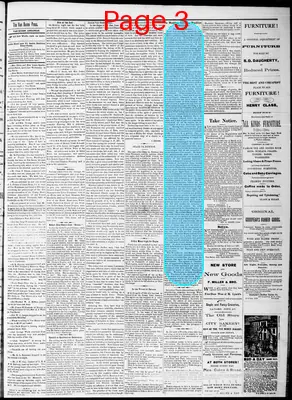
Story
July 17, 1877
The Van Buren Press
Van Buren, Crawford County, Arkansas
What is this article about?
At a July 4th Republican demonstration in Woodstock, James G. Blaine and Daniel H. Chamberlain vehemently criticize President Rutherford B. Hayes' administration for fraud, duplicity in Southern policy, and a potential war with Mexico via Gen. Ord's orders. They decry Hayes' actions in Louisiana and civil service hypocrisy, signaling intra-party revolt.
Clipping

OCR Quality
98%
Excellent
Full Text
The Woodstock Anti-Hayes Republican Demonstration.
[From New York Sun.]
There were strength, resolution, and audacity in the anti Hayes demonstration of Blaine and Chamberlain at Woodstock on the 4th of July. It was Blaine's part of to attack the war policy with which the Fraudulent Administration is now menacing the peace of the country. It was Chamberlain's part to strip off the garb of deceit from the Southern trading policy of Hayes, and to show up the duplicity and hypocrisy which he has introduced into the administration of public affairs. Blaine himself did not say much about the general conduct of the Hayes Ring; but, as he had read and approved Chamberlain's speech before its delivery. his position as an open relentless assailant of the Fraudulent Administration is publicly and definitely fixed. Blaine takes The Sun's view of the danger to the country from Hayes's order empowering Gen Ord to invade Mexico with a military force. He holds that the scheme has for its object the annexation of a large portion of the territory of Mexico, and that if this scheme be not thwarted, the country will, in the inevitable drift of events, be rapidly whirled into a current that can neither be stayed nor directed. "If the course of the Government," said he, "shall now be guided. or even largely influenced by the men and the interests that stand behind this movement-some of them masked and some of them in sight--we may find ourselves rushed into a war involving a serious drain upon our Treasury. to be reimbursed in the end by accession of territory, acquired at the wrong time, located in the wrong place, inhabited by an undesirable population, adding weakness where we want strength, discord where we need peace, and a lack of patriotic inspiration where most of all we require the devoted spirit of a true American nationality" Having fully covered this question, Blaine spoke a few words about the desirability of the annexation of Canada, briefly referred, in a general way, to Southern politics, and left to Chamberlain the business of expressing at length his views on the situation. Chamberlain's handling of the questions of the times gave evidence of the ability and courage which have never been denied him. He reviewed the Louisiana case at such length that we are compelled to curtail this part of his speech. He wrathfully and scornfully dealt with what he called the most peculiar and humiliating feature of the Louisiana business-- Hayes's willingness to accept for himself the fruits of the election there, though the vote for Hayes Electors fell short of the vote for Packard by several hundreds, and yet, while clutching those fruits with a ready if not eager hand, to plan and carry out Packard's overthrow "Hayes's course in Louisiana had made his heart grow hot with indignation, and brought unbidden curses to his lips. "Never," exclaimed Chamberlain, "never till the country heard with amazement the first whispering of the machinations of Stanley Matthews and the Ohio clique who stood nearest the President-the basest passage I have ever read in our political history-did any portion of the public or of the Republican party imagine that the President would enter upon such a policy or course of action. But Chamberlain did not confine his invective to this branch of his subject. He holds Hayes responsible for degrading and demoralizing the Republican party in all its ranks. He accuses Hayes of subterfuge and warns him that he cannot be dishonest on one subject and honest on others. He arraigns Hayes for his civil service fraud, and emphatically affirms that to this hour offices are conferred, refused or taken away with as much regard to political ends by the present Administration as by President Grant at any time, and with far less honorable motives. He holds Hayes and his Cabinet responsible for a policy which will take from our public domain and public Treasury untold subsidies to which private capitalists would shrink with contempt In short. he attacks the Fraudulent Administration in a way which no other leader of the Republican party has yet done. The Woodstock anti-Hayes demonstration is the most remarkable incident which has occurred, thus far. in the Republican war upon the Fraudulent Administration. The speech of Chamberlain, as approved by Blaine, is, however, but the boldest expression yet made of sentiments that have already been expressed by scores of other Republican leaders. We discern, in these rumblings from Woodstock, the approach of a storm which will yet rage in the Republican camp as well as out of it, and which will bring disaster to the men who are repudiated by the leaders of the party which they have brought to disgrace.
[From New York Sun.]
There were strength, resolution, and audacity in the anti Hayes demonstration of Blaine and Chamberlain at Woodstock on the 4th of July. It was Blaine's part of to attack the war policy with which the Fraudulent Administration is now menacing the peace of the country. It was Chamberlain's part to strip off the garb of deceit from the Southern trading policy of Hayes, and to show up the duplicity and hypocrisy which he has introduced into the administration of public affairs. Blaine himself did not say much about the general conduct of the Hayes Ring; but, as he had read and approved Chamberlain's speech before its delivery. his position as an open relentless assailant of the Fraudulent Administration is publicly and definitely fixed. Blaine takes The Sun's view of the danger to the country from Hayes's order empowering Gen Ord to invade Mexico with a military force. He holds that the scheme has for its object the annexation of a large portion of the territory of Mexico, and that if this scheme be not thwarted, the country will, in the inevitable drift of events, be rapidly whirled into a current that can neither be stayed nor directed. "If the course of the Government," said he, "shall now be guided. or even largely influenced by the men and the interests that stand behind this movement-some of them masked and some of them in sight--we may find ourselves rushed into a war involving a serious drain upon our Treasury. to be reimbursed in the end by accession of territory, acquired at the wrong time, located in the wrong place, inhabited by an undesirable population, adding weakness where we want strength, discord where we need peace, and a lack of patriotic inspiration where most of all we require the devoted spirit of a true American nationality" Having fully covered this question, Blaine spoke a few words about the desirability of the annexation of Canada, briefly referred, in a general way, to Southern politics, and left to Chamberlain the business of expressing at length his views on the situation. Chamberlain's handling of the questions of the times gave evidence of the ability and courage which have never been denied him. He reviewed the Louisiana case at such length that we are compelled to curtail this part of his speech. He wrathfully and scornfully dealt with what he called the most peculiar and humiliating feature of the Louisiana business-- Hayes's willingness to accept for himself the fruits of the election there, though the vote for Hayes Electors fell short of the vote for Packard by several hundreds, and yet, while clutching those fruits with a ready if not eager hand, to plan and carry out Packard's overthrow "Hayes's course in Louisiana had made his heart grow hot with indignation, and brought unbidden curses to his lips. "Never," exclaimed Chamberlain, "never till the country heard with amazement the first whispering of the machinations of Stanley Matthews and the Ohio clique who stood nearest the President-the basest passage I have ever read in our political history-did any portion of the public or of the Republican party imagine that the President would enter upon such a policy or course of action. But Chamberlain did not confine his invective to this branch of his subject. He holds Hayes responsible for degrading and demoralizing the Republican party in all its ranks. He accuses Hayes of subterfuge and warns him that he cannot be dishonest on one subject and honest on others. He arraigns Hayes for his civil service fraud, and emphatically affirms that to this hour offices are conferred, refused or taken away with as much regard to political ends by the present Administration as by President Grant at any time, and with far less honorable motives. He holds Hayes and his Cabinet responsible for a policy which will take from our public domain and public Treasury untold subsidies to which private capitalists would shrink with contempt In short. he attacks the Fraudulent Administration in a way which no other leader of the Republican party has yet done. The Woodstock anti-Hayes demonstration is the most remarkable incident which has occurred, thus far. in the Republican war upon the Fraudulent Administration. The speech of Chamberlain, as approved by Blaine, is, however, but the boldest expression yet made of sentiments that have already been expressed by scores of other Republican leaders. We discern, in these rumblings from Woodstock, the approach of a storm which will yet rage in the Republican camp as well as out of it, and which will bring disaster to the men who are repudiated by the leaders of the party which they have brought to disgrace.
What sub-type of article is it?
Historical Event
Deception Fraud
What themes does it cover?
Deception
Betrayal
What keywords are associated?
Anti Hayes Demonstration
Republican Criticism
Mexico Annexation
Louisiana Election
Civil Service Fraud
Political Duplicity
What entities or persons were involved?
Blaine
Chamberlain
Hayes
Gen Ord
Packard
Stanley Matthews
Where did it happen?
Woodstock
Story Details
Key Persons
Blaine
Chamberlain
Hayes
Gen Ord
Packard
Stanley Matthews
Location
Woodstock
Event Date
4th Of July
Story Details
Blaine and Chamberlain lead an anti-Hayes demonstration, attacking his war policy toward Mexico, Southern duplicity, Louisiana election fraud, civil service hypocrisy, and party demoralization, signaling Republican intra-party conflict.