Thank you for visiting SNEWPapers!
Sign up free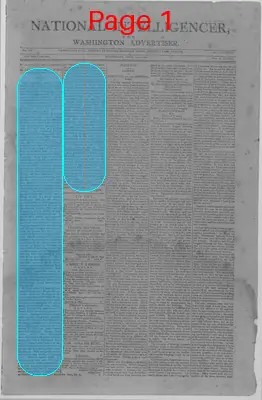
Editorial
April 13, 1803
The National Intelligencer And Washington Advertiser
Washington, District Of Columbia
What is this article about?
Editorial criticizes federalist opposition for refusing confidence in executive measures against potential threats from the First Consul, arguing their actions stem from party hostility rather than patriotism, risking national division amid Treaty of St. Lorenzo concerns.
Merged-components note: These two components form a continuous editorial article on the motives for war, with text flowing directly from one to the next.
Clipping
OCR Quality
98%
Excellent
Full Text
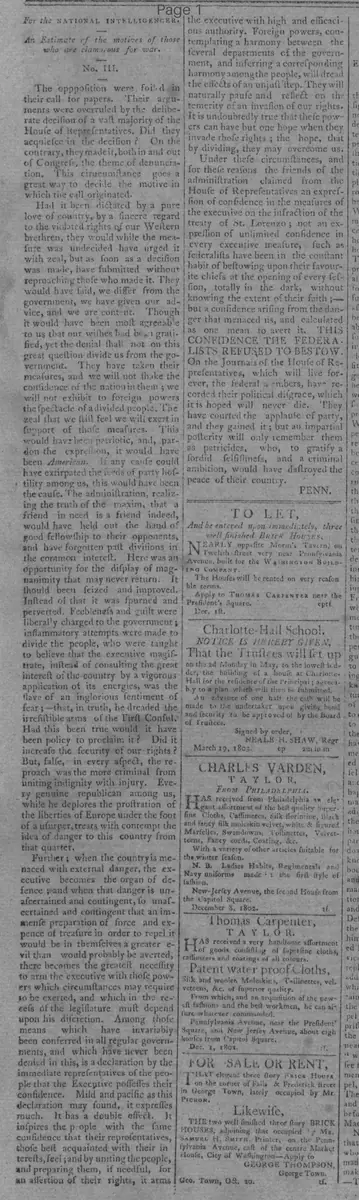
An Estimate of the motives of those who are clamorous for war.
No. III.
The opposition were foiled in their call for papers. Their arguments were overruled by the deliberate decision of a vast majority of the House of Representatives. Did they acquiesce in the decision? On the contrary, they made it, both in and out of Congress, the theme of denunciation. This circumstance goes a great way to decide the motive in which the call originated.
Had it been dictated by a pure love of country, by a sincere regard to the violated rights of our Western brethren, they would while the measure was undecided have urged it with zeal, but as soon as a decision was made, have submitted without reproaching those who made it. They would have said, we differ from the government, we have given our advice, and we are content. Though it would have been most agreeable to us that our wishes had been gratified, yet the denial shall not on this great question divide us from the government. They have taken their measures, and we will not shake the confidence of the nation in them; we will not exhibit to foreign powers the spectacle of a divided people. The zeal that we still feel we will exert in support of those measures. This would have been patriotic, and, pardon the expression, it would have been American. If any cause could have extirpated the seeds of party hostility among us, this would have been the cause. The administration, realizing the truth of the maxim, that a friend in need is a friend indeed, would have held out the hand of good fellowship to their opponents, and have forgotten past divisions in the common interest. Here was an opportunity for the display of magnanimity that may never return. It should have been seized and improved. Instead of that it was spurned and perverted. Feebleness and guilt were liberally charged to the government; inflammatory attempts were made to divide the people, who were taught to believe that the executive magistrate, instead of consulting the great interest of the country by a vigorous application of its energies, was the slave of an inglorious sentiment of fear;—that, in truth, he dreaded the irresistible arms of the First Consul.
Had this been true would it have been policy to proclaim it? Did it increase the security of our rights? But, false, in every aspect, the reproach was the more criminal from uniting indignity with injury. Every genuine republican among us, while he deplores the prostration of the liberties of Europe under the foot of a usurper, treats with contempt the idea of danger to this country from that quarter.
Further; when the country is menaced with external danger, the executive becomes the organ of defence; and when that danger is unascertained and contingent, or unascertained and contingent that an immense preparation of force and expense of treasure in order to repel it would be in themselves a greater evil than would probably be averted, there becomes the greatest necessity to arm the executive with those powers which circumstances may require to be exerted, and which in the recess of the legislature must depend upon his discretion. Among those means which have invariably been conferred in all regular governments, and which have never been denied in this, is a declaration by the immediate representatives of the people that the Executive possesses their confidence. Mild and pacific as this declaration may sound, it expresses much. It has a double effect. It inspires the people with the same confidence that their representatives, those best acquainted with their interests, feel; and by uniting the people, and preparing them, if needful, for an assertion of their rights, it arms the executive with high and efficacious authority. Foreign powers, contemplating a harmony between the several departments of the government, and inferring a corresponding harmony among the people, will dread the effects of any unjust step. They will naturally pause and reflect on the temerity of an invasion of our rights. It is undoubtedly true that these powers can have but one hope when they invade those rights; the hope, that by dividing, they may overcome us.
Under these circumstances, and for these reasons the friends of the administration claimed from the House of Representatives an expression of confidence in the measures of the executive on the infraction of the treaty of St. Lorenzo; not an expression of unlimited confidence in every executive measure, such as federalists have been in the constant habit of bestowing upon their favorite chiefs at the opening of every session, totally in the dark, without knowing the extent of their faith;—but a confidence arising from the danger that menaced us, and calculated as one mean to avert it. THIS CONFIDENCE THE FEDERALISTS REFUSED TO BESTOW.
On the Journals of the House of Representatives, which will live forever, the federal members have recorded their political disgrace, which it is hoped will never die. They have courted the applause of party, and they gained it; but an impartial posterity will only remember them as patricides, who, to gratify a sordid selfishness, and a criminal ambition, would have destroyed the peace of their country.
PENN.
No. III.
The opposition were foiled in their call for papers. Their arguments were overruled by the deliberate decision of a vast majority of the House of Representatives. Did they acquiesce in the decision? On the contrary, they made it, both in and out of Congress, the theme of denunciation. This circumstance goes a great way to decide the motive in which the call originated.
Had it been dictated by a pure love of country, by a sincere regard to the violated rights of our Western brethren, they would while the measure was undecided have urged it with zeal, but as soon as a decision was made, have submitted without reproaching those who made it. They would have said, we differ from the government, we have given our advice, and we are content. Though it would have been most agreeable to us that our wishes had been gratified, yet the denial shall not on this great question divide us from the government. They have taken their measures, and we will not shake the confidence of the nation in them; we will not exhibit to foreign powers the spectacle of a divided people. The zeal that we still feel we will exert in support of those measures. This would have been patriotic, and, pardon the expression, it would have been American. If any cause could have extirpated the seeds of party hostility among us, this would have been the cause. The administration, realizing the truth of the maxim, that a friend in need is a friend indeed, would have held out the hand of good fellowship to their opponents, and have forgotten past divisions in the common interest. Here was an opportunity for the display of magnanimity that may never return. It should have been seized and improved. Instead of that it was spurned and perverted. Feebleness and guilt were liberally charged to the government; inflammatory attempts were made to divide the people, who were taught to believe that the executive magistrate, instead of consulting the great interest of the country by a vigorous application of its energies, was the slave of an inglorious sentiment of fear;—that, in truth, he dreaded the irresistible arms of the First Consul.
Had this been true would it have been policy to proclaim it? Did it increase the security of our rights? But, false, in every aspect, the reproach was the more criminal from uniting indignity with injury. Every genuine republican among us, while he deplores the prostration of the liberties of Europe under the foot of a usurper, treats with contempt the idea of danger to this country from that quarter.
Further; when the country is menaced with external danger, the executive becomes the organ of defence; and when that danger is unascertained and contingent, or unascertained and contingent that an immense preparation of force and expense of treasure in order to repel it would be in themselves a greater evil than would probably be averted, there becomes the greatest necessity to arm the executive with those powers which circumstances may require to be exerted, and which in the recess of the legislature must depend upon his discretion. Among those means which have invariably been conferred in all regular governments, and which have never been denied in this, is a declaration by the immediate representatives of the people that the Executive possesses their confidence. Mild and pacific as this declaration may sound, it expresses much. It has a double effect. It inspires the people with the same confidence that their representatives, those best acquainted with their interests, feel; and by uniting the people, and preparing them, if needful, for an assertion of their rights, it arms the executive with high and efficacious authority. Foreign powers, contemplating a harmony between the several departments of the government, and inferring a corresponding harmony among the people, will dread the effects of any unjust step. They will naturally pause and reflect on the temerity of an invasion of our rights. It is undoubtedly true that these powers can have but one hope when they invade those rights; the hope, that by dividing, they may overcome us.
Under these circumstances, and for these reasons the friends of the administration claimed from the House of Representatives an expression of confidence in the measures of the executive on the infraction of the treaty of St. Lorenzo; not an expression of unlimited confidence in every executive measure, such as federalists have been in the constant habit of bestowing upon their favorite chiefs at the opening of every session, totally in the dark, without knowing the extent of their faith;—but a confidence arising from the danger that menaced us, and calculated as one mean to avert it. THIS CONFIDENCE THE FEDERALISTS REFUSED TO BESTOW.
On the Journals of the House of Representatives, which will live forever, the federal members have recorded their political disgrace, which it is hoped will never die. They have courted the applause of party, and they gained it; but an impartial posterity will only remember them as patricides, who, to gratify a sordid selfishness, and a criminal ambition, would have destroyed the peace of their country.
PENN.
What sub-type of article is it?
Partisan Politics
Foreign Affairs
War Or Peace
What keywords are associated?
War Motives
Federalist Opposition
Executive Confidence
Treaty Infraction
Partisan Discord
National Unity
External Danger
What entities or persons were involved?
Opposition
House Of Representatives
Administration
Executive Magistrate
First Consul
Federalists
Editorial Details
Primary Topic
Critique Of Federalist Motives In Opposing Executive Confidence On Treaty Infraction
Stance / Tone
Strongly Pro Administration And Anti Federalist
Key Figures
Opposition
House Of Representatives
Administration
Executive Magistrate
First Consul
Federalists
Key Arguments
Opposition's Denunciation After Defeat Reveals Impure Motives
True Patriots Would Submit To Decisions And Support Government Measures
Opposition's Actions Divide The People And Undermine National Confidence
Executive Needs Discretionary Powers In Uncertain External Dangers
Confidence Declaration Arms Executive And Deters Foreign Powers
Federalists Refused Confidence On Treaty Of St. Lorenzo Infraction
Federalists Recorded As Patricides In House Journals