Thank you for visiting SNEWPapers!
Sign up free
The New Hampshire Gazette And General Advertiser
Portsmouth, Rockingham County, New Hampshire
What is this article about?
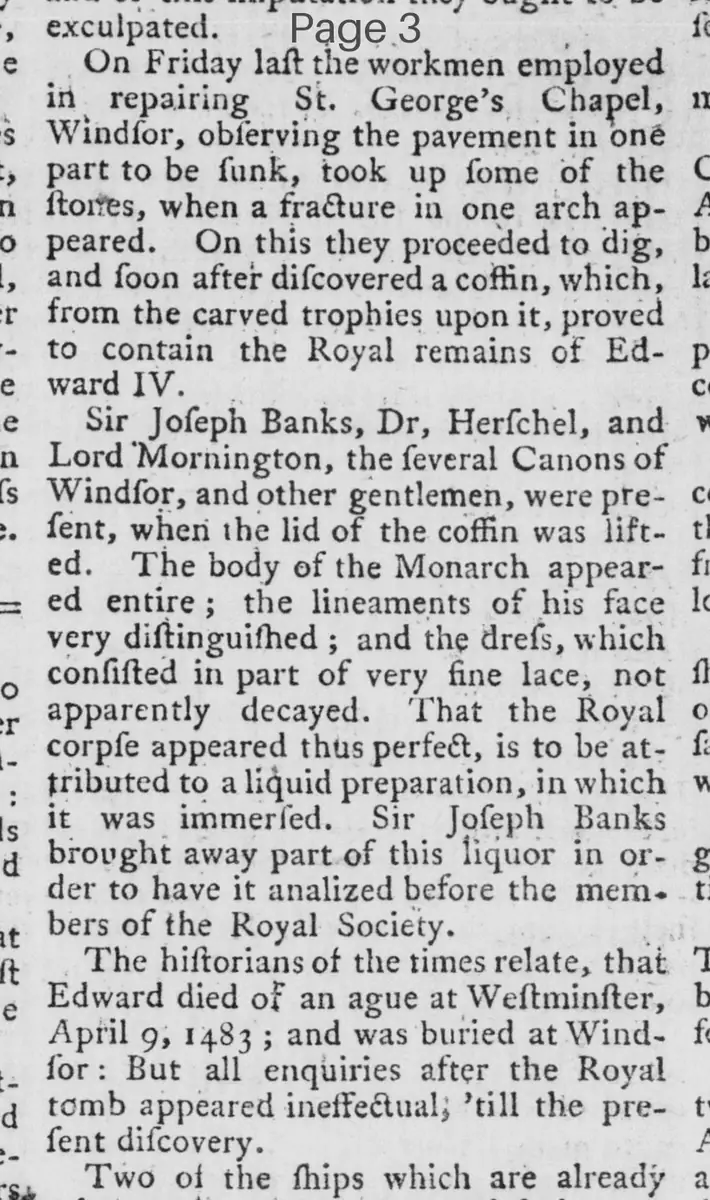
Workmen repairing St. George's Chapel in Windsor discovered the intact coffin of King Edward IV, preserved in a liquid, during pavement repairs. Sir Joseph Banks and others examined it, and he took liquor samples for Royal Society analysis. The king died April 9, 1483.
Clipping
OCR Quality
Full Text
Sir Joseph Banks, Dr. Herschel, and Lord Mornington, the several Canons of Windsor, and other gentlemen, were present, when the lid of the coffin was lifted. The body of the Monarch appeared entire: the lineaments of his face very distinguishable; and the dress, which consisted in part of very fine lace, not apparently decayed. That the Royal corpse appeared thus perfect, is to be attributed to a liquid preparation, in which it was immersed. Sir Joseph Banks brought away part of this liquor in order to have it analyzed before the members of the Royal Society.
The historians of the times relate, that Edward died of an ague at Westminster, April 9, 1483; and was buried at Windsor: But all enquiries after the Royal tomb appeared ineffectual; 'till the present discovery.
What sub-type of article is it?
What themes does it cover?
What keywords are associated?
What entities or persons were involved?
Where did it happen?
Story Details
Key Persons
Location
St. George's Chapel, Windsor
Event Date
Friday Last; Death April 9, 1483
Story Details
Workmen digging under sunk pavement during chapel repairs uncover Edward IV's coffin with intact, preserved body immersed in liquid. Present gentlemen including Sir Joseph Banks examine it; Banks takes liquor for analysis. Historians note king's 1483 death and prior failed tomb searches.