Thank you for visiting SNEWPapers!
Sign up free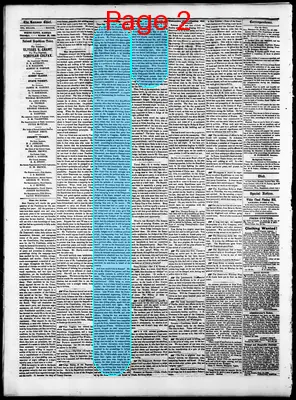
Editorial
October 29, 1868
White Cloud Kansas Chief
White Cloud, Doniphan County, Kansas
What is this article about?
This editorial warns Republicans in Northern Kansas against supporting Democratic judicial nominee Mr. Otis over inexperienced but loyal Republican Mr. Price, arguing that depoliticizing the judgeship allows Democrats to gain power and persecute Union supporters, citing examples from Pennsylvania, New York, and Kentucky where Democratic judges undermined war measures and enabled fraud.
Clipping
OCR Quality
95%
Excellent
Full Text
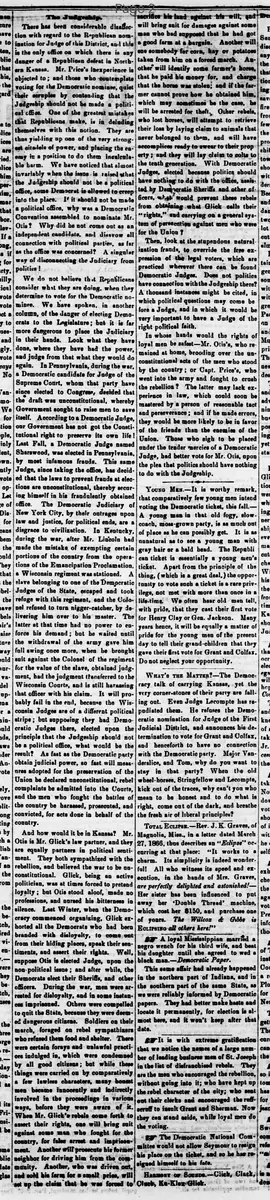
There has been considerable dissatisfaction with regard to the Republican nomination for Judge of this District, and this is the only office on which there is any danger of Republican defeat in Northern Kansas. Mr. Price's inexperience is objected to; and those who contemplate voting for the Democratic nominee, quiet their scruples by contending that the Judgeship should not be made a political office. One of the greatest mistakes that Republicans make, is in deluding themselves with this notion. They are thus yielding up one of the very strongest citadels of power, and placing the enemy in a position to do them incalculable harm. We have noticed that almost invariably when the issue is raised that the Judgeship should not be a political office, some Democrat is allowed to creep into the place. If it should not be made a political office, why was a Democratic Convention assembled to nominate Mr. Otis? Why did he not come out as an independent candidate, and disavow all connection with political parties, as far as the office was concerned? A singular way of disconnecting the Judiciary from politics!
We do not believe that Republicans consider what they are doing, when they determine to vote for the Democratic nominee. We have spoken, in another column, of the danger of electing Democrats to the Legislature; but it is far more dangerous to place the Judiciary in their hands. Look what they have done, where they have had the power, and judge from that what they would do again. In Pennsylvania, during the war, a Democratic candidate for Judge of the Supreme Court, whom that party have since elected to Congress, decided that the draft was unconstitutional, whereby Government sought to raise men to save itself. According to a Democratic Judge, our Government has not got the Constitutional right to preserve its own life! Last Fall, a Democratic Judge named Sharswood, was elected in Pennsylvania, by most infamous frauds. This same Judge, since taking the office, has decided that the laws to prevent frauds at elections are unconstitutional, thereby securing himself in his fraudulently obtained office. The Democratic Judiciary of New York City, by their outrages upon law and justice, for political ends, are a disgrace to civilization. In Kentucky, during the war, after Mr. Lincoln had made the mistake of exempting certain portions of the country from the operations of the Emancipation Proclamation, a Wisconsin regiment was stationed. A slave belonging to one of the Democratic Judges of the State, escaped and took refuge with this regiment, and the Colonel refused to turn nigger-catcher, by delivering him over to his master. The latter at that time had no power to enforce his demand; but he waited until the withdrawal of the army gave him full swing once more, when he brought suit against the Colonel of the regiment for the value of the slave, obtained judgment, had the judgment transferred to the Wisconsin Courts, and is still harassing that officer with his claim. It will probably fail in the end, because the Wisconsin Judges are of a different political stripe; but supposing they had Democratic Judges there, elected upon the principle that the Judgeship should not be a political office, what would be the result? As fast as the Democratic party obtain judicial power, so fast will measures adopted for the preservation of the Union be declared unconstitutional, rebel complaints be admitted into the Courts, and the men who fought the battles of the country be harassed, prosecuted, and convicted, for acts done in behalf of the country.
And how would it be in Kansas? Mr. Otis is Mr. Glick's law partner, and they are equally partners in political sentiment. They both sympathized with the rebellion, and believed the war to be unconstitutional. Glick, being an active politician, was at times forced to pretend loyalty; but Otis stood aloof, made no professions, and nursed his bitterness in silence. Last Winter, when the Democracy commenced organizing, Glick exhorted all the Democrats who had been branded with disloyalty, to come out from their hiding places, speak their sentiments, and assert their rights. Well, suppose Otis is elected Judge, upon the non-political issue; and after a while, the Democrats elect their Sheriffs, and other officers. During the war, men were arrested for disloyalty, and in some instances imprisoned. Others were compelled to quit the State, because they were deemed dangerous citizens. Soldiers on their march, foraged on rebel sympathizers who refused them food and shelter. There were certain forays and unlawful practices indulged in, which were condemned by all good citizens; but while these things were carried on by comparatively few lawless characters, many honest men became innocently and indirectly involved in the proceedings in various ways, before they were aware of it. When Mr. Glick's rebels come forth to assert their rights, one will bring suit against some man who fought for the country, for false arrest and imprisonment. Another will prosecute his former neighbor for driving him from the community. Another, who was driven out, and sold his farm for a small price, will set up the claim that he was forced to sacrifice his lands against his will; and will bring suit for damages against some man who had supposed that he had got a good farm at a bargain. Another will sue somebody for corn, hay or potatoes taken from him on a forced march. Another will identify some farmer's horse, that he paid his money for, and charge that the horse was stolen; and if the farmer cannot prove how he obtained him, which may sometimes be the case, he will be arrested for theft. Other rebels, who lost horses, will attempt to retrieve their loss by laying claim to animals that never belonged to them, and will have accomplices ready to swear to their property; and they will lay claim to colts to the tenth generation. With Democratic Judges, elected because politics should have nothing to do with the office, assisted by Democratic Sheriffs and other officers, who would prevent these rebels from obtaining what Glick calls their "rights," and carrying on a general system of persecution against men who were for the Union?
Then, look at the stupendous naturalization frauds, to override the free expression of the legal voters, which are practiced wherever there can be found Democratic Judges. Does not politics have connection with the Judgeship there? A thousand instances might be cited, in which political questions may come before a Judge, and in which it would be very important to have a Judge of the right political faith.
In whose hands would the rights of loyal men be safest—Mr. Otis's, who remained at home, brooding over the unconstitutional acts of the men who stood by the country; or Capt. Price's, who went into the army and fought to crush the rebellion? The latter may lack experience in law, which could soon be mastered by a person of reasonable tact and perseverance; and if he made errors, they would be more likely to be in favor of the friends than the enemies of the Union. Those who wish to be placed under the tender mercies of a Democratic Judge, had better vote for Mr. Otis, upon the plea that politics should have nothing to do with the Judgeship.
We do not believe that Republicans consider what they are doing, when they determine to vote for the Democratic nominee. We have spoken, in another column, of the danger of electing Democrats to the Legislature; but it is far more dangerous to place the Judiciary in their hands. Look what they have done, where they have had the power, and judge from that what they would do again. In Pennsylvania, during the war, a Democratic candidate for Judge of the Supreme Court, whom that party have since elected to Congress, decided that the draft was unconstitutional, whereby Government sought to raise men to save itself. According to a Democratic Judge, our Government has not got the Constitutional right to preserve its own life! Last Fall, a Democratic Judge named Sharswood, was elected in Pennsylvania, by most infamous frauds. This same Judge, since taking the office, has decided that the laws to prevent frauds at elections are unconstitutional, thereby securing himself in his fraudulently obtained office. The Democratic Judiciary of New York City, by their outrages upon law and justice, for political ends, are a disgrace to civilization. In Kentucky, during the war, after Mr. Lincoln had made the mistake of exempting certain portions of the country from the operations of the Emancipation Proclamation, a Wisconsin regiment was stationed. A slave belonging to one of the Democratic Judges of the State, escaped and took refuge with this regiment, and the Colonel refused to turn nigger-catcher, by delivering him over to his master. The latter at that time had no power to enforce his demand; but he waited until the withdrawal of the army gave him full swing once more, when he brought suit against the Colonel of the regiment for the value of the slave, obtained judgment, had the judgment transferred to the Wisconsin Courts, and is still harassing that officer with his claim. It will probably fail in the end, because the Wisconsin Judges are of a different political stripe; but supposing they had Democratic Judges there, elected upon the principle that the Judgeship should not be a political office, what would be the result? As fast as the Democratic party obtain judicial power, so fast will measures adopted for the preservation of the Union be declared unconstitutional, rebel complaints be admitted into the Courts, and the men who fought the battles of the country be harassed, prosecuted, and convicted, for acts done in behalf of the country.
And how would it be in Kansas? Mr. Otis is Mr. Glick's law partner, and they are equally partners in political sentiment. They both sympathized with the rebellion, and believed the war to be unconstitutional. Glick, being an active politician, was at times forced to pretend loyalty; but Otis stood aloof, made no professions, and nursed his bitterness in silence. Last Winter, when the Democracy commenced organizing, Glick exhorted all the Democrats who had been branded with disloyalty, to come out from their hiding places, speak their sentiments, and assert their rights. Well, suppose Otis is elected Judge, upon the non-political issue; and after a while, the Democrats elect their Sheriffs, and other officers. During the war, men were arrested for disloyalty, and in some instances imprisoned. Others were compelled to quit the State, because they were deemed dangerous citizens. Soldiers on their march, foraged on rebel sympathizers who refused them food and shelter. There were certain forays and unlawful practices indulged in, which were condemned by all good citizens; but while these things were carried on by comparatively few lawless characters, many honest men became innocently and indirectly involved in the proceedings in various ways, before they were aware of it. When Mr. Glick's rebels come forth to assert their rights, one will bring suit against some man who fought for the country, for false arrest and imprisonment. Another will prosecute his former neighbor for driving him from the community. Another, who was driven out, and sold his farm for a small price, will set up the claim that he was forced to sacrifice his lands against his will; and will bring suit for damages against some man who had supposed that he had got a good farm at a bargain. Another will sue somebody for corn, hay or potatoes taken from him on a forced march. Another will identify some farmer's horse, that he paid his money for, and charge that the horse was stolen; and if the farmer cannot prove how he obtained him, which may sometimes be the case, he will be arrested for theft. Other rebels, who lost horses, will attempt to retrieve their loss by laying claim to animals that never belonged to them, and will have accomplices ready to swear to their property; and they will lay claim to colts to the tenth generation. With Democratic Judges, elected because politics should have nothing to do with the office, assisted by Democratic Sheriffs and other officers, who would prevent these rebels from obtaining what Glick calls their "rights," and carrying on a general system of persecution against men who were for the Union?
Then, look at the stupendous naturalization frauds, to override the free expression of the legal voters, which are practiced wherever there can be found Democratic Judges. Does not politics have connection with the Judgeship there? A thousand instances might be cited, in which political questions may come before a Judge, and in which it would be very important to have a Judge of the right political faith.
In whose hands would the rights of loyal men be safest—Mr. Otis's, who remained at home, brooding over the unconstitutional acts of the men who stood by the country; or Capt. Price's, who went into the army and fought to crush the rebellion? The latter may lack experience in law, which could soon be mastered by a person of reasonable tact and perseverance; and if he made errors, they would be more likely to be in favor of the friends than the enemies of the Union. Those who wish to be placed under the tender mercies of a Democratic Judge, had better vote for Mr. Otis, upon the plea that politics should have nothing to do with the Judgeship.
What sub-type of article is it?
Partisan Politics
Constitutional
What keywords are associated?
Republican Nomination
Democratic Judges
Judgeship Politics
Civil War Loyalty
Kansas Judiciary
Union Persecution
What entities or persons were involved?
Mr. Price
Mr. Otis
Mr. Glick
Democrats
Republicans
Judge Sharswood
Editorial Details
Primary Topic
Opposition To Democratic Judicial Nominee In Kansas Election
Stance / Tone
Strongly Pro Republican And Anti Democratic Control Of Judiciary
Key Figures
Mr. Price
Mr. Otis
Mr. Glick
Democrats
Republicans
Judge Sharswood
Key Arguments
Judgeship Is Inherently Political, As Democrats Nominate Candidates
Democratic Judges Have Historically Undermined Union War Measures And Enabled Fraud
Electing Otis Would Allow Rebel Sympathizers To Persecute Union Loyalists Through Lawsuits
Price's Military Service Makes Him Preferable To Protect Loyal Men's Rights
Depoliticizing Judiciary Hands Power To Democrats To Declare Union Preserving Laws Unconstitutional