Thank you for visiting SNEWPapers!
Sign up free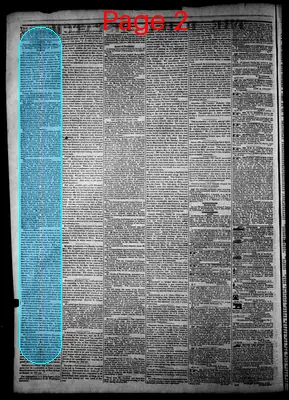
Editorial
April 20, 1852
The Daily Dispatch
Richmond, Virginia
What is this article about?
Editorial reflects on deaths of three New Orleans millionaires—McDonough, Fowler, Paulding—critiquing selfish wealth accumulation and praising Paulding's charitable will. Warns against money worship, faulting Franklin's views for fostering materialism.
Clipping

OCR Quality
95%
Excellent
Full Text
THE DAILY DISPATCH
TO ADVERTISERS. THE HON. of the Dispatch is TWENTY TIMES larger than that of any other Daily paper in the city of Richmond. It is therefore greatly superior to any other as a medium for advertising.
RICHMOND, VIRGINIA
Tuesday Morning April 20, 1852
A MORAL CONVEYED IN A FEW WORDS.
We call attention to the subjoined abstract of the remarks of a New Orleans paper upon the decease of three of its richest citizens. We know not what paper it is, from which the extract has been made, but the lesson, which it teaches mankind, is instructive to all mankind, or should be experienced. But it has not done so—it will teach the experience of others. He must be taught never to do so in his own, or never learnt wisdom by his own sufferings. We did not intend, however, to moralize when we commenced this paragraph. We meant simply to call attention to the lives of the three richest men whom New Orleans has produced in our day, and to let the reader draw his own inference from the result they have arrived at.
Three Millionaires.—A New Orleans paper has some curious commentaries on the lives of several rich men, recently deceased in that city. Of John McDonough it thus speaks:
"He had but two passions—notoriety and accumulation. These he pursued through a long and niggardly and sinful life, and these he exhibited in his will. He clutched at his bonds, and titles, and money bags, in his dying moments, and by a will both silly and intricate, and fruitful of fraud and controversy, a mirror of his character—he sought to control and administer them after death. He cut his neglected relations off with a shilling, and bequeathed the enormous aggregate of seventy years of avarice and cunning, to communities that will never plant a flower on his grave, or moisten it with a tear."
Here is a sketch of another:
"Joseph Fowler was a cold, selfish, cynical, vulgar man, without a scintilla of soul, who lived for himself alone, thinking neither of his suffering kindred in this world, nor of God and eternity. He was the slave of the almighty dollar all his life, and died, at last, without having the courage to make a will, or the grace to make, by public charities, some reparation for the selfishness of his life. His relations, who vainly, in his life time, implored the crumbs that fell from the rich man's table, will now, it is hoped, receive and enjoy the magnificent estate which he accumulated by exertion, and coined out of tears and destitution."
The third is referred to as follows:
"Cornelius Paulding was a better man than either of these. He was frigid, penurious and exacting; but he sometimes gave, and gave freely. For many years he had been a member of the Baptist Church; and, at various periods, after he removed to New Orleans, he provided a place of worship for his brethren, and tendered his house as a residence for the minister. Several Clergymen came to reside with him, but, notwithstanding their habits of self-denial, he starved them all out. Nor did the church thrive any better under his auspices. The church government of the Baptists is a pure democracy. All the power resides in the members, and even the old prejudices that exclude women from participation in government, is not recognized. All are equals, and the minister in that church, out of the pulpit, has no more power than one of his flock. This form of government was not adapted to the disposition of Mr. Paulding. He was far from arbitrary and dictatorial, and the result was, that the Baptists in this city, though few in number, and poor, preferred to worship in obscure places, rather than to occupy the splendid church which he sometimes proposed to erect for them. Mr. Paulding had lived long enough to learn a useful lesson from the death of John McDonough. He read the commentaries of the press upon his unnatural, selfish and litigious will. He has wisely bequeathed the bulk of his estate to his impoverished relations; has made generous donations to the Orphan Asylum and public schools—and we rejoice to learn appropriated $30,000 for the Baptists of this city."
Comment.—Money, as the medium of procuring us what we need—as the means of enabling us to assist those who are in want—as the only appliance by which a thousand honorable and honest objects can be effected—is very desirable. We all crave it—we all wish for it—none of us would refuse it. But to set out upon life with the sole object of "making money"—to sacrifice every other consideration—to that—to sell your soul, literally, to Mammon—is, in the striking words of Tom Marshall, employed, on a very different occasion, to "light the fire in the heart here; that must burn on through all eternity." Mammon was the "least erect" of all the spirits that fell from Heaven, so Milton says, and the mighty bard meant thereby to signify his utter scorn of those who think that man was put into this world for no other purpose than to make money. The great objection which we have always had to the works of Dr. Franklin, is based upon feelings of the same character.—He regards human life as little more than a period of time allowed to man, in the course of which he may coin a certain number of dollars—he looks upon man, himself, as a machine attached to a mint, and estimates him in the exact ratio of his capacity to strike off the coin with the greater or the less rapidity—in one word, man is an animal, according to him, who is born to make money and to die.
We do not underestimate the great qualities of Franklin, nor are we disposed to undervalue his immense services to the cause of humanity and of his country. But we think we may be excused for saying, that in this respect he has done an injury to, rather than conferred a benefit on his countrymen. His maxims have made a deep impression upon the public mind, and that impression has been lasting. If they did not create, they went very far to justify that money-loving spirit which is said to distinguish this people from all the other people that ever existed.
We do not mean to say, however, that grasping men and misers are confined to this country. They belong to humanity, and are to be found everywhere. Sir Giles Overreach is the representative of thousands and tens of thousands, to be found in every country. What we complain of is, that so great a man as Franklin, one who certainly was no miser himself—who was a philosopher—a patriot and a statesman—should have put forth sentiments from which every man can but infer that the grand object of human life is, to make money.
TO ADVERTISERS. THE HON. of the Dispatch is TWENTY TIMES larger than that of any other Daily paper in the city of Richmond. It is therefore greatly superior to any other as a medium for advertising.
RICHMOND, VIRGINIA
Tuesday Morning April 20, 1852
A MORAL CONVEYED IN A FEW WORDS.
We call attention to the subjoined abstract of the remarks of a New Orleans paper upon the decease of three of its richest citizens. We know not what paper it is, from which the extract has been made, but the lesson, which it teaches mankind, is instructive to all mankind, or should be experienced. But it has not done so—it will teach the experience of others. He must be taught never to do so in his own, or never learnt wisdom by his own sufferings. We did not intend, however, to moralize when we commenced this paragraph. We meant simply to call attention to the lives of the three richest men whom New Orleans has produced in our day, and to let the reader draw his own inference from the result they have arrived at.
Three Millionaires.—A New Orleans paper has some curious commentaries on the lives of several rich men, recently deceased in that city. Of John McDonough it thus speaks:
"He had but two passions—notoriety and accumulation. These he pursued through a long and niggardly and sinful life, and these he exhibited in his will. He clutched at his bonds, and titles, and money bags, in his dying moments, and by a will both silly and intricate, and fruitful of fraud and controversy, a mirror of his character—he sought to control and administer them after death. He cut his neglected relations off with a shilling, and bequeathed the enormous aggregate of seventy years of avarice and cunning, to communities that will never plant a flower on his grave, or moisten it with a tear."
Here is a sketch of another:
"Joseph Fowler was a cold, selfish, cynical, vulgar man, without a scintilla of soul, who lived for himself alone, thinking neither of his suffering kindred in this world, nor of God and eternity. He was the slave of the almighty dollar all his life, and died, at last, without having the courage to make a will, or the grace to make, by public charities, some reparation for the selfishness of his life. His relations, who vainly, in his life time, implored the crumbs that fell from the rich man's table, will now, it is hoped, receive and enjoy the magnificent estate which he accumulated by exertion, and coined out of tears and destitution."
The third is referred to as follows:
"Cornelius Paulding was a better man than either of these. He was frigid, penurious and exacting; but he sometimes gave, and gave freely. For many years he had been a member of the Baptist Church; and, at various periods, after he removed to New Orleans, he provided a place of worship for his brethren, and tendered his house as a residence for the minister. Several Clergymen came to reside with him, but, notwithstanding their habits of self-denial, he starved them all out. Nor did the church thrive any better under his auspices. The church government of the Baptists is a pure democracy. All the power resides in the members, and even the old prejudices that exclude women from participation in government, is not recognized. All are equals, and the minister in that church, out of the pulpit, has no more power than one of his flock. This form of government was not adapted to the disposition of Mr. Paulding. He was far from arbitrary and dictatorial, and the result was, that the Baptists in this city, though few in number, and poor, preferred to worship in obscure places, rather than to occupy the splendid church which he sometimes proposed to erect for them. Mr. Paulding had lived long enough to learn a useful lesson from the death of John McDonough. He read the commentaries of the press upon his unnatural, selfish and litigious will. He has wisely bequeathed the bulk of his estate to his impoverished relations; has made generous donations to the Orphan Asylum and public schools—and we rejoice to learn appropriated $30,000 for the Baptists of this city."
Comment.—Money, as the medium of procuring us what we need—as the means of enabling us to assist those who are in want—as the only appliance by which a thousand honorable and honest objects can be effected—is very desirable. We all crave it—we all wish for it—none of us would refuse it. But to set out upon life with the sole object of "making money"—to sacrifice every other consideration—to that—to sell your soul, literally, to Mammon—is, in the striking words of Tom Marshall, employed, on a very different occasion, to "light the fire in the heart here; that must burn on through all eternity." Mammon was the "least erect" of all the spirits that fell from Heaven, so Milton says, and the mighty bard meant thereby to signify his utter scorn of those who think that man was put into this world for no other purpose than to make money. The great objection which we have always had to the works of Dr. Franklin, is based upon feelings of the same character.—He regards human life as little more than a period of time allowed to man, in the course of which he may coin a certain number of dollars—he looks upon man, himself, as a machine attached to a mint, and estimates him in the exact ratio of his capacity to strike off the coin with the greater or the less rapidity—in one word, man is an animal, according to him, who is born to make money and to die.
We do not underestimate the great qualities of Franklin, nor are we disposed to undervalue his immense services to the cause of humanity and of his country. But we think we may be excused for saying, that in this respect he has done an injury to, rather than conferred a benefit on his countrymen. His maxims have made a deep impression upon the public mind, and that impression has been lasting. If they did not create, they went very far to justify that money-loving spirit which is said to distinguish this people from all the other people that ever existed.
We do not mean to say, however, that grasping men and misers are confined to this country. They belong to humanity, and are to be found everywhere. Sir Giles Overreach is the representative of thousands and tens of thousands, to be found in every country. What we complain of is, that so great a man as Franklin, one who certainly was no miser himself—who was a philosopher—a patriot and a statesman—should have put forth sentiments from which every man can but infer that the grand object of human life is, to make money.
What sub-type of article is it?
Moral Or Religious
What keywords are associated?
Avarice
Millionaires
Wealth
Charity
Morality
Benjamin Franklin
New Orleans
What entities or persons were involved?
John Mcdonough
Joseph Fowler
Cornelius Paulding
Benjamin Franklin
Editorial Details
Primary Topic
Moral Lesson From Lives Of Three New Orleans Millionaires
Stance / Tone
Cautionary Against Avarice And Money Worship
Key Figures
John Mcdonough
Joseph Fowler
Cornelius Paulding
Benjamin Franklin
Key Arguments
Accumulation Of Wealth Without Generosity Leads To Unloved Legacy
Mcdonough's Will Reflects Selfish Life, Benefiting Strangers Over Family
Fowler Died Without Will, Leaving Estate To Suffering Relations
Paulding Improved By Bequeathing To Family And Charities, Including Baptists
Prioritizing Money Over Soul Sells Out To Mammon Eternally
Franklin's Maxims Promote Money Making As Life's Goal, Injuring Society