Thank you for visiting SNEWPapers!
Sign up free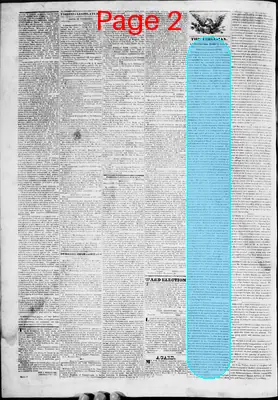
Editorial
March 9, 1829
Lynchburg Virginian
Lynchburg, Virginia
What is this article about?
Editorial from The Virginian reviews the Virginia Legislature's 1829 session, praising its talent and decisions on the Constitutional Convention for suffrage reform, internal improvements with liberal appropriations, and policy on lottery ticket vendors. Urges non-freeholders to advocate for voting rights.
Clipping

OCR Quality
95%
Excellent
Full Text
THE VIRGINIAN.
LYNCHBURG, MARCH 9, 1829.
VIRGINIA LEGISLATURE
This body adjourned on the 25th ult. after a much longer session than had been anticipated, and with the reputation of having been more distinguished for talent than any of its predecessors since the celebrated session of 1816, when Tazewell, Hay, Taylor, Giles, and other men conspicuously known to the commonwealth shone in its deliberations. There has certainly never been a session, in which measures of greater importance were discussed and decided. We shall commence in our next, and conclude as rapidly as possible, the publication of the Sketches of the laws passed by the Legislature—in the mean time, we will glance briefly at two or three of the most interesting questions which were before them.
The Convention question ranks first in magnitude, whether we regard the deep interest which it has so long excited in the public mind, or the severe struggles made by a formidable aristocracy to defeat the will of an overwhelming majority of the people, or the conflicting interests which were to be reconciled in its adjustment, or the principles upon which it was finally settled, or, more important still, the influence it may have on the future destinies of the Old Dominion.—We shall say nothing now, however, in the spirit of exultation, of the triumph which has crowned the unceasing exertions and the steady perseverance of the friends of reform: for, after all, it is accompanied by such odious and unjust provisions, that we should entertain but a feeble hope of procuring many salutary changes, were it not for our reliance on the enlarged and liberal views and the practical wisdom of the men to whom the formation of a new Constitution will be entrusted. It is much to be regretted that the Convention did not meet in the life time of the great champion of democracy—for, although we do not concur in all of his views on this subject, yet such a man as the sage of Monticello, carrying his ideas of political equality possibly beyond the bounds which experience has shown to be safe or practicable, would have checked the unjust assumptions and repelled the illiberal aspersions, of the bloated landed aristocracy, which has so long held the reins of power, and which has almost driven the Commonwealth to the verge of ruin. We shall not, however, abandon the hope that the great ends of political justice will be subserved—more especially that the freehold restriction will be removed and representation equalized although there is much to fear, when we recollect that nearly one third of the free white citizens have been rudely driven from the polls in the choice of delegates to the Convention, and that the eastern section of the State all possess an undue weight in that body, in consequence of having taken the census of 1820 as a guide in laying off the electoral districts. But, it must not be expected that the elective franchise will be extended without the non-freeholders shall make a vigorous and united effort to wrest it from the tenacious grasp of a freeholders' Convention. Nor must they rely entirely on their own efforts They must ask the aid of those freeholders who regard the extension of the right of suffrage as an act demanded by the best interests of the State, and sanctioned by the principles of our Revolution. And let them point those whose prejudices conjure up a thousand dangers as a necessary consequence of this extension, to our sister States, in which the right of voting is carried to the greatest limit, and ask them if they do not there see an ample refutation of their visionary fears? Are their legislators less wise than our own? Is their policy less sound and beneficial? Are the people less virtuous, intelligent, prosperous and happy? Let a comparison be made between any State which has repudiated the odious distinction of which we complain, and Virginia, the only one, we believe, which still clings to this relic of a feudal age—and how deep must be our humiliation!—But, we have not room to pursue the subject farther at present. It cannot conclude, however, without soliciting the earnest attention of the non-freeholders to the fact that a meeting is proposed to be held next Saturday to devise some plan by which they may be raised to the dignity of freemen. This is the crisis of their fate. If, therefore, they shall not come forward, they must be regarded as insensible to their degradation, and as fit to be the slaves they are in every thing but the name.
The subject of Internal Improvement is next in importance to the Convention question; and it gives us pleasure to say that a more liberal and generous disposition was manifested by the Legislature in its appropriations than, under existing circumstances, or from previous indications, we had any reason to expect. This immediate section of country, particularly, will derive great advantages from the works authorized to be constructed, if the zeal and enterprise of our citizens shall bear any proportion to the liberality of the Legislature. As at present constituted, however, we need not expect the vigorous prosecution, by that body, of the grand and important schemes of improvement recommended by the Charlottesville Convention, the consummation of which will be attended with such great and imperishable blessings. When the equalization of sectional and personal rights shall take from the eastern part of the State the unjust preponderance in the government which it has so long held, to the detriment of all its great interests, we may reasonably expect to see fresh vigor infused into her councils and may look forward, with confident hope, to the brilliant prospects which, but for the mis-administration of her government, she would long since have enjoyed.
We think the Legislature adopted the proper policy in compelling venders of Lottery tickets
LYNCHBURG, MARCH 9, 1829.
VIRGINIA LEGISLATURE
This body adjourned on the 25th ult. after a much longer session than had been anticipated, and with the reputation of having been more distinguished for talent than any of its predecessors since the celebrated session of 1816, when Tazewell, Hay, Taylor, Giles, and other men conspicuously known to the commonwealth shone in its deliberations. There has certainly never been a session, in which measures of greater importance were discussed and decided. We shall commence in our next, and conclude as rapidly as possible, the publication of the Sketches of the laws passed by the Legislature—in the mean time, we will glance briefly at two or three of the most interesting questions which were before them.
The Convention question ranks first in magnitude, whether we regard the deep interest which it has so long excited in the public mind, or the severe struggles made by a formidable aristocracy to defeat the will of an overwhelming majority of the people, or the conflicting interests which were to be reconciled in its adjustment, or the principles upon which it was finally settled, or, more important still, the influence it may have on the future destinies of the Old Dominion.—We shall say nothing now, however, in the spirit of exultation, of the triumph which has crowned the unceasing exertions and the steady perseverance of the friends of reform: for, after all, it is accompanied by such odious and unjust provisions, that we should entertain but a feeble hope of procuring many salutary changes, were it not for our reliance on the enlarged and liberal views and the practical wisdom of the men to whom the formation of a new Constitution will be entrusted. It is much to be regretted that the Convention did not meet in the life time of the great champion of democracy—for, although we do not concur in all of his views on this subject, yet such a man as the sage of Monticello, carrying his ideas of political equality possibly beyond the bounds which experience has shown to be safe or practicable, would have checked the unjust assumptions and repelled the illiberal aspersions, of the bloated landed aristocracy, which has so long held the reins of power, and which has almost driven the Commonwealth to the verge of ruin. We shall not, however, abandon the hope that the great ends of political justice will be subserved—more especially that the freehold restriction will be removed and representation equalized although there is much to fear, when we recollect that nearly one third of the free white citizens have been rudely driven from the polls in the choice of delegates to the Convention, and that the eastern section of the State all possess an undue weight in that body, in consequence of having taken the census of 1820 as a guide in laying off the electoral districts. But, it must not be expected that the elective franchise will be extended without the non-freeholders shall make a vigorous and united effort to wrest it from the tenacious grasp of a freeholders' Convention. Nor must they rely entirely on their own efforts They must ask the aid of those freeholders who regard the extension of the right of suffrage as an act demanded by the best interests of the State, and sanctioned by the principles of our Revolution. And let them point those whose prejudices conjure up a thousand dangers as a necessary consequence of this extension, to our sister States, in which the right of voting is carried to the greatest limit, and ask them if they do not there see an ample refutation of their visionary fears? Are their legislators less wise than our own? Is their policy less sound and beneficial? Are the people less virtuous, intelligent, prosperous and happy? Let a comparison be made between any State which has repudiated the odious distinction of which we complain, and Virginia, the only one, we believe, which still clings to this relic of a feudal age—and how deep must be our humiliation!—But, we have not room to pursue the subject farther at present. It cannot conclude, however, without soliciting the earnest attention of the non-freeholders to the fact that a meeting is proposed to be held next Saturday to devise some plan by which they may be raised to the dignity of freemen. This is the crisis of their fate. If, therefore, they shall not come forward, they must be regarded as insensible to their degradation, and as fit to be the slaves they are in every thing but the name.
The subject of Internal Improvement is next in importance to the Convention question; and it gives us pleasure to say that a more liberal and generous disposition was manifested by the Legislature in its appropriations than, under existing circumstances, or from previous indications, we had any reason to expect. This immediate section of country, particularly, will derive great advantages from the works authorized to be constructed, if the zeal and enterprise of our citizens shall bear any proportion to the liberality of the Legislature. As at present constituted, however, we need not expect the vigorous prosecution, by that body, of the grand and important schemes of improvement recommended by the Charlottesville Convention, the consummation of which will be attended with such great and imperishable blessings. When the equalization of sectional and personal rights shall take from the eastern part of the State the unjust preponderance in the government which it has so long held, to the detriment of all its great interests, we may reasonably expect to see fresh vigor infused into her councils and may look forward, with confident hope, to the brilliant prospects which, but for the mis-administration of her government, she would long since have enjoyed.
We think the Legislature adopted the proper policy in compelling venders of Lottery tickets
What sub-type of article is it?
Constitutional
Suffrage
Infrastructure
What keywords are associated?
Virginia Convention
Suffrage Extension
Internal Improvements
Political Reform
Freehold Restriction
Aristocracy Critique
What entities or persons were involved?
Virginia Legislature
Landed Aristocracy
Non Freeholders
Thomas Jefferson
Charlottesville Convention
Editorial Details
Primary Topic
Virginia Constitutional Convention And Suffrage Reform
Stance / Tone
Supportive Of Reform And Suffrage Extension, Critical Of Aristocracy
Key Figures
Virginia Legislature
Landed Aristocracy
Non Freeholders
Thomas Jefferson
Charlottesville Convention
Key Arguments
Convention Triumph For Reform Despite Unjust Provisions
Regret Absence Of Jefferson To Counter Aristocracy
Hope For Removal Of Freehold Restriction And Equal Representation
Urge Non Freeholders To Unite For Suffrage Extension
Compare Virginia Unfavorably To Other States Without Freehold Restrictions
Praise Liberal Appropriations For Internal Improvements
Link Improvements To Future Equalization Of Rights