Thank you for visiting SNEWPapers!
Sign up free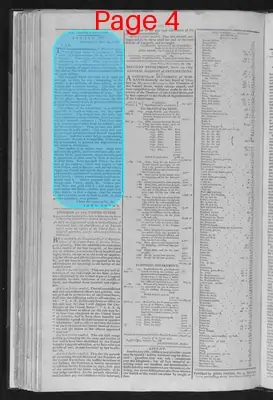
Literary
November 28, 1789
Gazette Of The United States
New York, New York County, New York
What is this article about?
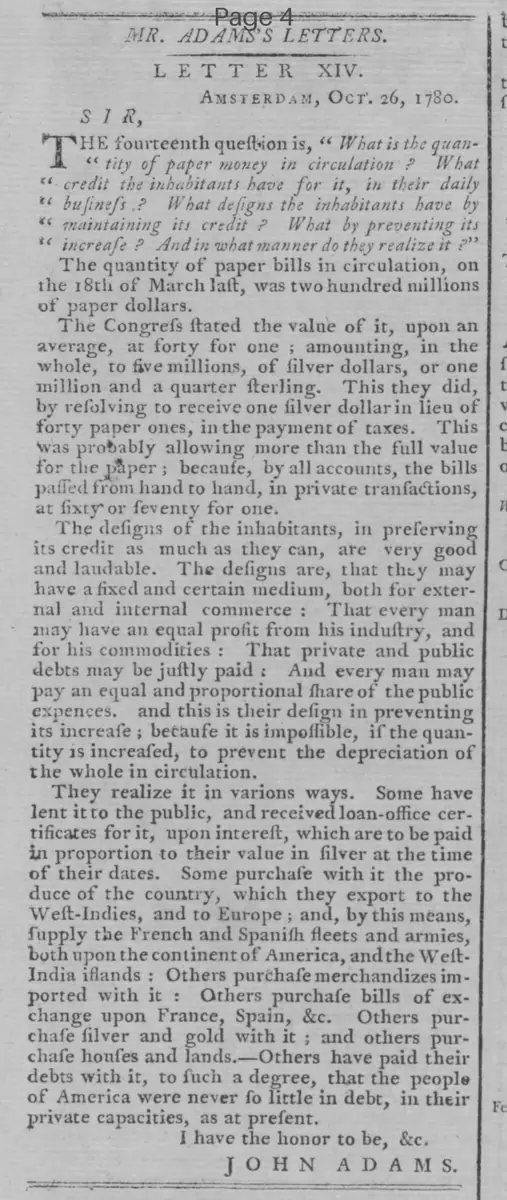
In Letter XIV from Amsterdam dated Oct. 26, 1780, John Adams addresses the quantity of paper money in American circulation (200 million paper dollars, valued at 40:1 in silver by Congress, higher depreciation in private trade), the inhabitants' aims in upholding its credit for stable commerce and fair payments, reasons to limit increase to avoid depreciation, and ways to realize it via loans, exports, purchases, and debt repayment.
Clipping
OCR Quality
95%
Excellent
Full Text
MR. ADAMS'S LETTERS
LETTER XIV.
Amsterdam, Oct. 26, 1780.
SIR,
The fourteenth question is, "What is the quantity of paper money in circulation? What credit the inhabitants have for it, in their daily business? What designs the inhabitants have by maintaining its credit? What by preventing its increase? And in what manner do they realize it?"
The quantity of paper bills in circulation, on the 18th of March last, was two hundred millions of paper dollars.
The Congress stated the value of it, upon an average, at forty for one; amounting, in the whole, to five millions of silver dollars, or one million and a quarter sterling. This they did, by resolving to receive one silver dollar in lieu of forty paper ones, in the payment of taxes. This was probably allowing more than the full value for the paper; because, by all accounts, the bills passed from hand to hand, in private transactions, at sixty or seventy for one.
The designs of the inhabitants, in preserving its credit as much as they can, are very good and laudable. The designs are, that they may have a fixed and certain medium, both for external and internal commerce: That every man may have an equal profit from his industry, and for his commodities: That private and public debts may be justly paid: And every man may pay an equal and proportional share of the public expenses. And this is their design in preventing its increase; because it is impossible, if the quantity is increased, to prevent the depreciation of the whole in circulation.
They realize it in various ways. Some have lent it to the public, and received loan-office certificates for it, upon interest, which are to be paid in proportion to their value in silver at the time of their dates. Some purchase with it the produce of the country, which they export to the West-Indies, and to Europe; and, by this means, supply the French and Spanish fleets and armies, both upon the continent of America, and the West-India islands: Others purchase merchandizes imported with it: Others purchase bills of exchange upon France, Spain, &c. Others purchase silver and gold with it; and others purchase houses and lands.—Others have paid their debts with it, to such a degree, that the people of America were never so little in debt, in their private capacities, as at present.
I have the honor to be, &c.
JOHN ADAMS.
LETTER XIV.
Amsterdam, Oct. 26, 1780.
SIR,
The fourteenth question is, "What is the quantity of paper money in circulation? What credit the inhabitants have for it, in their daily business? What designs the inhabitants have by maintaining its credit? What by preventing its increase? And in what manner do they realize it?"
The quantity of paper bills in circulation, on the 18th of March last, was two hundred millions of paper dollars.
The Congress stated the value of it, upon an average, at forty for one; amounting, in the whole, to five millions of silver dollars, or one million and a quarter sterling. This they did, by resolving to receive one silver dollar in lieu of forty paper ones, in the payment of taxes. This was probably allowing more than the full value for the paper; because, by all accounts, the bills passed from hand to hand, in private transactions, at sixty or seventy for one.
The designs of the inhabitants, in preserving its credit as much as they can, are very good and laudable. The designs are, that they may have a fixed and certain medium, both for external and internal commerce: That every man may have an equal profit from his industry, and for his commodities: That private and public debts may be justly paid: And every man may pay an equal and proportional share of the public expenses. And this is their design in preventing its increase; because it is impossible, if the quantity is increased, to prevent the depreciation of the whole in circulation.
They realize it in various ways. Some have lent it to the public, and received loan-office certificates for it, upon interest, which are to be paid in proportion to their value in silver at the time of their dates. Some purchase with it the produce of the country, which they export to the West-Indies, and to Europe; and, by this means, supply the French and Spanish fleets and armies, both upon the continent of America, and the West-India islands: Others purchase merchandizes imported with it: Others purchase bills of exchange upon France, Spain, &c. Others purchase silver and gold with it; and others purchase houses and lands.—Others have paid their debts with it, to such a degree, that the people of America were never so little in debt, in their private capacities, as at present.
I have the honor to be, &c.
JOHN ADAMS.
What sub-type of article is it?
Epistolary
Essay
What themes does it cover?
Commerce Trade
Political
Taxation Oppression
What keywords are associated?
Paper Money
Depreciation
Congress
Commerce
Taxes
Exports
Debts
Revolution
What entities or persons were involved?
John Adams
Literary Details
Title
Letter Xiv.
Author
John Adams
Subject
On The Quantity And Credit Of Paper Money In Circulation
Key Lines
The Quantity Of Paper Bills In Circulation, On The 18th Of March Last, Was Two Hundred Millions Of Paper Dollars.
The Congress Stated The Value Of It, Upon An Average, At Forty For One; Amounting, In The Whole, To Five Millions Of Silver Dollars, Or One Million And A Quarter Sterling.
The Designs Of The Inhabitants, In Preserving Its Credit As Much As They Can, Are Very Good And Laudable.
They Realize It In Various Ways. Some Have Lent It To The Public... Others Have Paid Their Debts With It, To Such A Degree, That The People Of America Were Never So Little In Debt, In Their Private Capacities, As At Present.