Thank you for visiting SNEWPapers!
Sign up free
Literary
September 5, 1879
Springfield Weekly Republican
Springfield, Hampden County, Massachusetts
What is this article about?
Summary of Prof. Langley's lecture on solar science, covering history of study since 1830, sunspots, photography advancements, atmospheric effects on Earth, and future predictions for weather and harvests.
Clipping
OCR Quality
95%
Excellent
Full Text
Interesting Facts Concerning the Sun.
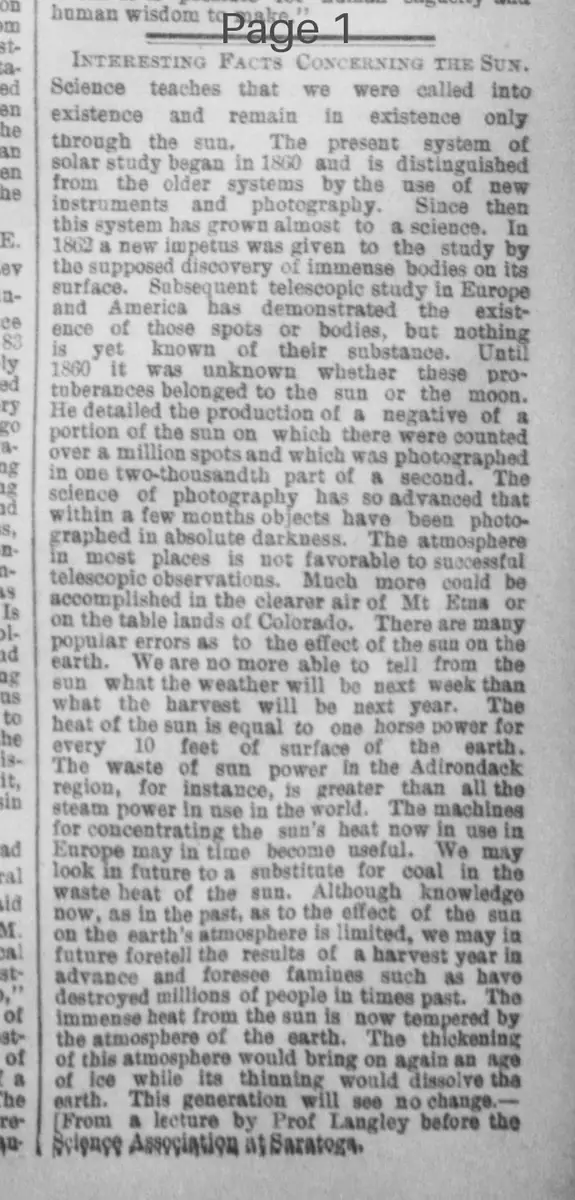
Science teaches that we were called into existence and remain in existence only through the sun. The present system of solar study began in 1830 and is distinguished from the older systems by the use of new instruments and photography. Since then this system has grown almost to a science. In 1872 a new impetus was given to the study by the supposed discovery of immense bodies on its surface. Subsequent telescopic study in Europe and America has demonstrated the existence of those spots or bodies, but nothing is yet known of their substance. Until 1850 it was unknown whether these protuberances belonged to the sun or the moon. He detailed the production of a negative of a portion of the sun on which there were counted over a million spots and which was photographed in one two-thousandth part of a second. The science of photography has so advanced that within a few months objects have been photographed in absolute darkness. The atmosphere in most places is not favorable to successful telescopic observations. Much more could be accomplished in the clearer air of Mt. Etna or on the table lands of Colorado. There are many popular errors as to the effect of the sun on the earth. We are no more able to tell from the sun what the weather will be next week than what the harvest will be next year. The heat of the sun is equal to one horse power for every 10 feet of surface of the earth. The waste of sun power in the Adirondack region, for instance, is greater than all the steam power in use in the world. The machines for concentrating the sun's heat now in use in Europe may in time become useful. We may look in future to a substitute for coal in the waste heat of the sun. Although knowledge now, as in the past, as to the effect of the sun on the earth's atmosphere is limited, we may in future foretell the results of a harvest year in advance and foresee famines such as have destroyed millions of people in times past. The immense heat from the sun is now tempered by the atmosphere of the earth. The thickening of this atmosphere would bring on again an age of ice while its thinning would dissolve the earth. This generation will see no change.
[From a lecture by Prof. Langley before the Science Association at Saratoga.]
Science teaches that we were called into existence and remain in existence only through the sun. The present system of solar study began in 1830 and is distinguished from the older systems by the use of new instruments and photography. Since then this system has grown almost to a science. In 1872 a new impetus was given to the study by the supposed discovery of immense bodies on its surface. Subsequent telescopic study in Europe and America has demonstrated the existence of those spots or bodies, but nothing is yet known of their substance. Until 1850 it was unknown whether these protuberances belonged to the sun or the moon. He detailed the production of a negative of a portion of the sun on which there were counted over a million spots and which was photographed in one two-thousandth part of a second. The science of photography has so advanced that within a few months objects have been photographed in absolute darkness. The atmosphere in most places is not favorable to successful telescopic observations. Much more could be accomplished in the clearer air of Mt. Etna or on the table lands of Colorado. There are many popular errors as to the effect of the sun on the earth. We are no more able to tell from the sun what the weather will be next week than what the harvest will be next year. The heat of the sun is equal to one horse power for every 10 feet of surface of the earth. The waste of sun power in the Adirondack region, for instance, is greater than all the steam power in use in the world. The machines for concentrating the sun's heat now in use in Europe may in time become useful. We may look in future to a substitute for coal in the waste heat of the sun. Although knowledge now, as in the past, as to the effect of the sun on the earth's atmosphere is limited, we may in future foretell the results of a harvest year in advance and foresee famines such as have destroyed millions of people in times past. The immense heat from the sun is now tempered by the atmosphere of the earth. The thickening of this atmosphere would bring on again an age of ice while its thinning would dissolve the earth. This generation will see no change.
[From a lecture by Prof. Langley before the Science Association at Saratoga.]
What sub-type of article is it?
Essay
What themes does it cover?
Nature
What keywords are associated?
Solar Study
Sunspots
Photography
Atmosphere
Sun Heat
Harvest Prediction
What entities or persons were involved?
Prof. Langley
Literary Details
Title
Interesting Facts Concerning The Sun.
Author
Prof. Langley
Subject
Lecture On Solar Science And Its Effects On Earth
Key Lines
Science Teaches That We Were Called Into Existence And Remain In Existence Only Through The Sun.
The Heat Of The Sun Is Equal To One Horse Power For Every 10 Feet Of Surface Of The Earth.
We May Look In Future To A Substitute For Coal In The Waste Heat Of The Sun.
The Thickening Of This Atmosphere Would Bring On Again An Age Of Ice While Its Thinning Would Dissolve The Earth.