Thank you for visiting SNEWPapers!
Sign up free
Literary
July 11, 1933
Henderson Daily Dispatch
Henderson, Vance County, North Carolina
What is this article about?
In this romantic narrative, Rickey returns devastated after Marty jilts him just before their secret wedding. Back home, he discovers Virginia has refined his manuscript 'Burning Beauty' into a promising book but claims ownership and refuses editor Michael's advance, amid emotional turmoil.
Clipping
OCR Quality
98%
Excellent
Full Text
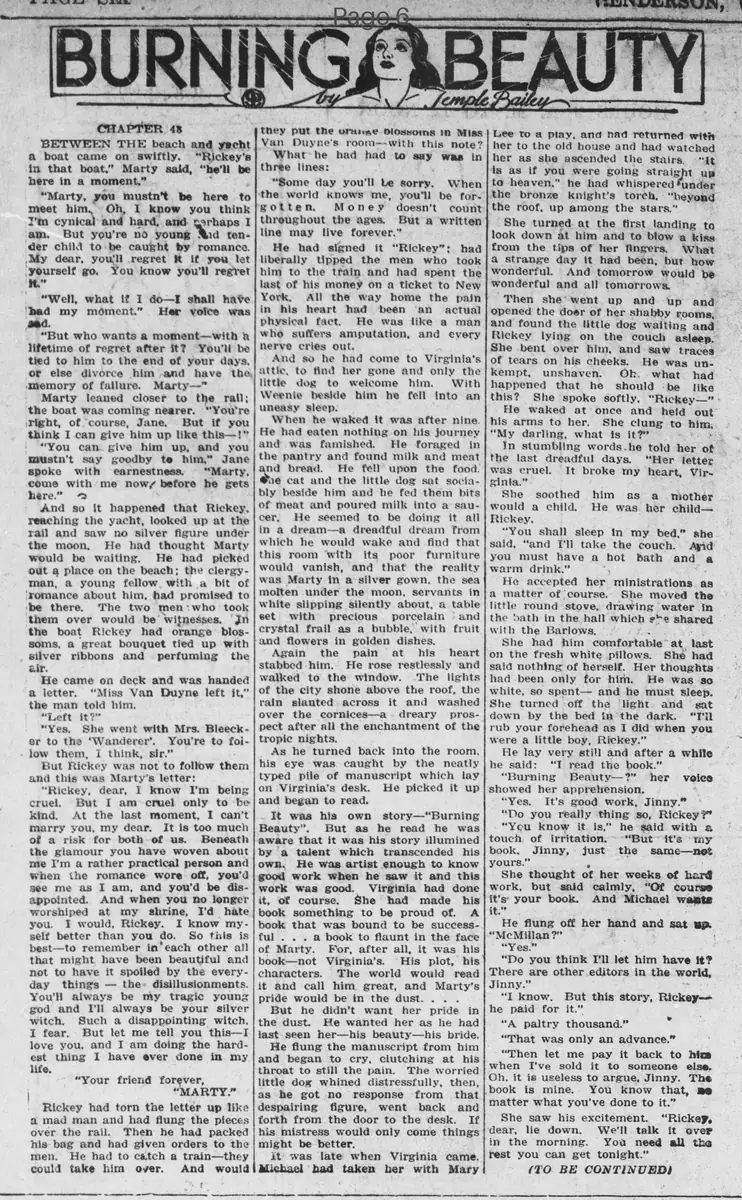
BURNING BEAUTY
BETWEEN THE beach and yacht a boat came on swiftly. "Rickey's in that boat," Marty said, "he'll be here in a moment."
Marty, you mustn't be here to meet him. Oh, I know you think I'm cynical and hard, and perhaps I am. But you're no young innocent child to be caught by romance. My dear, you'll regret it if you let yourself go. You know you'll regret it."
"Well, what if I do—I shall have had my moment." Her voice was sad.
But who wants a moment—with a lifetime of regret after it? You'll be tied to him to the end of your days, or else divorce him and have the memory of failure. Marty—"
Marty leaned closer to the rail; the boat was coming nearer. "You're right, of course, Jane. But if you think I can give him up like this—!"
"You can give him up, and you mustn't say goodbye to him," Jane spoke with earnestness. "Marty, come with me now, before he gets here."
And so it happened that Rickey reaching the yacht, looked up at the rail and saw no silver figure under the moon. He had thought Marty would be waiting. He had picked out a place on the beach: the clergyman, a young fellow with a bit of romance about him, had promised to be there. The two men who took them over would be witnesses. In the boat Rickey had orange blossoms, a great bouquet tied up with silver ribbons and perfuming the air.
He came on deck and was handed a letter.
"Miss Van Duyne left it," the man told him.
"Left it?"
"Yes. She went with Mrs. Bleecker to the Wanderer. You're to follow them, I think, sir."
But Rickey was not to follow them and this was Marty's letter:
"Rickey, dear, I know I'm being cruel. But I am cruel only to be kind. At the last moment, I can't marry you, my dear. It is too much of a risk for both of us. Beneath the glamour you have woven about me I'm a rather practical person and when the romance wore off, you'd see me as I am, and you'd be disappointed. And when you no longer worshiped at my shrine, I'd hate you. I would, Rickey. I know myself better than you do. So this is best—to remember in each other all that might have been beautiful and not to have it spoiled by the everyday things—the disillusionments. You'll always be my tragic young god and I'll always be your silver witch. Such a disappointing witch, I fear. But let me tell you this—I love you, and I am doing the hardest thing I have ever done in my life."
"Your friend forever,
"MARTY."
Rickey had torn the letter up like a mad man and had flung the pieces over the rail. Then he had packed his bag and had given orders to the men. He had to catch a train—they could take him over. And would they put the orange blossoms in Miss Van Duyne's room—with this note?
What he had had to say was in three lines:
"Some day you'll be sorry. When the world knows me, you'll be forgotten. Money doesn't count throughout the ages. But a written line may live forever."
He had signed it "Rickey"; had liberally tipped the men who took him to the train and had spent the last of his money on a ticket to New York. All the way home the pain in his heart had been an actual physical fact. He was like a man who suffers amputation, and every nerve cries out.
And so he had come to Virginia's attic, to find her gone and only the little dog to welcome him. With Weenie beside him he fell into an uneasy sleep.
When he waked it was after nine. He had eaten nothing on his journey and was famished. He foraged in the pantry and found milk and meat and bread. He fell upon the food like a cat and the little dog sat sociably beside him and he fed them bits of meat and poured milk into a saucer. He seemed to be doing it all in a dream—a dreadful dream from which he would wake and find that this room with its poor furniture would vanish, and that the reality was Marty in a silver gown, the sea molten under the moon, servants in white slipping silently about, a table set with precious porcelain and crystal frail as a bubble, with fruit and flowers in golden dishes.
Again the pain at his heart stabbed him. He rose restlessly and walked to the window. The lights of the city shone above the roof, the rain slanted across it and washed over the cornices—a dreary prospect after all the enchantment of the tropic nights.
As he turned back into the room, his eye was caught by the neatly typed pile of manuscript which lay on Virginia's desk. He picked it up and began to read.
It was his own story—"Burning Beauty". But as he read he was aware that it was his story illumined by a talent which transcended his own. He was artist enough to know good work when he saw it and this work was good. Virginia had done it, of course. She had made his book something to be proud of. A book that was bound to be successful... a book to flaunt in the face of Marty. For, after all, it was his book—not Virginia's. His plot, his characters. The world would read it and call him great, and Marty's pride would be in the dust....
But he didn't want her pride in the dust. He wanted her as he had last seen her—his beauty—his bride.
He flung the manuscript from him and began to cry, clutching at his throat to still the pain. The worried little dog whined distressfully, then, as he got no response from that despairing figure, went back and forth from the door to the desk. If his mistress would only come things might be better.
It was late when Virginia came. Michael had taken her with Mary Lee to a play, and had returned with her to the old house and had watched her as she ascended the stairs. "It is as if you were going straight up to heaven," he had whispered under the bronze knight's torch. "Beyond the roof, up among the stars."
She turned at the first landing to look down at him and to blow a kiss from the tips of her fingers. What a strange day it had been, but how wonderful. And tomorrow would be wonderful and all tomorrows.
Then she went up and up and opened the door of her shabby rooms, and found the little dog waiting and Rickey lying on the couch asleep.
She bent over him, and saw traces of tears on his cheeks. He was unkempt, unshaven. Oh, what had happened that he should be like this? She spoke softly. "Rickey—"
He waked at once and held out his arms to her. She clung to him.
"My darling, what is it?"
In stumbling words he told her of the last dreadful days. "Her letter was cruel. It broke my heart, Virginia."
She soothed him as a mother would a child. He was her child—Rickey.
"You shall sleep in my bed," she said, "and I'll take the couch. And you must have a hot bath and a warm drink."
He accepted her ministrations as a matter of course. She moved the little round stove, drawing water in the bath in the hall which she shared with the Barlows.
She had him comfortable at last on the fresh white pillows. She had said nothing of herself. Her thoughts had been only for him. He was so white, so spent—and he must sleep.
She turned off the light and sat down by the bed in the dark. "I'll rub your forehead as I did when you were a little boy, Rickey."
He lay very still and after a while he said: "I read the book."
"Burning Beauty—?" her voice showed her apprehension.
"Yes. It's good work, Jinny."
"Do you really think so, Rickey?"
"You know it is," he said with a touch of irritation. "But it's my book, Jinny, just the same—not yours."
She thought of her weeks of hard work, but said calmly, "Of course it's your book. And Michael wants it."
He flung off her hand and sat up.
"McMillan?"
"Yes."
"Do you think I'll let him have it? There are other editors in the world, Jinny."
"I know. But this story, Rickey—he paid for it."
"A paltry thousand."
"That was only an advance."
"Then let me pay it back to him when I've sold it to someone else. Oh, it is useless to argue, Jinny. The book is mine. You know that, no matter what you've done to it."
She saw his excitement. "Rickey dear, lie down. We'll talk it over in the morning. You need all the rest you can get tonight."
(TO BE CONTINUED)
BETWEEN THE beach and yacht a boat came on swiftly. "Rickey's in that boat," Marty said, "he'll be here in a moment."
Marty, you mustn't be here to meet him. Oh, I know you think I'm cynical and hard, and perhaps I am. But you're no young innocent child to be caught by romance. My dear, you'll regret it if you let yourself go. You know you'll regret it."
"Well, what if I do—I shall have had my moment." Her voice was sad.
But who wants a moment—with a lifetime of regret after it? You'll be tied to him to the end of your days, or else divorce him and have the memory of failure. Marty—"
Marty leaned closer to the rail; the boat was coming nearer. "You're right, of course, Jane. But if you think I can give him up like this—!"
"You can give him up, and you mustn't say goodbye to him," Jane spoke with earnestness. "Marty, come with me now, before he gets here."
And so it happened that Rickey reaching the yacht, looked up at the rail and saw no silver figure under the moon. He had thought Marty would be waiting. He had picked out a place on the beach: the clergyman, a young fellow with a bit of romance about him, had promised to be there. The two men who took them over would be witnesses. In the boat Rickey had orange blossoms, a great bouquet tied up with silver ribbons and perfuming the air.
He came on deck and was handed a letter.
"Miss Van Duyne left it," the man told him.
"Left it?"
"Yes. She went with Mrs. Bleecker to the Wanderer. You're to follow them, I think, sir."
But Rickey was not to follow them and this was Marty's letter:
"Rickey, dear, I know I'm being cruel. But I am cruel only to be kind. At the last moment, I can't marry you, my dear. It is too much of a risk for both of us. Beneath the glamour you have woven about me I'm a rather practical person and when the romance wore off, you'd see me as I am, and you'd be disappointed. And when you no longer worshiped at my shrine, I'd hate you. I would, Rickey. I know myself better than you do. So this is best—to remember in each other all that might have been beautiful and not to have it spoiled by the everyday things—the disillusionments. You'll always be my tragic young god and I'll always be your silver witch. Such a disappointing witch, I fear. But let me tell you this—I love you, and I am doing the hardest thing I have ever done in my life."
"Your friend forever,
"MARTY."
Rickey had torn the letter up like a mad man and had flung the pieces over the rail. Then he had packed his bag and had given orders to the men. He had to catch a train—they could take him over. And would they put the orange blossoms in Miss Van Duyne's room—with this note?
What he had had to say was in three lines:
"Some day you'll be sorry. When the world knows me, you'll be forgotten. Money doesn't count throughout the ages. But a written line may live forever."
He had signed it "Rickey"; had liberally tipped the men who took him to the train and had spent the last of his money on a ticket to New York. All the way home the pain in his heart had been an actual physical fact. He was like a man who suffers amputation, and every nerve cries out.
And so he had come to Virginia's attic, to find her gone and only the little dog to welcome him. With Weenie beside him he fell into an uneasy sleep.
When he waked it was after nine. He had eaten nothing on his journey and was famished. He foraged in the pantry and found milk and meat and bread. He fell upon the food like a cat and the little dog sat sociably beside him and he fed them bits of meat and poured milk into a saucer. He seemed to be doing it all in a dream—a dreadful dream from which he would wake and find that this room with its poor furniture would vanish, and that the reality was Marty in a silver gown, the sea molten under the moon, servants in white slipping silently about, a table set with precious porcelain and crystal frail as a bubble, with fruit and flowers in golden dishes.
Again the pain at his heart stabbed him. He rose restlessly and walked to the window. The lights of the city shone above the roof, the rain slanted across it and washed over the cornices—a dreary prospect after all the enchantment of the tropic nights.
As he turned back into the room, his eye was caught by the neatly typed pile of manuscript which lay on Virginia's desk. He picked it up and began to read.
It was his own story—"Burning Beauty". But as he read he was aware that it was his story illumined by a talent which transcended his own. He was artist enough to know good work when he saw it and this work was good. Virginia had done it, of course. She had made his book something to be proud of. A book that was bound to be successful... a book to flaunt in the face of Marty. For, after all, it was his book—not Virginia's. His plot, his characters. The world would read it and call him great, and Marty's pride would be in the dust....
But he didn't want her pride in the dust. He wanted her as he had last seen her—his beauty—his bride.
He flung the manuscript from him and began to cry, clutching at his throat to still the pain. The worried little dog whined distressfully, then, as he got no response from that despairing figure, went back and forth from the door to the desk. If his mistress would only come things might be better.
It was late when Virginia came. Michael had taken her with Mary Lee to a play, and had returned with her to the old house and had watched her as she ascended the stairs. "It is as if you were going straight up to heaven," he had whispered under the bronze knight's torch. "Beyond the roof, up among the stars."
She turned at the first landing to look down at him and to blow a kiss from the tips of her fingers. What a strange day it had been, but how wonderful. And tomorrow would be wonderful and all tomorrows.
Then she went up and up and opened the door of her shabby rooms, and found the little dog waiting and Rickey lying on the couch asleep.
She bent over him, and saw traces of tears on his cheeks. He was unkempt, unshaven. Oh, what had happened that he should be like this? She spoke softly. "Rickey—"
He waked at once and held out his arms to her. She clung to him.
"My darling, what is it?"
In stumbling words he told her of the last dreadful days. "Her letter was cruel. It broke my heart, Virginia."
She soothed him as a mother would a child. He was her child—Rickey.
"You shall sleep in my bed," she said, "and I'll take the couch. And you must have a hot bath and a warm drink."
He accepted her ministrations as a matter of course. She moved the little round stove, drawing water in the bath in the hall which she shared with the Barlows.
She had him comfortable at last on the fresh white pillows. She had said nothing of herself. Her thoughts had been only for him. He was so white, so spent—and he must sleep.
She turned off the light and sat down by the bed in the dark. "I'll rub your forehead as I did when you were a little boy, Rickey."
He lay very still and after a while he said: "I read the book."
"Burning Beauty—?" her voice showed her apprehension.
"Yes. It's good work, Jinny."
"Do you really think so, Rickey?"
"You know it is," he said with a touch of irritation. "But it's my book, Jinny, just the same—not yours."
She thought of her weeks of hard work, but said calmly, "Of course it's your book. And Michael wants it."
He flung off her hand and sat up.
"McMillan?"
"Yes."
"Do you think I'll let him have it? There are other editors in the world, Jinny."
"I know. But this story, Rickey—he paid for it."
"A paltry thousand."
"That was only an advance."
"Then let me pay it back to him when I've sold it to someone else. Oh, it is useless to argue, Jinny. The book is mine. You know that, no matter what you've done to it."
She saw his excitement. "Rickey dear, lie down. We'll talk it over in the morning. You need all the rest you can get tonight."
(TO BE CONTINUED)
What sub-type of article is it?
Prose Fiction
What themes does it cover?
Love Romance
What keywords are associated?
Romance
Heartbreak
Elopement
Manuscript
Rejection
Literary Details
Title
Burning Beauty
Key Lines
"Rickey, Dear, I Know I'm Being Cruel. But I Am Cruel Only To Be Kind. At The Last Moment, I Can't Marry You, My Dear. It Is Too Much Of A Risk For Both Of Us."
"Some Day You'll Be Sorry. When The World Knows Me, You'll Be Forgotten. Money Doesn't Count Throughout The Ages. But A Written Line May Live Forever."
"You Know It Is," He Said With A Touch Of Irritation. "But It's My Book, Jinny, Just The Same—Not Yours."