Thank you for visiting SNEWPapers!
Sign up free
Literary
January 25, 1827
The Rhode Island Republican
Newport, Newport County, Rhode Island
What is this article about?
A philosophical essay praising virtue as essential for moral integrity, protection from vice, personal happiness, social good, and preparation for death and eternal reward, contrasting the virtuous life with one of corruption and fear.
Clipping
OCR Quality
95%
Excellent
Full Text
MISCELLANY.
VIRTUE
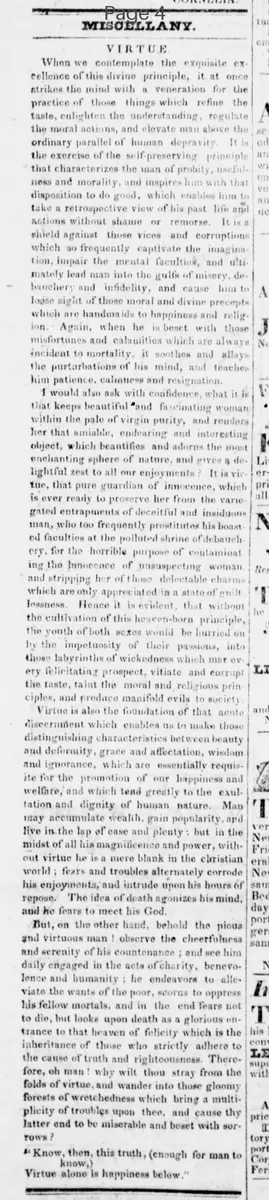
When we contemplate the exquisite excellence of this divine principle, it at once strikes the mind with a veneration for the practice of those things which refine the taste, enlighten the understanding, regulate the moral actions, and elevate man above the ordinary parallel of human depravity. It is the exercise of the self-preserving principle that characterizes the man of probity, usefulness and morality, and inspires him with that disposition to do good, which enables him to take a retrospective view of his past life and actions without shame or remorse. It is a shield against those vices and corruptions which so frequently captivate the imagination, impair the mental faculties, and ultimately lead man into the gulfs of misery, debauchery and infidelity, and cause him to lose sight of those moral and divine precepts which are handmaids to happiness and religion. Again, when he is beset with those misfortunes and calamities which are always incident to mortality, it soothes and allays the perturbations of his mind, and teaches him patience, calmness and resignation.
I would also ask with confidence, what it is that keeps beautiful and fascinating woman within the pale of virgin purity, and renders her that amiable, endearing and interesting object, which beautifies and adorns the most enchanting sphere of nature, and gives a delightful zest to all our enjoyments? It is virtue, that pure guardian of innocence, which is ever ready to preserve her from the variegated entrapments of deceitful and insidious man, who too frequently prostitutes his boasted faculties at the polluted shrine of debauchery, for the horrible purpose of contaminating the innocence of unsuspecting woman and stripping her of those delectable charms which are only appreciated in a state of guiltlessness. Hence it is evident, that without the cultivation of this heaven-born principle, the youth of both sexes would be hurried on by the impetuosity of their passions, into those labyrinths of wickedness which mar every felicitating prospect, vitiate and corrupt the taste, taint the moral and religious principles, and produce manifold evils to society.
Virtue is also the foundation of that acute discernment which enables us to make those distinguishing characteristics between beauty and deformity, grace and affectation, wisdom and ignorance, which are essentially requisite for the promotion of our happiness and welfare, and which tend greatly to the exaltation and dignity of human nature. Man may accumulate wealth, gain popularity, and live in the lap of ease and plenty: but in the midst of all his magnificence and power, without virtue he is a mere blank in the Christian world: fears and troubles alternately corrode his enjoyments, and intrude upon his hours of repose. The idea of death agonizes his mind, and he fears to meet his God.
But, on the other hand, behold the pious and virtuous man! observe the cheerfulness and serenity of his countenance; and see him daily engaged in the acts of charity, benevolence and humanity: he endeavors to alleviate the wants of the poor, scorns to oppress his fellow mortals, and in the end fears not to die, but looks upon death as a glorious entrance to that heaven of felicity which is the inheritance of those who strictly adhere to the cause of truth and righteousness. Therefore, oh man! why wilt thou stray from the folds of virtue, and wander into those gloomy forests of wretchedness which bring a multiplicity of troubles upon thee, and cause thy latter end to be miserable and beset with sorrows?
"Know, then, this truth, (enough for man to know,)
Virtue alone is happiness below."
VIRTUE
When we contemplate the exquisite excellence of this divine principle, it at once strikes the mind with a veneration for the practice of those things which refine the taste, enlighten the understanding, regulate the moral actions, and elevate man above the ordinary parallel of human depravity. It is the exercise of the self-preserving principle that characterizes the man of probity, usefulness and morality, and inspires him with that disposition to do good, which enables him to take a retrospective view of his past life and actions without shame or remorse. It is a shield against those vices and corruptions which so frequently captivate the imagination, impair the mental faculties, and ultimately lead man into the gulfs of misery, debauchery and infidelity, and cause him to lose sight of those moral and divine precepts which are handmaids to happiness and religion. Again, when he is beset with those misfortunes and calamities which are always incident to mortality, it soothes and allays the perturbations of his mind, and teaches him patience, calmness and resignation.
I would also ask with confidence, what it is that keeps beautiful and fascinating woman within the pale of virgin purity, and renders her that amiable, endearing and interesting object, which beautifies and adorns the most enchanting sphere of nature, and gives a delightful zest to all our enjoyments? It is virtue, that pure guardian of innocence, which is ever ready to preserve her from the variegated entrapments of deceitful and insidious man, who too frequently prostitutes his boasted faculties at the polluted shrine of debauchery, for the horrible purpose of contaminating the innocence of unsuspecting woman and stripping her of those delectable charms which are only appreciated in a state of guiltlessness. Hence it is evident, that without the cultivation of this heaven-born principle, the youth of both sexes would be hurried on by the impetuosity of their passions, into those labyrinths of wickedness which mar every felicitating prospect, vitiate and corrupt the taste, taint the moral and religious principles, and produce manifold evils to society.
Virtue is also the foundation of that acute discernment which enables us to make those distinguishing characteristics between beauty and deformity, grace and affectation, wisdom and ignorance, which are essentially requisite for the promotion of our happiness and welfare, and which tend greatly to the exaltation and dignity of human nature. Man may accumulate wealth, gain popularity, and live in the lap of ease and plenty: but in the midst of all his magnificence and power, without virtue he is a mere blank in the Christian world: fears and troubles alternately corrode his enjoyments, and intrude upon his hours of repose. The idea of death agonizes his mind, and he fears to meet his God.
But, on the other hand, behold the pious and virtuous man! observe the cheerfulness and serenity of his countenance; and see him daily engaged in the acts of charity, benevolence and humanity: he endeavors to alleviate the wants of the poor, scorns to oppress his fellow mortals, and in the end fears not to die, but looks upon death as a glorious entrance to that heaven of felicity which is the inheritance of those who strictly adhere to the cause of truth and righteousness. Therefore, oh man! why wilt thou stray from the folds of virtue, and wander into those gloomy forests of wretchedness which bring a multiplicity of troubles upon thee, and cause thy latter end to be miserable and beset with sorrows?
"Know, then, this truth, (enough for man to know,)
Virtue alone is happiness below."
What sub-type of article is it?
Essay
What themes does it cover?
Moral Virtue
Religious
What keywords are associated?
Virtue
Morality
Happiness
Debauchery
Religion
Charity
Piety
Literary Details
Title
Virtue
Form / Style
Prose Reflection On Moral Excellence
Key Lines
It Is The Exercise Of The Self Preserving Principle That Characterizes The Man Of Probity, Usefulness And Morality, And Inspires Him With That Disposition To Do Good, Which Enables Him To Take A Retrospective View Of His Past Life And Actions Without Shame Or Remorse.
It Is Virtue, That Pure Guardian Of Innocence, Which Is Ever Ready To Preserve Her From The Variegated Entrapments Of Deceitful And Insidious Man, Who Too Frequently Prostitutes His Boasted Faculties At The Polluted Shrine Of Debauchery, For The Horrible Purpose Of Contaminating The Innocence Of Unsuspecting Woman And Stripping Her Of Those Delectable Charms Which Are Only Appreciated In A State Of Guiltlessness.
Virtue Is Also The Foundation Of That Acute Discernment Which Enables Us To Make Those Distinguishing Characteristics Between Beauty And Deformity, Grace And Affectation, Wisdom And Ignorance, Which Are Essentially Requisite For The Promotion Of Our Happiness And Welfare, And Which Tend Greatly To The Exaltation And Dignity Of Human Nature.
But, On The Other Hand, Behold The Pious And Virtuous Man! Observe The Cheerfulness And Serenity Of His Countenance; And See Him Daily Engaged In The Acts Of Charity, Benevolence And Humanity: He Endeavors To Alleviate The Wants Of The Poor, Scorns To Oppress His Fellow Mortals, And In The End Fears Not To Die, But Looks Upon Death As A Glorious Entrance To That Heaven Of Felicity Which Is The Inheritance Of Those Who Strictly Adhere To The Cause Of Truth And Righteousness.
"Know, Then, This Truth, (Enough For Man To Know,)
Virtue Alone Is Happiness Below."