Thank you for visiting SNEWPapers!
Sign up free
Literary
October 29, 1815
Virginia Argus
Richmond, Virginia
What is this article about?
Historical essay on English fashions during Queens Mary and Elizabeth's reigns, focusing on oversized square-toed shoes, proclamation limits, stuffed breeches with anecdotes of legal excuses and parliamentary scaffolds, plus a quote from the 1607 play Lingua on women's attire.
Clipping
OCR Quality
98%
Excellent
Full Text
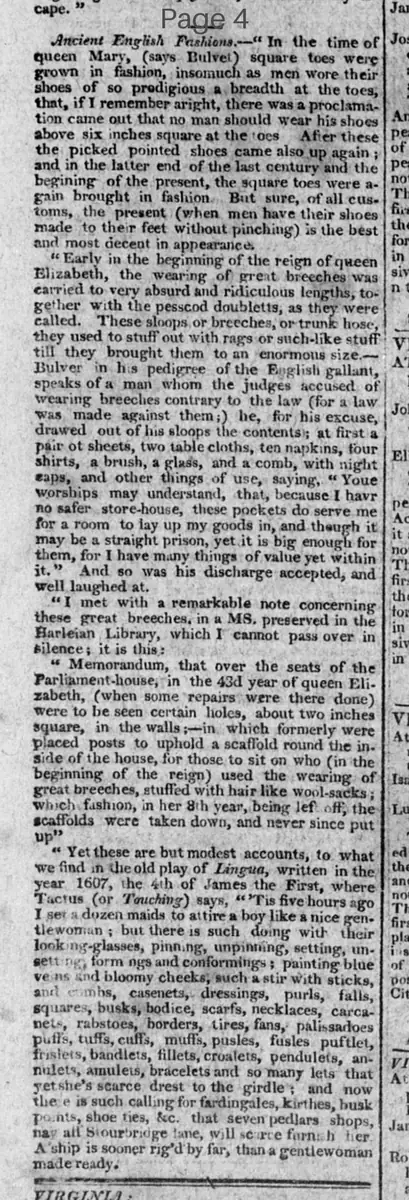
Ancient English Fashions.—In the time of queen Mary, (says Bulwer) square toes were grown in fashion, insomuch as men wore their shoes of so prodigious a breadth at the toes, that, if I remember aright, there was a proclamation came out that no man should wear his shoes above six inches square at the toes. After these the picked pointed shoes came also up again; and in the latter end of the last century and the beginning of the present, the square toes were again brought in fashion. But sure, of all customs, the present (when men have their shoes made to their feet without pinching) is the best and most decent in appearance.
Early in the beginning of the reign of queen Elizabeth, the wearing of great breeches was carried to very absurd and ridiculous lengths, together with the peascod doublets, as they were called. These slops or breeches, or trunk hose, they used to stuff out with rags or such-like stuff till they brought them to an enormous size.—Bulwer in his pedigree of the English gallant, speaks of a man whom the judges accused of wearing breeches contrary to the law (for a law was made against them;) he, for his excuse, drawed out of his slops the contents; at first a pair of sheets, two table cloths, ten napkins, four shirts, a brush, a glass, and a comb, with night caps, and other things of use, saying, "Your worships may understand, that, because I have no safer store-house, these pockets do serve me for a room to lay up my goods in, and though it may be a straight prison, yet it is big enough for them, for I have many things of value yet within it." And so was his discharge accepted, and well laughed at.
I met with a remarkable note concerning these great breeches, in a MS. preserved in the Harleian Library, which I cannot pass over in silence: it is this:
"Memorandum, that over the seats of the Parliament-house, in the 43d year of queen Elizabeth, (when some repairs were there done) were to be seen certain holes, about two inches square, in the walls;—in which formerly were placed posts to uphold a scaffold round the inside of the house, for those to sit on who (in the beginning of the reign) used the wearing of great breeches, stuffed with hair like wool-sacks; which fashion, in her 8th year, being left off, the scaffolds were taken down, and never since put up."
Yet these are but modest accounts, to what we find in the old play of Lingua, written in the year 1607, the 4th of James the First, where Tactus (or Touching) says, "'Tis five hours ago I saw a dozen maids to attire a boy like a nice gentlewoman; but there is such doing with their looking-glasses, pinning, unpinning, setting, unsettling, formings and conformings; painting blue veins and bloomy cheeks, such a stir with sticks, and combs, casenets, dressings, purls, falls, squares, busks, bodice, scarfs, necklaces, carcanets, rabstoes, borders, tires, fans, palissadoes puffs, tuffs, cuffs, muffs, pusles, fusles puftlet, frisiets, bandlets, fillets, croalets, pendulets, annulets, amulets, bracelets and so many lets that yet she's scarce drest to the girdle; and now there is such calling for fardingales, kirthes, busk points, shoe ties, &c. that seven pedlars shops, nay all Stourbridge lane, will scarce furnish her. A ship is sooner rig'd by far, than a gentlewoman made ready."
Early in the beginning of the reign of queen Elizabeth, the wearing of great breeches was carried to very absurd and ridiculous lengths, together with the peascod doublets, as they were called. These slops or breeches, or trunk hose, they used to stuff out with rags or such-like stuff till they brought them to an enormous size.—Bulwer in his pedigree of the English gallant, speaks of a man whom the judges accused of wearing breeches contrary to the law (for a law was made against them;) he, for his excuse, drawed out of his slops the contents; at first a pair of sheets, two table cloths, ten napkins, four shirts, a brush, a glass, and a comb, with night caps, and other things of use, saying, "Your worships may understand, that, because I have no safer store-house, these pockets do serve me for a room to lay up my goods in, and though it may be a straight prison, yet it is big enough for them, for I have many things of value yet within it." And so was his discharge accepted, and well laughed at.
I met with a remarkable note concerning these great breeches, in a MS. preserved in the Harleian Library, which I cannot pass over in silence: it is this:
"Memorandum, that over the seats of the Parliament-house, in the 43d year of queen Elizabeth, (when some repairs were there done) were to be seen certain holes, about two inches square, in the walls;—in which formerly were placed posts to uphold a scaffold round the inside of the house, for those to sit on who (in the beginning of the reign) used the wearing of great breeches, stuffed with hair like wool-sacks; which fashion, in her 8th year, being left off, the scaffolds were taken down, and never since put up."
Yet these are but modest accounts, to what we find in the old play of Lingua, written in the year 1607, the 4th of James the First, where Tactus (or Touching) says, "'Tis five hours ago I saw a dozen maids to attire a boy like a nice gentlewoman; but there is such doing with their looking-glasses, pinning, unpinning, setting, unsettling, formings and conformings; painting blue veins and bloomy cheeks, such a stir with sticks, and combs, casenets, dressings, purls, falls, squares, busks, bodice, scarfs, necklaces, carcanets, rabstoes, borders, tires, fans, palissadoes puffs, tuffs, cuffs, muffs, pusles, fusles puftlet, frisiets, bandlets, fillets, croalets, pendulets, annulets, amulets, bracelets and so many lets that yet she's scarce drest to the girdle; and now there is such calling for fardingales, kirthes, busk points, shoe ties, &c. that seven pedlars shops, nay all Stourbridge lane, will scarce furnish her. A ship is sooner rig'd by far, than a gentlewoman made ready."
What sub-type of article is it?
Essay
What themes does it cover?
Social Manners
What keywords are associated?
English Fashions
Queen Mary
Queen Elizabeth
Square Toes
Great Breeches
Trunk Hose
Bulwer
Harleian Library
Lingua Play
Literary Details
Title
Ancient English Fashions.
Subject
Historical English Fashions In Shoes And Breeches
Form / Style
Prose Reflection On Historical Customs
Key Lines
There Was A Proclamation Came Out That No Man Should Wear His Shoes Above Six Inches Square At The Toes.
He, For His Excuse, Drawed Out Of His Slops The Contents; At First A Pair Of Sheets, Two Table Cloths, Ten Napkins, Four Shirts, A Brush, A Glass, And A Comb, With Night Caps, And Other Things Of Use, Saying, "Your Worships May Understand, That, Because I Have No Safer Store House, These Pockets Do Serve Me For A Room To Lay Up My Goods In, And Though It May Be A Straight Prison, Yet It Is Big Enough For Them, For I Have Many Things Of Value Yet Within It."
"Memorandum, That Over The Seats Of The Parliament House, In The 43d Year Of Queen Elizabeth, (When Some Repairs Were There Done) Were To Be Seen Certain Holes, About Two Inches Square, In The Walls;"
'Tis Five Hours Ago I Saw A Dozen Maids To Attire A Boy Like A Nice Gentlewoman; But There Is Such Doing With Their Looking Glasses, Pinning, Unpinning, Setting, Unsettling, Formings And Conformings;