Thank you for visiting SNEWPapers!
Sign up free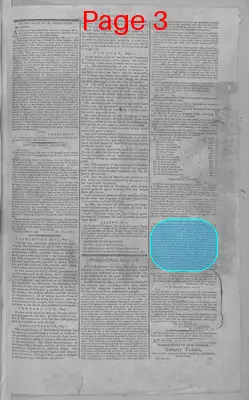
Gazette Of The United States
New York, New York County, New York
What is this article about?
Extract from Mr. Paine's pamphlet critiques Mr. Burke's view that the French Revolution targeted only King Louis XVI, arguing instead that it arose from multiple entrenched despotisms in France's government, including monarchy, parliament, church, feudal, and ministerial forms, independent of the king's character.
Clipping
OCR Quality
Full Text
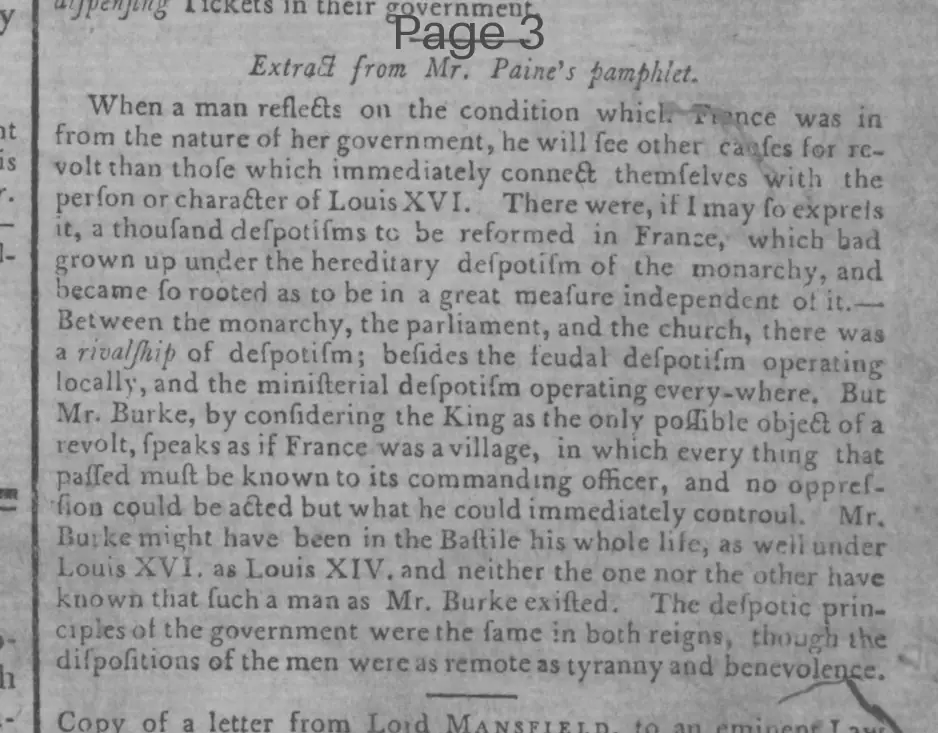
When a man reflects on the condition which France was in from the nature of her government, he will see other causes for revolt than those which immediately connect themselves with the person or character of Louis XVI. There were, if I may so express it, a thousand despotisms to be reformed in France, which had grown up under the hereditary despotism of the monarchy, and became so rooted as to be in a great measure independent of it.—Between the monarchy, the parliament, and the church, there was a rivalry of despotism; besides the feudal despotism operating locally, and the ministerial despotism operating every-where. But Mr. Burke, by considering the King as the only possible object of a revolt, speaks as if France was a village, in which every thing that passed must be known to its commanding officer, and no oppression could be acted but what he could immediately controul. Mr. Burke might have been in the Bastile his whole life, as well under Louis XVI. as Louis XIV. and neither the one nor the other have known that such a man as Mr. Burke existed. The despotic principles of the government were the same in both reigns, though the dispositions of the men were as remote as tyranny and benevolence.
What sub-type of article is it?
What keywords are associated?
What entities or persons were involved?
Where did it happen?
Foreign News Details
Primary Location
France
Key Persons
Event Details
Mr. Paine argues that the revolt in France stemmed from numerous despotisms rooted in the monarchy, including rivalries between monarchy, parliament, and church, plus feudal and ministerial despotisms, independent of Louis XVI's character. He criticizes Mr. Burke for viewing the king as the sole target of revolt, noting that oppression could occur without the king's knowledge, as exemplified by the possibility of Mr. Burke being imprisoned in the Bastile unnoticed by either Louis XVI or Louis XIV, despite similar despotic principles in both reigns.