Thank you for visiting SNEWPapers!
Sign up free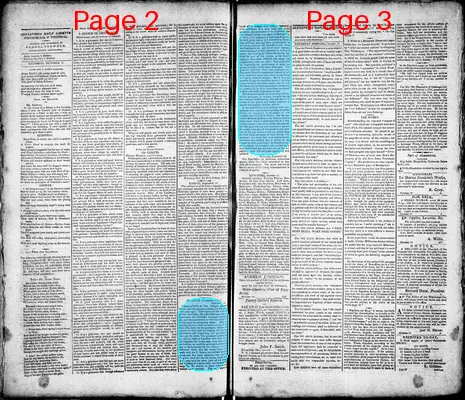
Alexandria Daily Gazette, Commercial & Political
Alexandria, Virginia
What is this article about?
In St. Louis, a delegation of Osage chiefs met with Governor Howard to discuss internal disputes and a U.S. treaty. Initially resisting land sale terms, they ultimately agreed to accept annuities and goods after deliberation, affirming the treaty's validity.
Merged-components note: Continuation of the story about Osage Indians, treaty, and council with the governor across pages, text flows directly.
Clippings
1 of 2
OCR Quality
Full Text
September 12.
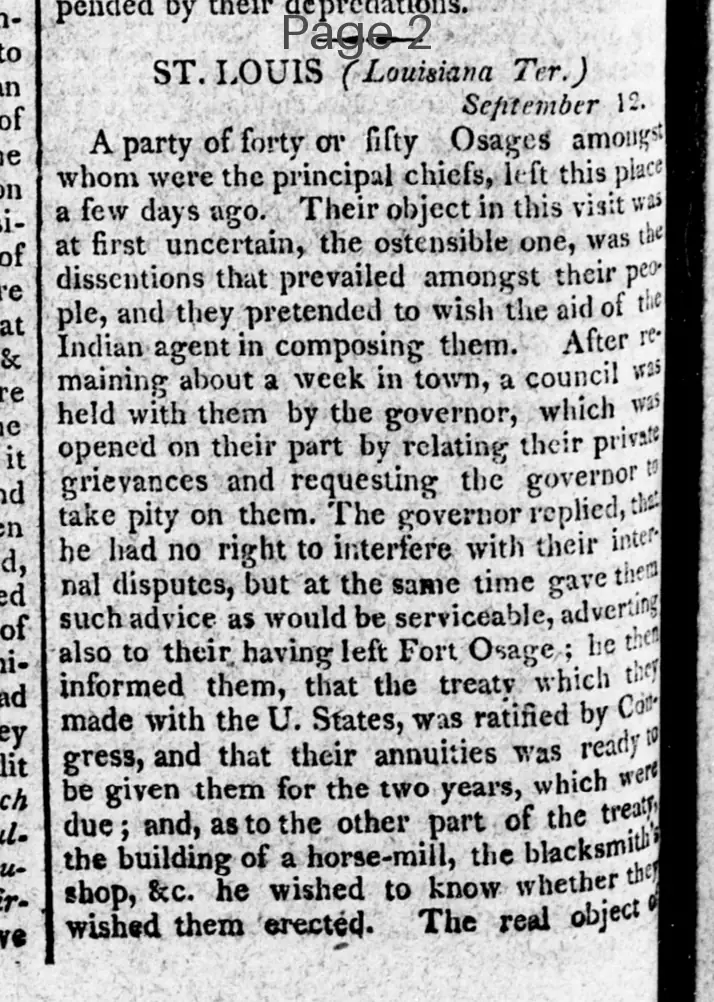
A party of forty or fifty Osages amongst whom were the principal chiefs, left this place a few days ago. Their object in this visit was at first uncertain, the ostensible one, was the dissentions that prevailed amongst their people, and they pretended to wish the aid of the Indian agent in composing them. After remaining about a week in town, a council was held with them by the governor, which was opened on their part by relating their private grievances and requesting the governor to take pity on them. The governor replied, that he had no right to interfere with their internal disputes, but at the same time gave them such advice as would be serviceable, adverting also to their having left Fort Osage; he then informed them, that the treaty which they made with the U. States, was ratified by Congress, and that their annuities was ready to be given them for the two years, which were due; and, as to the other part of the treaty the building of a horse-mill, the blacksmith shop, &c. he wished to know whether they wished them erected. The real object of these wily savages now plainly appeared; they addressed him with long and artful speeches, and pretended to be surprised, that this subject should ever again be brought into view; they supposed it had been forgotten by their great father, as it had been by them; they said that they had been overreached in the treaty, and had only intended a sale from the Gasconade, &c. and not of their country, which belonged to their posterity as well as to them; that their great father, not having fulfilled his part of the treaty, at the time it ought to have been fulfilled, the treaty was considered by them as void; they concluded by requesting the government to keep the goods, and they would keep their land. The governor informed them that their great father never forced or compelled Indians to sell their lands, but when they chose to sell them, the treaty must be obeyed; that it was not possible to pay the annuities sooner; that the treaty would at all events stand, and if they did not accept of those annuities, it would only be considered by their great father as a proof of their unfriendly disposition to him. The Indians retired, and in two days informed the governor, in another council, that on more mature deliberation, they had agreed to accept of the goods, and would endeavor to render their people satisfied with it. It was evident that those Indians were sanguine in their expectation of getting rid of this treaty, so important to the people of this country and the United States; and had governor Howard yielded in the least to them it might have led, to embarrassments of a very serious nature; one of the chiefs who protested with great warmth and vehemence against the treaty, said, that all the goods on the other side of the big waters would not satisfy them for their land, and spoke of their having 1500 warriors; but when they were answered that the treaty was ratified, that it would be observed by their great father the President, and that it should be complied with on their part, they deliberated and agreed to accept the annuities; they left this place apparently well satisfied.
What sub-type of article is it?
What keywords are associated?
What entities or persons were involved?
Where did it happen?
Domestic News Details
Primary Location
St. Louis (Louisiana Ter.)
Event Date
September 12.
Key Persons
Outcome
the osages agreed to accept the annuities and goods, affirming the treaty.
Event Details
A delegation of 40-50 Osages, including principal chiefs, visited St. Louis ostensibly to resolve internal dissensions with Indian agent aid. In council with Governor Howard, they raised grievances and challenged the U.S. treaty's land sale terms, claiming overreach and non-fulfillment. The governor upheld the ratified treaty, advising acceptance. After deliberation, they agreed to take the two years' annuities and proceed with treaty provisions like mills and shops.