Thank you for visiting SNEWPapers!
Sign up free
Gazette Of The United States
New York, New York County, New York
What is this article about?
In the English House of Commons, on April 23 and 25, debates occurred on abolishing the African Slave Trade. Mr. Dundas proposed gradual abolition starting 1800, but Lord Mornington's amendment for 1793 was defeated 109-158.
Clipping
OCR Quality
Full Text
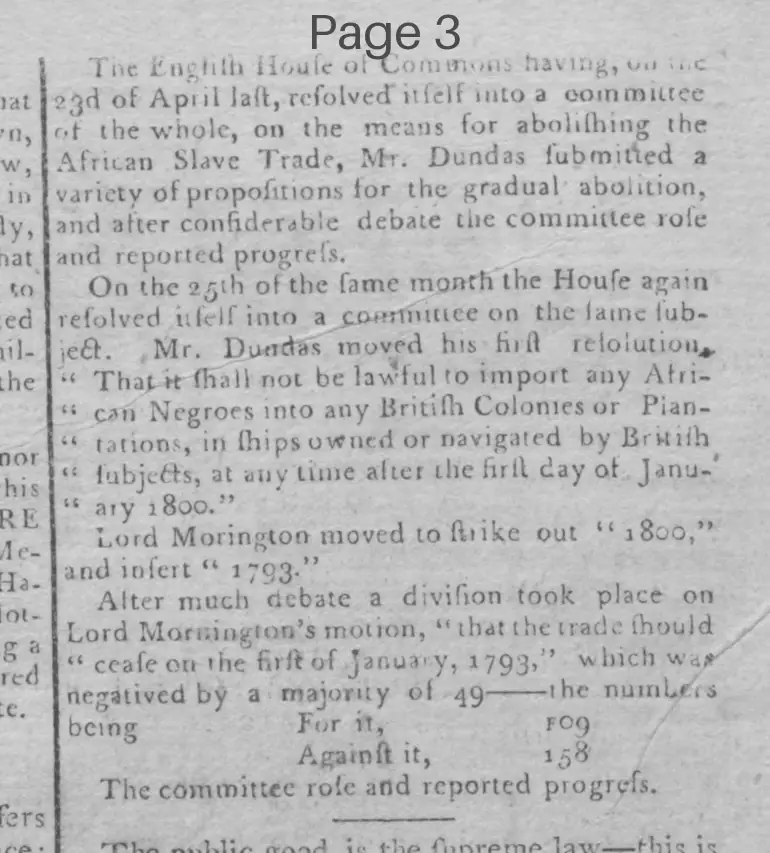
On the 25th of the same month the House again resolved itself into a committee on the same subject. Mr. Dundas moved his first resolution "That it shall not be lawful to import any African Negroes into any British Colonies or Plantations, in ships owned or navigated by British subjects, at any time after the first day of January 1800."
Lord Mornington moved to strike out "1800," and insert "1793."
After much debate a division took place on Lord Mornington's motion, "that the trade should cease on the first of January, 1793," which was negatived by a majority of 49, the numbers being
For it, 109
Against it, 158
The committee rose and reported progress.
What sub-type of article is it?
What keywords are associated?
What entities or persons were involved?
Where did it happen?
Foreign News Details
Primary Location
England
Event Date
23d Of April Last And 25th Of The Same Month
Key Persons
Outcome
lord mornington's motion negatived by a majority of 49, the numbers being for it, 109 against it, 158
Event Details
The English House of Commons resolved into a committee on April 23 to discuss means for abolishing the African Slave Trade, where Mr. Dundas submitted propositions for gradual abolition. On April 25, the House again formed a committee; Mr. Dundas moved a resolution to prohibit importing African Negroes into British Colonies after January 1, 1800. Lord Mornington proposed amending to 1793, but after debate, his motion was defeated.