Thank you for visiting SNEWPapers!
Sign up free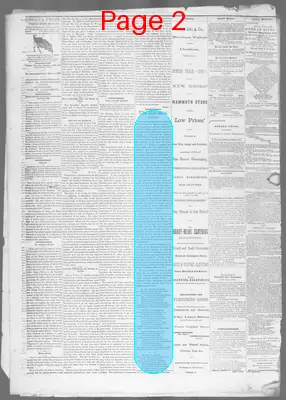
Literary
March 23, 1864
Urbana Union
Urbana, Champaign County, Ohio
What is this article about?
In 'The Idle Man, No. XVI,' the author reflects on concealed religious sentiments among scientists, shares an anecdote of physician Dr. Thomas Linacre's deathbed dismay at the Gospel's contrast with Christian practice from 313 years prior, and presents a 1661 penitential hymn attributed to a Newgate prisoner, invoking repentance and divine mercy.
Clipping

OCR Quality
95%
Excellent
Full Text
The Idle Man.
NUMBER XVI.
There are men who pass through life without a trace of religious feeling; it has ever been so, and most clearly so, with those whose minds have been too much informed to relish mere sacerdotal theology as a substitute for religion. This disrelish on the part of men devoted to scientific pursuits and their exclusive devotion to the study of nature caused it to be thought in past ages that such studies and such pursuits led to infidelity. But however men may have seemed to disregard the outward forms of worship and made no manifestation of religious feeling it is not to be supposed that they had no inward thoughts. These thoughts are of a nature too sacred to be made the theme of idle talk among careless men, and the sensitive man will never expose them to others, unless perchance at the end of his days, when he sees that the veil which divides the two worlds is to be drawn aside for him.
The Idle Man has found many instances of this, and he knows of none so striking as that of Dr. Thomas Linacre a most distinguished physician of his day, who died 313 years ago—distinguished in his day, but not distinguished now, and perhaps would not be known at all, except for the anecdote which the Idle Man is about to give, and which he finds in the form of a Latin extract from a work by another physician on The Pronunciation of Greek, and which the Idle Man thus renders:
And now Linacre ought to please me, and in this, that when he was now approaching the end of his life—a man broken by sickness and much study, he is said to have taken into his hand for the first time, the New Testament, and to have read from it a few chapters of Matthew. And when he had run through the fifth, the sixth and the seventh, he cast the book away and swore that this was 'either not the Gospel or that we were not Christians.'
This was a masterly sarcasm—the affecting to be offended at the book for the discrepancy between its teachings and the practice of christians—as if the latter were all correct, and therefore the book a false pretender. But the Doctor who had passed his life in seeming neglect of religion, knew full well what the teaching was, and knew full well that the ways of men were different from it.
In those same days of three hundred years ago, was written 'a penitential Hymn, composed by occasion of a dream, about midnight, October 19, 1661.' It professes to have been written by a prisoner at Newgate, and the Idle Man is happy to give it here:
My God! Thou didst awake me,
This night, out of a sad and fearful Dream,
That sensible did make me
Of sins, which heretofore small sins did seem;
And ere I perfect heed could take
Whether I slept or was awake,
He that is watching ev'ry hour
Whom he may mischief and devour,
Sought how he might thereby advantage make:
Rebuke him—for my dear Redeemer's sake!
Permit Thou no transgression,
Whereof I heretofore have guilty been,
For great nor small omission,
Which I forgotten have, or overseen,
(Either through want of penitence
Or of confessing my offence)
To rise against me, great or small;
For, Lord! I do repent them all:
And likewise (be it more or less)
Renounce all trust in my own righteousness.
Oh God! most kind, most holy!
Remember not the errors of my life:
Call not to mind my folly,
To add a new affliction to my grief.
World, flesh, and devil, my foes are;
And much more than my strength can bear
On me they have already cast,
Unless Thou compassion hast.
Oh! throw my sins out of thy sight therefore,
That they may not be seen or heard of more.
Dear God of my salvation!
Preserve me, by thy love and mighty pow'r,
From perilous temptation,
In weal and woe, and at my dying hour.
Me let Thy guardian angels keep,
When I do wake, and while I sleep,
From shame without and fear within,
From evil thoughts and actual sin;
That friends and foes, and every one may see—
No man in vain doth put their trust in Thee!
NUMBER XVI.
There are men who pass through life without a trace of religious feeling; it has ever been so, and most clearly so, with those whose minds have been too much informed to relish mere sacerdotal theology as a substitute for religion. This disrelish on the part of men devoted to scientific pursuits and their exclusive devotion to the study of nature caused it to be thought in past ages that such studies and such pursuits led to infidelity. But however men may have seemed to disregard the outward forms of worship and made no manifestation of religious feeling it is not to be supposed that they had no inward thoughts. These thoughts are of a nature too sacred to be made the theme of idle talk among careless men, and the sensitive man will never expose them to others, unless perchance at the end of his days, when he sees that the veil which divides the two worlds is to be drawn aside for him.
The Idle Man has found many instances of this, and he knows of none so striking as that of Dr. Thomas Linacre a most distinguished physician of his day, who died 313 years ago—distinguished in his day, but not distinguished now, and perhaps would not be known at all, except for the anecdote which the Idle Man is about to give, and which he finds in the form of a Latin extract from a work by another physician on The Pronunciation of Greek, and which the Idle Man thus renders:
And now Linacre ought to please me, and in this, that when he was now approaching the end of his life—a man broken by sickness and much study, he is said to have taken into his hand for the first time, the New Testament, and to have read from it a few chapters of Matthew. And when he had run through the fifth, the sixth and the seventh, he cast the book away and swore that this was 'either not the Gospel or that we were not Christians.'
This was a masterly sarcasm—the affecting to be offended at the book for the discrepancy between its teachings and the practice of christians—as if the latter were all correct, and therefore the book a false pretender. But the Doctor who had passed his life in seeming neglect of religion, knew full well what the teaching was, and knew full well that the ways of men were different from it.
In those same days of three hundred years ago, was written 'a penitential Hymn, composed by occasion of a dream, about midnight, October 19, 1661.' It professes to have been written by a prisoner at Newgate, and the Idle Man is happy to give it here:
My God! Thou didst awake me,
This night, out of a sad and fearful Dream,
That sensible did make me
Of sins, which heretofore small sins did seem;
And ere I perfect heed could take
Whether I slept or was awake,
He that is watching ev'ry hour
Whom he may mischief and devour,
Sought how he might thereby advantage make:
Rebuke him—for my dear Redeemer's sake!
Permit Thou no transgression,
Whereof I heretofore have guilty been,
For great nor small omission,
Which I forgotten have, or overseen,
(Either through want of penitence
Or of confessing my offence)
To rise against me, great or small;
For, Lord! I do repent them all:
And likewise (be it more or less)
Renounce all trust in my own righteousness.
Oh God! most kind, most holy!
Remember not the errors of my life:
Call not to mind my folly,
To add a new affliction to my grief.
World, flesh, and devil, my foes are;
And much more than my strength can bear
On me they have already cast,
Unless Thou compassion hast.
Oh! throw my sins out of thy sight therefore,
That they may not be seen or heard of more.
Dear God of my salvation!
Preserve me, by thy love and mighty pow'r,
From perilous temptation,
In weal and woe, and at my dying hour.
Me let Thy guardian angels keep,
When I do wake, and while I sleep,
From shame without and fear within,
From evil thoughts and actual sin;
That friends and foes, and every one may see—
No man in vain doth put their trust in Thee!
What sub-type of article is it?
Essay
Hymn Or Psalm
What themes does it cover?
Religious
Moral Virtue
What keywords are associated?
Religious Feeling
Scientific Pursuits
Thomas Linacre
New Testament
Penitential Hymn
Newgate Prisoner
Repentance
Divine Mercy
What entities or persons were involved?
The Idle Man
Literary Details
Title
The Idle Man. Number Xvi.
Author
The Idle Man
Subject
Reflections On Hidden Religious Feelings In Men Of Science, With Anecdote Of Dr. Thomas Linacre And A 1661 Penitential Hymn By A Newgate Prisoner
Form / Style
Prose Essay Incorporating A Quoted Religious Hymn
Key Lines
And When He Had Run Through The Fifth, The Sixth And The Seventh, He Cast The Book Away And Swore That This Was 'Either Not The Gospel Or That We Were Not Christians.'
My God! Thou Didst Awake Me, This Night, Out Of A Sad And Fearful Dream, That Sensible Did Make Me Of Sins, Which Heretofore Small Sins Did Seem;
Oh! Throw My Sins Out Of Thy Sight Therefore, That They May Not Be Seen Or Heard Of More.
No Man In Vain Doth Put Their Trust In Thee!