Thank you for visiting SNEWPapers!
Sign up free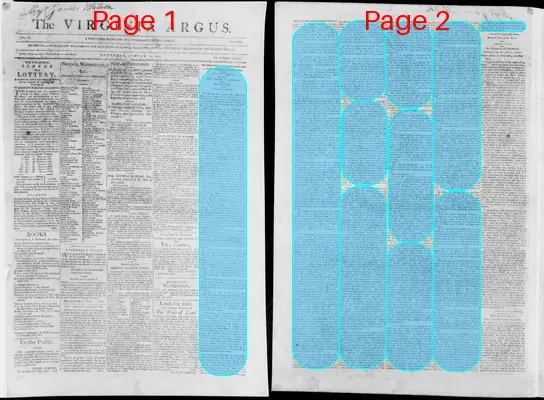
Virginia Argus
Richmond, Virginia
What is this article about?
Detailed account of the U.S. Congress debates in early 1802 on repealing the Judiciary Act of 1801, which created 16 new circuit judges. Intense partisan arguments over necessity, expense, and constitutionality led to narrow passage in Senate (16-15) and House (59-32), with key speakers including Breckenridge, Giles, and Bayard.
Merged-components note: This is a clear continuation of the story on the judiciary bill debate across pages, based on sequential reading order and text flow.
Clippings

1 of 2
OCR Quality
Full Text
-HISTORY.
OF THE
LAST SESSION OF CONGRESS
(CONTINUED.]
JUDICIARY.
On the 6th of January, Mr. Breckenridge, in consequence of previous notice, submitted to the senate a resolution for the repeal of the act of the last session respecting the organization of the courts of the United States.
Before the passage of that act, the federal courts consisted of one supreme court, of district courts in which a single judge presided, and of circuit courts composed of one or more justices of the supreme court, and of the judges of the districts in which the court sat.
By the law of the last session, the character of the circuit courts was entirely changed: the justices of the supreme court ceased to discharge circuit duties, which were devolved on sixteen new judges denominated circuit-judges.
On the desire of Mr. Tracy, Mr. Breckenridge agreed to postpone the consideration of his motion till Friday ensuing, when it was taken up. A debate then commenced, which from the importance of the subject, from the length of the debates and profound universal attention it excited will be memorable in the annals of politics. In this hasty view of the proceedings of the Legislature, it cannot be expected that full justice should be done either to the arguments or the eloquence of the several speakers; particularly as no discussion has ever taken place in our National councils which drew forth more copiously their entire talent. No other attempt, therefore, shall be made than that of exhibiting the procedure with a few of the prominent arguments on each side.
In the senate the repeal was supported by Messrs. Breckenridge, Cocke, Jackson, S. T. Mason, Baldwin, Anderson, Wright, Bradley, Nicholas, and Stone; and opposed by Messrs. Oliver, Jones, M'Kay, Gunn, Tracy, Bingham, White, Ross, Dayton, Ogden, Chipman, Wells, & Calhoun. By the former it was contended that the new judges created by the act of the last session were unnecessary; and that being unnecessary, the expense which the establishment occasioned ought not to be incurred; that they were appointed in the last periods of an expiring administration, and could only be viewed in the light of political instruments, created in order to oppose the public will.
By the latter the circuit judges were declared to be necessary, and the expense too trifling to merit the least consideration; and that they had been established by a legislature, and appointed by a president, in the legitimate exercise of their duty, and not with the least aspect of political influence.
But these points were of secondary character compared with the constitutional question. By the federal side the constitutional right of the legislature to divest a judge of his office and salary was denied; and on this point an argument, not less elaborate than able, ensued. As it is not susceptible of abridgment without mutilation, and as it is so familiar to the public from the voluminous publications recently made, we shall repress all exposition of it.
On the 8th of January, the bill was ordered to be engrossed for a third reading by the casting vote of the Vice-president there being 14 Yeas and the same number of Nays.
On the next day it was read a third time, when Mr. Dayton, professing a wish to avert the decision of the constitutional question, moved a reference of the bill to a select committee, with instructions to consider and report the alterations that might be proper in the judiciary system of the United States.
This motion was supported by Mr. Calhoun, and warmly opposed by Mr. Nicholas.
When the Yeas and Nays were called, they appeared to be equal; and the Vice-president, being called upon to decide, declared himself in the affirmative; and the bill was accordingly committed to Messrs. Baldwin, Dayton, Calhoun, Anderson and Morris; three of whom were hostile to the principle of it. This decision, cast by the Vice-president, excited an inconsiderable sensation in the senate, and not less feeling in the community; and there were not wanting those who whispered the conduct of the Vice-president inconsistent and inexplicable.
On the first of February Mr. Breckenridge gave notice that he should on the following day, move that the select committee, to whom the judiciary bill had been referred, should be discharged from any further consideration of it. This motion was accordingly made on the second, and was supported by Messrs Breckenridge, Cocke, S. T. Mason, Anderson, Wright, Baldwin, and Jackson: and opposed by Messrs. Dayton, Ross, Tracy and Morris, when the Yeas and Nays being called, it appeared to be carried by a majority of two; and the bill, in the shape in which it had been committed, was again before the senate.
On the third, the bill was read a third time, and after a debate which did not terminate till 5 o'clock, passed by a majority of one. The following are the Yeas and Nays:-
Yeas—Messrs. Anderson, Baldwin, Bradley, Breckenridge, Brown, Cocke, Elrod, T. Foster, Franklin, Jackson, Logan, S. T. Mason, Nicholas, Stone, Sumter, Wright, 16.
Nays—Messrs. Calhoun, Chipman, Dayton, D. Foster, Hillhouse, Howard, J. Mason, Morris, Olcott, Ross, Sheafe, Tracy, Wells, White, 15.
The bill, as passed in the Senate, was received in the House of Representatives on the 4th of February. Having been read twice, Mr. Bayard moved to commit it to the select committee charged with an enquiry into the expediency of altering the judiciary system.
Mr. Randolph moved its commitment to the committee of the whole house. On this motion which superseded that of Mr. Bayard, a debate ensued between Messrs. Randolph, Giles, Milledge, Smilie and S. Smith, in favor of, and Messrs. Bayard, Rutledge, Griswold and Dana against it; when it was carried, ayes 54.
Various days were named whereon to take it up. The federal side of the house moved the most distant, viz. the 15th inst. and engaged, if indulged with that delay, to discuss the principle involved in the bill with logical correctness and forbearance from party allusion. This day was then agreed to by general consent.
Accordingly, on the 15th of February, Mr. Davis called for the order of the day, when Mr. Bayard moved to postpone the consideration of it to the third Monday in March. It was supported by Messrs. Rutledge, Griswold, Dennis, Hemphill, Goddard, Huger, T. Morris, and Dana; and opposed by Messrs. Giles, Davis, R. Williams, Smilie, Eustis, S. Smith and Holland.
Much extrinsic matter was introduced into the discussion of the question of postponement, which, however, principally turned on the propriety of waiting for a further expression of the public sentiment before the repealing act should be finally passed; each side, as usual, claiming that sentiment to be in its favor. The federal side charged the other with precipitation, who repelled the charge by replying that as the day had been of their suggestion, and had, though distant, been agreed to in a spirit of accommodation, it ill became them to make the reproach. The motion prevailed by a majority of 26: when, other motions of postponement to shorter days had far shared the same fate, the house resolved itself into a committee of the whole, and took the bill into immediate consideration.
The floor was first taken by Mr. Henderson, who, in a speech which, compared with those that followed, may be called concise, assigned his reasons against the bill on the two grounds of constitutionality and expediency. Having by various arguments supported his doctrine, he closed his speech in the following manner.
"Mr. Chairman. I see, or think I see, in this attempt, that spirit of innovation which has prostrated before it a great part of the old world. Every institution which the wisdom and experience of ages had reared up for the benefit of man. A spirit which has rode in the whirlwind, and directed the storm to the desimilation of the fairest portion of Europe, which has swept before it every vestige of law, religion, morality, and rational government, which has brought twenty millions of people at the feet of one man, and compelled them to seek refuge from their complicated miseries in the calm of despotism. It is against the influence of this tremendous spirit, that I wish to raise my voice and exert my powers, weak and feeble as they are. I fear, sir, on the 7th of December it made its appearance within these walls clothed in a gigantic body, impatient for action. I fear it has already begun to exert its all-devouring energy. Have you a judiciary system extending over this immense country, matured by the wisdom of your ablest and best men? "It must be destroyed. Have you taxes which had been laid since the commencement of the government, and is the irritation consequent upon the laying of taxes worn off? "Are they paid exclusively by the wealthy and the luxurious part of the community; and are they old enough for the payment of the public debt? They must be abolished. Have you a mint establishment which is not only essentially necessary to protect the country against the influx of base or foreign metals, but is a splendid attribute of sovereignty? It must be abolished. Have you laws, which require foreigners coming to this country to go through a probationary sieve, by which their habits, their morals and propensities may be known before they are admitted to all the rights of native Americans? They must be repealed and our shores crowded with outcasts of society, lest offended humanity should find no asylum on this globe!
"Mr. Chairman, if the doctrine contended for by gentlemen on the other side of the house should become the settled construction of the constitution, and enlightened America acquiesce with that construction, I declare for myself, and for myself alone, I would not have a sigh nor shed a tear, over its total desolation. The wound you are about to give it will be mortal; it may languish out a miserable existence for a few years, but it will surely die. It will neither serve to protect its friends nor defend itself from the omnipotent energies of its enemies. Better at once to bury it, and with it all our hopes."
Mr. Henderson was followed by Messrs. R. Williams, Thompson, Davis and Bacon, in favor of the bill, and Messrs. Hemphill, T. Morris and Stanley against it.
On the 15th Mr. Giles delivered his sentiments in a speech of about two hours in length. Considering the responsibility of public agents to the people as the great question involved in the discussion, he took a retrospective view of the operations of the federal government, as tested by this leading principle, from which he had occasion to mark a succession of important deviations, previously to that evinced in the passage of the judiciary bill proposed to be repealed, which he viewed as intended to afford illegitimate protection to the principles of the then existing administration, by creating a new corps of judges, of concurring political opinions, and irresponsible to the nation.
Mr. Giles said, "he rejoiced that this subject was now to be discussed; he thought the crisis peculiarly auspicious for the discussion. He said the European world with which the United States have the most relations, is now tranquilized. The tremendous scenes of blood and revolution, which had agitated that portion of the globe, had at length subsided into profound peace; and had left mankind, in silent amazement, to retrospect the wonderful events which were passed; and he hoped with calm deliberation to improve the lessons they had furnished for the benefit of mankind in time to come. The interests and sympathies which the people of the United States felt in these events no longer turn their attention from their own internal concerns; arguments of the highest consideration for the safety of the constitution, and the liberty of the citizens, no longer receive the short reply, French partizans! Jacobins! Disorganizers! And although the gentleman from N. Carolina, sees, or thinks he sees the destructive spirit mount in the whirlwind and direct the storm; let him be consoled by the information, "that all these our actors are mere spirits and are dissolved into thin air."
Yes, sir, these magical delusions are now vanished, and have left the American people and their Congress in their real persons, and original American characters, engaged in the transaction of American concerns.
"Upon taking a view of our internal situation, he observed, although party rage may not be done away; it may be said, its highest paroxysm is past. And although the gentleman from New-York, (Mr. T. Morris) yesterday observed, that the President had commenced a system of persecution; so ignorant, he said, he was of the existence of such a system, that he could not conceive to what the gentleman alluded. It is some time, Mr. Chairman, since a member of this house, and sundry printers throughout the United States, have been amerced and imprisoned to appease the vengeance of an unconstitutional sedition act, merely for publishing their own sentiments, which happened to be unpalatable to the then existing administration! It is some time, sir, since we have seen judges who ought to have been independent, converted into political partizans, and like executive missionaries pronouncing political harangues throughout the United States! It is some time, sir, since we have seen the zealous judge stoop from the bench to look out for more victims for judicial vengeance! It is some time since we have seen the same judicial impetuosity drive from the bar, the most respectable counsel, who humanely proposed to interpose between a friendless and unprotected man, and the judicial vengeance to which he was doomed! It is some time, sir, since we have seen the same judicial zeal extending the provisions of the sedition act, by discovering that it had jurisdiction of the lex non scripta, or common law! It is some time since we have seen the chief executive magistrate dooming to "humiliation in dust and ashes" a great portion of the American people: Yes, sir, these terrific scenes are past. These noisy declamations, and this judicial zeal are hushed into silence by the audible pronunciation of the public will. He said, we may even indulge the hope, Mr. Chairman, that our pulpits will not much longer be converted into political forums; and that the meek and humble teachers of the christian faith, instead of stirring up all the angry and destructive passions of the human mind, will ere long, once more condescend to teach those precepts of humility, forbearance and toleration, taught them by their divine preceptor. Those precepts so essential to the discovery of truth, by predisposing the mind to deliberation and reflection.
"The present executive pursuing the general good, and supported by the general confidence, stands not in need of these artificial aids. He invites your inquiry. He knows that the highest encomium which can be bestowed upon his administration would flow from a correct understanding of his motives and his conduct. Instead of calling in the aid of sedition acts, to the defamatory scribblers, who appear to increase in numbers, and in impudence, in proportion to the desperation of their cause, and their security from punishment, he has said, "let them stand undisturbed as monuments of the safety with which error of opinion may be tolerated, where reason is left free to combat it." Under these auspicious circumstances, he said, he proceeded to the discussion of the important question before us with pleasure, conscious he was subject to error, and knowing that if he did err it was his interest to be corrected: confident also, that there "was a mass of intelligence and calm reflection at this moment in the people of the United States, competent to detect the error, and apply the corrective."
After other preliminary remarks, Mr. Giles delivered a luminous exposition of the constitutional question.
He was followed the next day by Mr. Bayard, who occupied the floor the whole of that, and until late o'clock of the ensuing day. He began by expressing his surprise at the course pursued by Mr. Giles, from whom he had expected a different line of conduct. He had cherished this expectation from his professions of a desire to conciliate so repeatedly made during the session. But the mask had been suddenly thrown aside, and a blazing torch carried into the house.
Mr. Bayard then replied, in a very diffuse manner, to each of the preliminary remarks of Mr. Giles. He denied the charge of monarchic attachment, and asserted that the gentleman himself did not believe that there existed in the country an anti-republican party.
After vindicating the past administrations, he said:--
"I pray God I may be mistaken in the opinion I entertain as to the designs of gentlemen to whom I am opposed. Those designs I believe hostile to the powers of this government. State pride extinguishes national sentiment. Whatever is taken from this government is given to the states.
"The ruins of this government aggrandize the states. There are states which are too proud to be controlled. Whose sense of greatness and resource renders them indifferent to our protection, and induces a belief, that if no general government existed, their influence would be more extensive and their importance more conspicuous. There are gentlemen who make no secret of an extreme point of depression, to which the government is to be sunk."
Mr. Bayard proceeded in a similar strain until he reached that part of Mr. Giles's speech which related to the judiciary.
He then observed:--
"After, Mr. Chairman, the honorable member had exhausted one quiver of arrows against the late executive, he opened another equally poisoned, against the judiciary. He told us, sir, that when the power of the government was rapidly passing from federal hands, after we had heard the thundering voice of the people which dismissed us from their service, we erected a judiciary, which we expected would afford us the shelter of an inviolable sanctuary. The gentleman is deceived. We knew better, sir, the characters who were to succeed us, and we knew that nothing was sacred in the eyes of infidels. No, sir, I never had a thought that anything belonging to the federal government was holy in the eyes of those gentlemen. I could never therefore imagine that a sanctuary could be built up which would not be violated. I believe these gentlemen regard public opinion because their power depends upon it, but I believe they respect no existing establishment of the government, and if public opinion could be brought to support them, I have no doubt they would annihilate the whole."
"The judges, sir, have been criminated for their conduct in relation to the sedition act, and have been charged with searching for victims who were sacrificed under it. The charge is easily made, but has the gentleman the means of supporting it? It was the evident design of the gentleman to attach the odium of the sedition law to the judiciary; on this score the judges are surely innocent. They did not pass the act: the legislature made the law, and they were obliged by their oaths to execute it. The judges decided the law to be constitutional, and I am not now going to agitate the question. I did hope when the law passed, that its effect would be useful. It did not touch the freedom of speech, and was designed only to restrain the enormous abuses of the press. It went no further than to punish malicious falsehoods published with the wicked intention of destroying the government. No innocent man ever did or could have suffered under the law. No punishment could be indicted till a jury was satisfied that the publication was false, and that the party charged knowing it to be false had published it with an evil design."
Mr. Bayard then vindicated the act of the last session at great length, and urged the unconstitutionality of the present bill: when towards the close of his speech he remarked:-
"I say in the nature of things the dependence of the judges upon the legislature, and their right to declare the acts of the legislature void, are repugnant and cannot exist together. The doctrine, sir, supposes two rights—first the right of the legislature to destroy the office of the judge, and the right of the judge to vacate the act of the legislature. You have a right to abolish by a law, the offices of the judges of the circuit courts. They have a right to declare your law void. It unavoidably follows in the exercise of these rights, either that you destroy their rights, or that they destroy yours. This doctrine is not an harmless absurdity, it is a most dangerous heresy. It is a doctrine which cannot be practiced without producing not discord only, but bloodshed. If you pass the bill upon your table the judges have a constitutional right to declare it void. I hope they will have courage to exercise that right: and if, sir, I am called upon to take my side, standing acquitted in my conscience and before my God, of all motives but the support of the constitution of my country, I shall not tremble at the consequences.
"The constitution may have its enemies, but I know that it has also its friends. I beg gentlemen to pause before they take this rash step. There are many, very many who believe, if you strike this blow, you inflict a mortal wound on the constitution. There are many now willing to spill their blood to defend that constitution. Are gentlemen disposed to risk the consequence? Sir, I mean no threats—I have no expectation of appalling the stout hearts of my adversaries; but if gentlemen are regardless of themselves, let them consider their wives and children, their neighbours and their friends." Will they risk civil dissension: will they hazard the welfare, will they jeopardize the peace of the country, to save a paltry sum of money, less than thirty thousand dollars."
From these specimens, it will appear that the speech of Mr. Bayard was characterized by a style of uncommon vehemence, not to say fury. He professed to find his apology for this strain in the preceding remarks of Mr. Giles: but it is believed that the disinterested observer of political events will discern in this apology no other than a pretext for the unbounded license with which the orator, by direct assertion, or more envenomed insinuation, reproached the present administration.
From this period the debate assumed the harshest features of party antipathy and prejudice. Few of the following speakers confined themselves to the merits of the question, while many entirely lost sight of them in the vehemence of their feelings. Whatever of prejudice or of truth that related to the past, present, or expected measures of the government, was liberally and tiresomely repeated, until the patience of the house, apparently exhausted, no longer brooked delay. For twelve days, the house was exclusively occupied with the speeches of Messrs. Mason, Israel Smith, Dawson, Nicholson, S. Smith, in favor of the repeal: and of Messrs. Huger, Goddard, Rutledge, Griswold, Dennis, against it; in addition to those already noticed; when on Saturday the 27th, the taking of the question was earnestly urged by the republican, and as earnestly opposed by the federal side of the house; further time for discussion was however allowed, by a majority of three.
On Monday, Messrs. Gregg, and Holland, spoke in favor of, and Messrs. Hill, Cutler, Hastings, Dana, Plater, Tillman, and Lowndes, against the bill, when, about 11 o'clock at night the question was taken on striking out the first clause, which would have been equivalent to a rejection of the bill, and lost—Yeas 81—Nays 60.
The bill, being reported without amendment, was the next day taken up in the House, when Messrs. Griswold and Bayard moved a number of amendments, all of which were rejected by large majorities.
At this period of the debate Dr. Eustis delivered his sentiments; and expressed himself against the bill in its present shape, not because he deemed the repeal unconstitutional—of that he had no doubt—but because he thought the old system ought to be amended before it should be restored.
On the ensuing day the bill was read a third time. A motion, made by Mr. Lowndes, to postpone it until the first Monday of December, was lost by a majority of 27.
Messrs. Clopton, Varnum and Stanford, spoke in favor of, and Mr. Lowndes against the bill; when the final question was taken on the passage, by Yeas and Nays, and carried by a majority of 27.
The Yeas were Messrs. Alston, Archer, Bacon, Bailey, Bishop, Drent, Brown, Butler, Cabell, Claiborne, Clay, Clopton, Condit, Cutts, Davis, Dawson, Dickson, Elmendorf, Elmer, Fowler, Giles, Gray, Gregg, J. Heister, Helms, Hoge, Holland, Holmes, Jackson, Johnson, Jones, Leib, Milledge, Mitchell, Moore, Mott, New, Newton, Nicholson, Randolph, Smilie, J. Smith, of N. Y. J. Smith, of Virg. Jos. Smith, S. Smith, Southard, Stanford, Stanton, Stewart, Tazewell, Thomas, Thompson, A. Tignor, J. Trigg, Van Cortlandt, Van Ness, Varnum, Van Horne, K. Williams—59.
Nays—Messrs. Boudinot, Campbell, Cutler, Dana, Davenport, Dennis, Eustis, Foster, Goddard, Griswold, Grove, Hastings, Hemphill, Henderson, Hill, Huger, Lowndes, L. R. Morris, Pierce, Plater, Read, Rutledge, Stanley, Tallman, Tenney, Tillinghast, Upham, Van Rensselaer, Wadsworth, Walker, I. Williams, Woods—32.
Thus ended this gigantic debate. With the nation it rests to decide, if it has not already decided, the constitutionality of the right asserted by the legislature. This decision will be made, through the ordinary organs of the public will, notwithstanding the criminal efforts of party to agitate and convulse the union—While it is to be regretted that this untoward spirit, bent on the gratification of its sinister purposes, should put to hazard our dearest interests by exciting passions no less subversive of union than destructive to the great charter of our rights; we cannot feel too grateful in the assurance that the American people, whose interests are the same, will continue in every vicissitude, to cling to the union of the states, as the rock of their happiness.
What sub-type of article is it?
What themes does it cover?
What keywords are associated?
What entities or persons were involved?
Where did it happen?
Story Details
Key Persons
Location
U.S. Senate And House Of Representatives
Event Date
January To March 1802
Story Details
Congress debates and passes bill repealing the Judiciary Act of 1801, which created sixteen new circuit judges under the prior administration; arguments focus on necessity, expense, and constitutionality of removing judges from office.