Thank you for visiting SNEWPapers!
Sign up free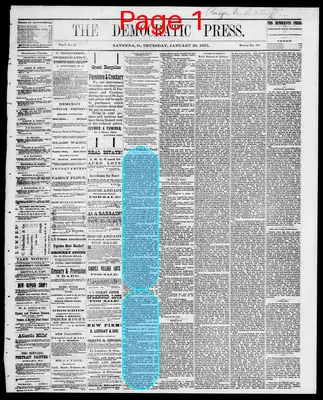
Story
January 28, 1875
The Democratic Press
Ravenna, Portage County, Ohio
What is this article about?
Absent-minded Rev. Abiram Pohick nearly hangs for horse theft after a thief swaps clothes and rides off on his horse Old Job during the night, leading to a case of mistaken identity resolved by a deputy sheriff.
Clipping

OCR Quality
95%
Excellent
Full Text
Parson Pohick's Peril.
The Rev. Abiram Pohick was a devout man and zealous circuit rider, but in worldly matters notably absent-minded. So much so that if his wife, who was a noticing woman, hadn't kept a keen lookout when he arose in the morning, ten to one he would have appeared in public half the time arrayed in her clothes instead of his own, and exchange which some would have scoffingly declared not inappropriate.
His head once set on a text, he was oblivious to all else. To find his way round the circuit he trusted implicitly to Old Job's geographical knowledge. Old Job was the parson's horse. He was not an old horse either, but a likely animal in the prime of life. It was his gravity and patience, mayhap, that he won the sobriquet of Old Job. He was a horse of sense, withal, and to a congregation that understood Houyhnhnm, could probably have preached a more practical sermon than his master.
A portion of Parson Pohick's field of labor lay in a wild, out-of-the-way region; and it was his first journey to keep an appointment there that he met with the adventure we are about to relate.
After a wearisome day's travel, Old Job and the parson sought and found rest one night at a settler's cabin. At a later hour another wayfarer arrived: and, after a hearty supper and a sociable chat, the two guests, who were to take an early start in the morning, retired to rest, both being assigned to one apartment.
Mr. Pohick, his devotions ended, would gladly have conversed a little with his fellow guest, but the latter was not inclined to talk; and the parson, from falling into a revery on his forthcoming sermon, in due time fell sound asleep.
He awoke at daybreak and found his companion had already gone. Having a long road yet before him, the parson rose at once, and having made his toilet, and performed his morning duties with all proper dispatch, he left the house without disturbing the family, having paid his score the night before, and finding his way to the stable, saddled his horse and rode off, intending to breakfast further on.
It was a fresh, bright morning, and as the parson rode along he sought to improve the time by more fully working up the details of the discourse he was preparing to enlighten a people hitherto groping in darkness.
"Get along, Job," said the parson, at the end of a mutual paragraph; "I never knew you to lag so before."
But the horse seemed absorbed in his own reflections, and paid no heed. Inattention to his master's words was an unusual thing in Old Job, and might have attracted the parson's notice; but just then he began subdividing his "Nineteenthly," and the horse might have stopped stock still for all his rider would have known.
The chattering of the hoofs and the cry of "Stop thief!" behind him at length broke the parson's chain of thought.
"Stop you old villain, or we'll blow you through!" yelled several voices, accompanying the command with divers expletives which greatly shocked the parson's ears.
Parson Pohick had no suspicion that such words could possibly be addressed to him; but the reproof of profanity was a duty he never neglected. So turning about, he quoted several texts on the subject, and would have enlarged edifying but for the derisive shouts of the company in whose midst he quickly found himself.
"Ha! ha!" laughed one; "just hear the old rascal!"
"Satan reprovin' sin," added another.
"Whose hoss is that?" queried a third.
"Whose horse?" echoed the parson; "whose is what horse?"
"Why, that 'ere you're mounted on."
"This? Why this is my horse-Old Job," answered the parson, more and more surprised.
"Your horse!" exclaimed a burly fellow. "You say that again and I'll smash your mug. That's my hoss as was stole, an' you stole him, an' his name's not Job, it's Pete."
The horse whinnied at the name, as if turning State's evidence against his rider.
"Git down, you old reprobate!" the burly man continued. "Why, I've owned that hoss ever since he was foaled, and there's plenty here 'ken prove it."
"That's so!" chimed in several. "Git down! git down! you tarnel old thief!"
A dozen revolvers were leveled at him, and the parson felt constrained to dismount.
I assure you, gentlemen, the horse is mine," he protested earnestly, "and being a minister of the Gospel, my word should have some weight."
"Minister of the--haw! haw!"
The man who tried to repeat the words broke down with laughter.
"Pretty minister you are!" jeered another, who, searching the parson's person, drew a pack of cards from one pocket and an empty whisky bottle from another.
Mr. Pohick was dumbfounded.
"There is some terrible mistake here!" was all he could utter.
"What say you, gentlemen?--is the pris'ner guilty or not guilty!" sang out the leader of the crowd.
"Guilty!" they all said.
With equal unanimity it was voted to hang him on the spot!
"My friends, before taking a fellow-creature's life," pleaded the parson, "you should have clear and certain proof."
"Proof! what would you have?" replied the leader. "Wasn't the hoss found on you or you on the hoss--which is the same thing in law? Come, string 'im up, boys."
And the poor parson would surely have ended his worldly career then and there, but for the timely arrival of another party.
In their midst was a man in clerical garb, none other than Mr. Pohick's companion of the preceding night, securely bound on a horse.
The new company was headed by a deputy sheriff, well acquainted with Mr. Pohick.
"Glad I see you, Mr. Pohick," said the officer, "but bless me, I hardly knew you in that rig."
The parson's eyes for the first time fell on his garments. They were certainly not his own. Nothing could be more unclerical than their cut and material. The cards and whisky bottle were now accounted for; and when Old Job, on whose back the prisoner was tied, greeted his master with his old familiar neigh, the whole truth flashed upon the parson's mind.
The man with whom he had shared his room the night before was a horse-thief, who, rising first in the morning, had not only taken the parson's clothes for a disguise, leaving his own, but taken Old Job, who was far the better horse, instead of the one he had recently stolen--the parson, in his absent-mindedness, never noticing the difference.
The thief was one well known to the officer, who had been for some time on his track; and when the sheriff's deputy, who knew Old Job as well as his master, saw the form and the clothes of the latter in the possession of a noted outlaw, he feared at first that murder as well as theft had been committed: and murder would have been committed but for his arrival in the nick of time.
"Let it teach you to keep your eyes open next time," was all the consolation the parson got from Mrs. Pohick on reaching home, and telling her how near he had come to being hanged.
The Rev. Abiram Pohick was a devout man and zealous circuit rider, but in worldly matters notably absent-minded. So much so that if his wife, who was a noticing woman, hadn't kept a keen lookout when he arose in the morning, ten to one he would have appeared in public half the time arrayed in her clothes instead of his own, and exchange which some would have scoffingly declared not inappropriate.
His head once set on a text, he was oblivious to all else. To find his way round the circuit he trusted implicitly to Old Job's geographical knowledge. Old Job was the parson's horse. He was not an old horse either, but a likely animal in the prime of life. It was his gravity and patience, mayhap, that he won the sobriquet of Old Job. He was a horse of sense, withal, and to a congregation that understood Houyhnhnm, could probably have preached a more practical sermon than his master.
A portion of Parson Pohick's field of labor lay in a wild, out-of-the-way region; and it was his first journey to keep an appointment there that he met with the adventure we are about to relate.
After a wearisome day's travel, Old Job and the parson sought and found rest one night at a settler's cabin. At a later hour another wayfarer arrived: and, after a hearty supper and a sociable chat, the two guests, who were to take an early start in the morning, retired to rest, both being assigned to one apartment.
Mr. Pohick, his devotions ended, would gladly have conversed a little with his fellow guest, but the latter was not inclined to talk; and the parson, from falling into a revery on his forthcoming sermon, in due time fell sound asleep.
He awoke at daybreak and found his companion had already gone. Having a long road yet before him, the parson rose at once, and having made his toilet, and performed his morning duties with all proper dispatch, he left the house without disturbing the family, having paid his score the night before, and finding his way to the stable, saddled his horse and rode off, intending to breakfast further on.
It was a fresh, bright morning, and as the parson rode along he sought to improve the time by more fully working up the details of the discourse he was preparing to enlighten a people hitherto groping in darkness.
"Get along, Job," said the parson, at the end of a mutual paragraph; "I never knew you to lag so before."
But the horse seemed absorbed in his own reflections, and paid no heed. Inattention to his master's words was an unusual thing in Old Job, and might have attracted the parson's notice; but just then he began subdividing his "Nineteenthly," and the horse might have stopped stock still for all his rider would have known.
The chattering of the hoofs and the cry of "Stop thief!" behind him at length broke the parson's chain of thought.
"Stop you old villain, or we'll blow you through!" yelled several voices, accompanying the command with divers expletives which greatly shocked the parson's ears.
Parson Pohick had no suspicion that such words could possibly be addressed to him; but the reproof of profanity was a duty he never neglected. So turning about, he quoted several texts on the subject, and would have enlarged edifying but for the derisive shouts of the company in whose midst he quickly found himself.
"Ha! ha!" laughed one; "just hear the old rascal!"
"Satan reprovin' sin," added another.
"Whose hoss is that?" queried a third.
"Whose horse?" echoed the parson; "whose is what horse?"
"Why, that 'ere you're mounted on."
"This? Why this is my horse-Old Job," answered the parson, more and more surprised.
"Your horse!" exclaimed a burly fellow. "You say that again and I'll smash your mug. That's my hoss as was stole, an' you stole him, an' his name's not Job, it's Pete."
The horse whinnied at the name, as if turning State's evidence against his rider.
"Git down, you old reprobate!" the burly man continued. "Why, I've owned that hoss ever since he was foaled, and there's plenty here 'ken prove it."
"That's so!" chimed in several. "Git down! git down! you tarnel old thief!"
A dozen revolvers were leveled at him, and the parson felt constrained to dismount.
I assure you, gentlemen, the horse is mine," he protested earnestly, "and being a minister of the Gospel, my word should have some weight."
"Minister of the--haw! haw!"
The man who tried to repeat the words broke down with laughter.
"Pretty minister you are!" jeered another, who, searching the parson's person, drew a pack of cards from one pocket and an empty whisky bottle from another.
Mr. Pohick was dumbfounded.
"There is some terrible mistake here!" was all he could utter.
"What say you, gentlemen?--is the pris'ner guilty or not guilty!" sang out the leader of the crowd.
"Guilty!" they all said.
With equal unanimity it was voted to hang him on the spot!
"My friends, before taking a fellow-creature's life," pleaded the parson, "you should have clear and certain proof."
"Proof! what would you have?" replied the leader. "Wasn't the hoss found on you or you on the hoss--which is the same thing in law? Come, string 'im up, boys."
And the poor parson would surely have ended his worldly career then and there, but for the timely arrival of another party.
In their midst was a man in clerical garb, none other than Mr. Pohick's companion of the preceding night, securely bound on a horse.
The new company was headed by a deputy sheriff, well acquainted with Mr. Pohick.
"Glad I see you, Mr. Pohick," said the officer, "but bless me, I hardly knew you in that rig."
The parson's eyes for the first time fell on his garments. They were certainly not his own. Nothing could be more unclerical than their cut and material. The cards and whisky bottle were now accounted for; and when Old Job, on whose back the prisoner was tied, greeted his master with his old familiar neigh, the whole truth flashed upon the parson's mind.
The man with whom he had shared his room the night before was a horse-thief, who, rising first in the morning, had not only taken the parson's clothes for a disguise, leaving his own, but taken Old Job, who was far the better horse, instead of the one he had recently stolen--the parson, in his absent-mindedness, never noticing the difference.
The thief was one well known to the officer, who had been for some time on his track; and when the sheriff's deputy, who knew Old Job as well as his master, saw the form and the clothes of the latter in the possession of a noted outlaw, he feared at first that murder as well as theft had been committed: and murder would have been committed but for his arrival in the nick of time.
"Let it teach you to keep your eyes open next time," was all the consolation the parson got from Mrs. Pohick on reaching home, and telling her how near he had come to being hanged.
What sub-type of article is it?
Deception Fraud
Crime Story
Curiosity
What themes does it cover?
Deception
Misfortune
Triumph
What keywords are associated?
Horse Theft
Mistaken Identity
Absent Minded Parson
Near Hanging
Horse Swap
What entities or persons were involved?
Rev. Abiram Pohick
Old Job
Horse Thief
Deputy Sheriff
Mrs. Pohick
Where did it happen?
Wild Out Of The Way Region, Settler's Cabin, On The Road
Story Details
Key Persons
Rev. Abiram Pohick
Old Job
Horse Thief
Deputy Sheriff
Mrs. Pohick
Location
Wild Out Of The Way Region, Settler's Cabin, On The Road
Story Details
Absent-minded parson shares room with horse thief who swaps clothes and horses overnight; parson rides off on stolen horse in thief's clothes, gets accused of theft, nearly hanged, saved by deputy sheriff who captures real thief.