Thank you for visiting SNEWPapers!
Sign up free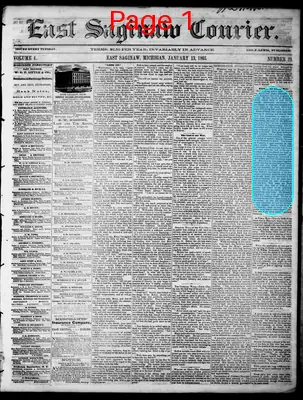
Literary
January 13, 1863
East Saginaw Courier
East Saginaw, Saginaw, Saginaw County, Michigan
What is this article about?
An advisory essay for young men on the benefits of reading as a safeguard against ruin, emphasizing self-education through stolen moments from manual labor. It profiles famous figures like Hans Sachs, Ben Jonson, Linnaeus, Franklin, Herschel, Dollond, and Gifford who rose from humble trades to greatness.
Clipping
OCR Quality
95%
Excellent
Full Text
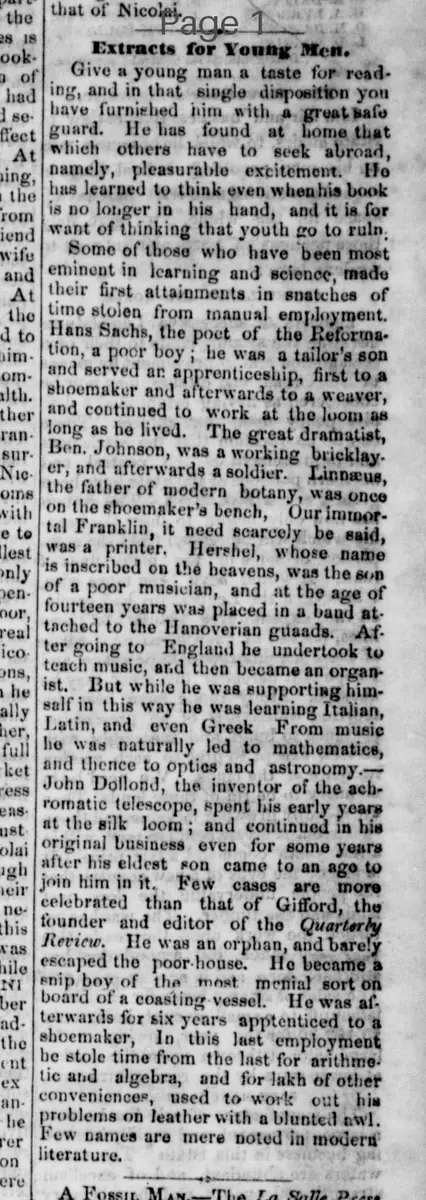
Extracts for Young Men.
Give a young man a taste for reading, and in that single disposition you have furnished him with a great safeguard. He has found at home that which others have to seek abroad, namely, pleasurable excitement. He has learned to think even when his book is no longer in his hand, and it is for want of thinking that youth go to ruin.
Some of those who have been most eminent in learning and science, made their first attainments in snatches of time stolen from manual employment. Hans Sachs, the poet of the Reformation, a poor boy; he was a tailor's son and served an apprenticeship, first to a shoemaker and afterwards to a weaver, and continued to work at the loom as long as he lived. The great dramatist, Ben. Johnson, was a working bricklayer, and afterwards a soldier. Linnaeus, the father of modern botany, was once on the shoemaker's bench. Our immortal Franklin, it need scarcely be said, was a printer. Hershel, whose name is inscribed on the heavens, was the son of a poor musician, and at the age of fourteen years was placed in a band attached to the Hanoverian guards. After going to England he undertook to teach music, and then became an organist. But while he was supporting himself in this way he was learning Italian, Latin, and even Greek. From music he was naturally led to mathematics, and thence to optics and astronomy.
John Dollond, the inventor of the achromatic telescope, spent his early years at the silk loom; and continued in his original business even for some years after his eldest son came to an age to join him in it. Few cases are more celebrated than that of Gifford, the founder and editor of the Quarterly Review. He was an orphan, and barely escaped the poor-house. He became a ship boy of the most menial sort on board of a coasting vessel. He was afterwards for six years apprenticed to a shoemaker. In this last employment he stole time from the last for arithmetic and algebra, and for lack of other conveniences, used to work out his problems on leather with a blunted awl. Few names are more noted in modern literature.
Give a young man a taste for reading, and in that single disposition you have furnished him with a great safeguard. He has found at home that which others have to seek abroad, namely, pleasurable excitement. He has learned to think even when his book is no longer in his hand, and it is for want of thinking that youth go to ruin.
Some of those who have been most eminent in learning and science, made their first attainments in snatches of time stolen from manual employment. Hans Sachs, the poet of the Reformation, a poor boy; he was a tailor's son and served an apprenticeship, first to a shoemaker and afterwards to a weaver, and continued to work at the loom as long as he lived. The great dramatist, Ben. Johnson, was a working bricklayer, and afterwards a soldier. Linnaeus, the father of modern botany, was once on the shoemaker's bench. Our immortal Franklin, it need scarcely be said, was a printer. Hershel, whose name is inscribed on the heavens, was the son of a poor musician, and at the age of fourteen years was placed in a band attached to the Hanoverian guards. After going to England he undertook to teach music, and then became an organist. But while he was supporting himself in this way he was learning Italian, Latin, and even Greek. From music he was naturally led to mathematics, and thence to optics and astronomy.
John Dollond, the inventor of the achromatic telescope, spent his early years at the silk loom; and continued in his original business even for some years after his eldest son came to an age to join him in it. Few cases are more celebrated than that of Gifford, the founder and editor of the Quarterly Review. He was an orphan, and barely escaped the poor-house. He became a ship boy of the most menial sort on board of a coasting vessel. He was afterwards for six years apprenticed to a shoemaker. In this last employment he stole time from the last for arithmetic and algebra, and for lack of other conveniences, used to work out his problems on leather with a blunted awl. Few names are more noted in modern literature.
What sub-type of article is it?
Essay
What themes does it cover?
Moral Virtue
What keywords are associated?
Reading
Self Education
Biographical Examples
Humble Beginnings
Famous Figures
Manual Labor
Literary Details
Title
Extracts For Young Men.
Subject
Benefits Of Reading And Self Education For Young Men
Form / Style
Prose Essay With Biographical Examples
Key Lines
Give A Young Man A Taste For Reading, And In That Single Disposition You Have Furnished Him With A Great Safeguard.
He Has Learned To Think Even When His Book Is No Longer In His Hand, And It Is For Want Of Thinking That Youth Go To Ruin.
Some Of Those Who Have Been Most Eminent In Learning And Science, Made Their First Attainments In Snatches Of Time Stolen From Manual Employment.