Thank you for visiting SNEWPapers!
Sign up free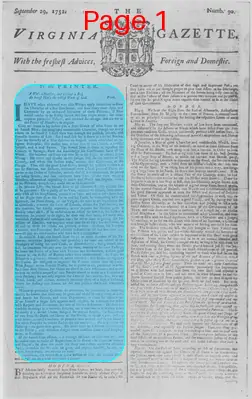
Letter to Editor
September 29, 1752
The Virginia Gazette
Richmond, Williamsburg, Richmond County, Virginia
What is this article about?
A letter to the printer sketches the character of an honest man, rooted in religious principles, detailing his conduct in public service, private life, and domestic affairs, emphasizing integrity, generosity, and moral virtue over ambition or vice.
Clipping
OCR Quality
98%
Excellent
Full Text
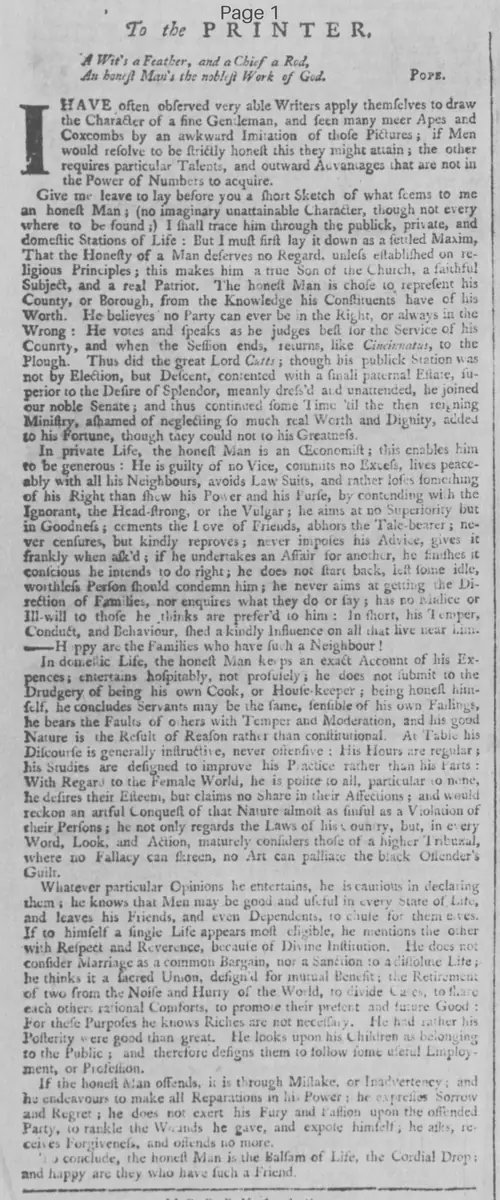
To the PRINTER.
A Wit’s a Feather, and a Chief a Rod,
An honest Man’s the noblest Work of God.
POPE.
I have often observed very able Writers apply themselves to draw the Character of a fine Gentleman, and even many mere Apes and Coxcombs by an awkward Imitation of those Pictures; if Men would resolve to be strictly honest this they might attain; the other requires particular Talents, and outward Advantages that are not in the Power of Numbers to acquire.
Give me leave to lay before you a short Sketch of what seems to me an honest Man; (no imaginary unattainable Character, though not every where to be found;) I shall trace him through the publick, private, and domestick Stations of Life: But I must first lay it down as a settled Maxim, That the Honesty of a Man deserves no Regard, unless established on religious Principles; this makes him a true Son of the Church, a faithful Subject, and a real Patriot. The honest Man is chose to represent his County, or Borough, from the Knowledge his Constituents have of his Worth. He believes no Party can ever be in the Right, or always in the Wrong: He votes and speaks as he judges best for the Service of his Country, and when the Session ends, returns like Cincinnatus, to the Plough. Thus did the great Lord Cato; though his publick Station was not by Election, but Descent, contented with a moderate Paternal Estate, superior to the Desire of Splendor, meanly drest and unattended, he joined our noble Senate; and thus continued some Time ’til the then reigning Ministry, ashamed of neglecting so much real Worth and Dignity, added to his Fortune, though they could not to his Greatness.
In private Life, the honest Man is an OEconomist; this enables him to be generous: He is guilty of no Vice, commits no Excess, lives peaceably with all his Neighbours, avoids Law Suits, and rather loses something of his Right than shew his Power and his Purse, by contending with the Ignorant, the Head-strong, or the Vulgar; he aims at no Superiority but in Goodness; cements the Love of Friends, abhors the Tale-bearer; never censures, but kindly reproves; never imposes his Advice, gives it frankly when ask’d: if he undertakes an Affair for another, he finishes it conscious he intends to do right; he does not care back, lest some idle, worthless Person should condemn him; he never aims at getting the Direction of Families, nor enquires what they do or say; has no Malice or Ill-will to those he thinks are prefer’d to him: In short, his Temper, Conduct, and Behaviour, shed a kindly Influence on all that live near him. — Happy are the Families who have such a Neighbour!
In domestick Life, the honest Man keeps an exact Account of his Expences; entertains hospitably, not profusely; he does not submit to the Drudgery of being his own Cook, or House-keeper; being honest himself, he concludes Servants may be the same, sensible of his own Failings, he bears the Faults of others with Temper and Moderation, and his good Nature is the Result of Reason rather than constitutional. At Table his Discourse is generally instructive, never offensive: His Hours are regular; his Studies are designed to improve his Practice rather than his Parts: With Regard to the Female World, he is polite to all, particular to none, he desires their Esteem, but claims no Share in their Affections: and would reckon an artful Conquest of that Nature almost as sinful as a Violation of their Persons; he not only regards the Laws of his own Country, but, in every Word, Look, and Action, maturely considers those of a higher Tribunal, where no Fallacy can screen, no Art can palliate the black Offender’s Guilt.
Whatever particular Opinions he entertains, he is cautious in declaring them: he knows that Men may be good and useful in every State of Life, and leaves his Friends, and even Dependents, to chuse for themselves. If to himself single Life appears most eligible, he mentions the other with Respect and Reverence, because of Divine Institution. He does not consider Marriage as a common Bargain, nor a Sanction to a dissolute Life; he thinks it a sacred Union, design’d for mutual Benefit: the Retirement of two from the Noise and Hurry of the World, to divide (as it were) to share each others rational Comforts, to promote their present and future Good: For these Purposes he knows Riches are not necessary. He had rather his Posterity were good than great. He looks upon his Children as belonging to the Public; and therefore designs them to follow some useful Employment, or Profession.
If the honest Man offends, it is through Mistake, or Inadvertency; and he endeavours to make all Reparations in his Power; he expresses Sorrow and Regret: he does not exert his Fury and Passion upon the offended Party, to rankle the Wounds he gave, and expose himself, he asks, receives Forgiveness, and offends no more.
I conclude, the honest Man is the Balm of Life, the Cordial Drop; and happy are they who have such a friend.
A Wit’s a Feather, and a Chief a Rod,
An honest Man’s the noblest Work of God.
POPE.
I have often observed very able Writers apply themselves to draw the Character of a fine Gentleman, and even many mere Apes and Coxcombs by an awkward Imitation of those Pictures; if Men would resolve to be strictly honest this they might attain; the other requires particular Talents, and outward Advantages that are not in the Power of Numbers to acquire.
Give me leave to lay before you a short Sketch of what seems to me an honest Man; (no imaginary unattainable Character, though not every where to be found;) I shall trace him through the publick, private, and domestick Stations of Life: But I must first lay it down as a settled Maxim, That the Honesty of a Man deserves no Regard, unless established on religious Principles; this makes him a true Son of the Church, a faithful Subject, and a real Patriot. The honest Man is chose to represent his County, or Borough, from the Knowledge his Constituents have of his Worth. He believes no Party can ever be in the Right, or always in the Wrong: He votes and speaks as he judges best for the Service of his Country, and when the Session ends, returns like Cincinnatus, to the Plough. Thus did the great Lord Cato; though his publick Station was not by Election, but Descent, contented with a moderate Paternal Estate, superior to the Desire of Splendor, meanly drest and unattended, he joined our noble Senate; and thus continued some Time ’til the then reigning Ministry, ashamed of neglecting so much real Worth and Dignity, added to his Fortune, though they could not to his Greatness.
In private Life, the honest Man is an OEconomist; this enables him to be generous: He is guilty of no Vice, commits no Excess, lives peaceably with all his Neighbours, avoids Law Suits, and rather loses something of his Right than shew his Power and his Purse, by contending with the Ignorant, the Head-strong, or the Vulgar; he aims at no Superiority but in Goodness; cements the Love of Friends, abhors the Tale-bearer; never censures, but kindly reproves; never imposes his Advice, gives it frankly when ask’d: if he undertakes an Affair for another, he finishes it conscious he intends to do right; he does not care back, lest some idle, worthless Person should condemn him; he never aims at getting the Direction of Families, nor enquires what they do or say; has no Malice or Ill-will to those he thinks are prefer’d to him: In short, his Temper, Conduct, and Behaviour, shed a kindly Influence on all that live near him. — Happy are the Families who have such a Neighbour!
In domestick Life, the honest Man keeps an exact Account of his Expences; entertains hospitably, not profusely; he does not submit to the Drudgery of being his own Cook, or House-keeper; being honest himself, he concludes Servants may be the same, sensible of his own Failings, he bears the Faults of others with Temper and Moderation, and his good Nature is the Result of Reason rather than constitutional. At Table his Discourse is generally instructive, never offensive: His Hours are regular; his Studies are designed to improve his Practice rather than his Parts: With Regard to the Female World, he is polite to all, particular to none, he desires their Esteem, but claims no Share in their Affections: and would reckon an artful Conquest of that Nature almost as sinful as a Violation of their Persons; he not only regards the Laws of his own Country, but, in every Word, Look, and Action, maturely considers those of a higher Tribunal, where no Fallacy can screen, no Art can palliate the black Offender’s Guilt.
Whatever particular Opinions he entertains, he is cautious in declaring them: he knows that Men may be good and useful in every State of Life, and leaves his Friends, and even Dependents, to chuse for themselves. If to himself single Life appears most eligible, he mentions the other with Respect and Reverence, because of Divine Institution. He does not consider Marriage as a common Bargain, nor a Sanction to a dissolute Life; he thinks it a sacred Union, design’d for mutual Benefit: the Retirement of two from the Noise and Hurry of the World, to divide (as it were) to share each others rational Comforts, to promote their present and future Good: For these Purposes he knows Riches are not necessary. He had rather his Posterity were good than great. He looks upon his Children as belonging to the Public; and therefore designs them to follow some useful Employment, or Profession.
If the honest Man offends, it is through Mistake, or Inadvertency; and he endeavours to make all Reparations in his Power; he expresses Sorrow and Regret: he does not exert his Fury and Passion upon the offended Party, to rankle the Wounds he gave, and expose himself, he asks, receives Forgiveness, and offends no more.
I conclude, the honest Man is the Balm of Life, the Cordial Drop; and happy are they who have such a friend.
What sub-type of article is it?
Ethical Moral
Reflective
Philosophical
What themes does it cover?
Morality
Religion
What keywords are associated?
Honesty
Moral Character
Religious Principles
Public Service
Private Life
Domestic Life
Virtue
What entities or persons were involved?
To The Printer.
Letter to Editor Details
Recipient
To The Printer.
Main Argument
the letter presents a sketch of an honest man whose integrity is founded on religious principles, portraying his exemplary conduct in public, private, and domestic life as a model of virtue, patriotism, and moral rectitude.
Notable Details
Quotes Pope: 'A Wit’s A Feather, And A Chief A Rod, An Honest Man’s The Noblest Work Of God.'
References Cincinnatus Returning To The Plough.
References Lord Cato's Modest Public Service.