Thank you for visiting SNEWPapers!
Sign up free
The New Hampshire Gazette And Historical Chronicle
Portsmouth, Greenland, Rockingham County, New Hampshire
What is this article about?
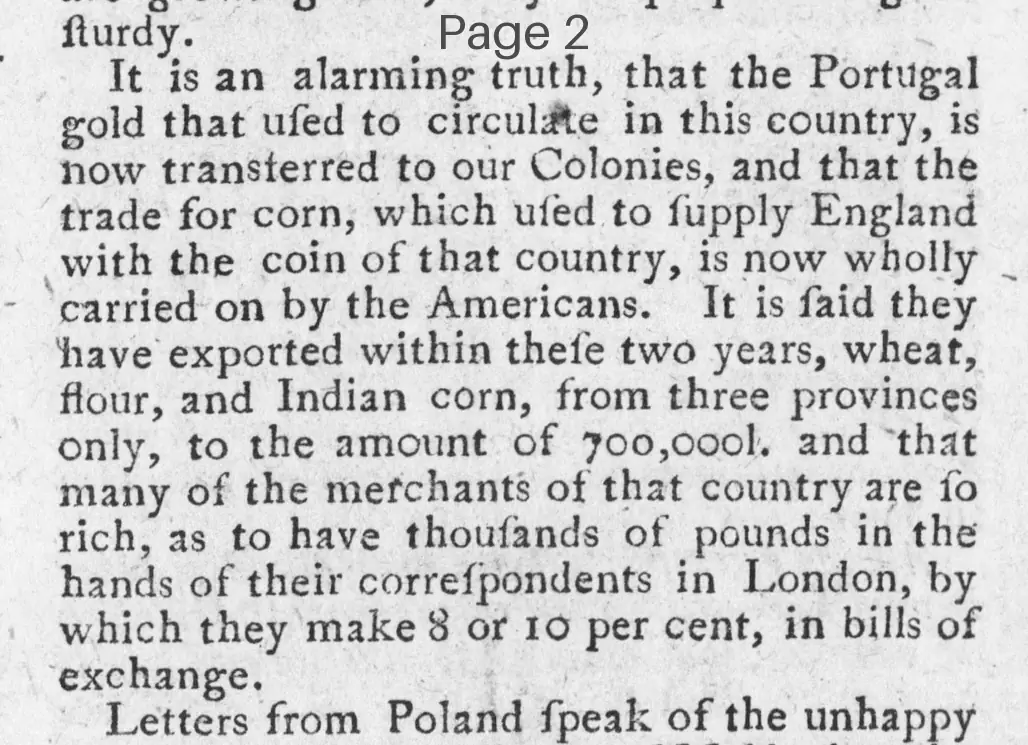
Portugal gold formerly circulating in England has transferred to the American colonies, where Americans now dominate the corn trade supplying England. Exports of wheat, flour, and Indian corn from three provinces reached 100,000l. in two years. American merchants hold thousands of pounds with London correspondents, earning 8-10% on bills of exchange.
Clipping
OCR Quality
Full Text
What sub-type of article is it?
What keywords are associated?
Where did it happen?
Domestic News Details
Primary Location
American Colonies
Event Date
Within These Two Years
Event Details
Portugal gold that used to circulate in this country is now transferred to our Colonies, and the trade for corn which used to supply England with the coin of that country is now wholly carried on by the Americans. They have exported within these two years, wheat, flour, and Indian corn, from three provinces only, to the amount of 100,000l. Many of the merchants of that country are so rich as to have thousands of pounds in the hands of their correspondents in London, by which they make 8 or 10 per cent in bills of exchange.