Thank you for visiting SNEWPapers!
Sign up free
Literary
May 21, 1890
The Central Presbyterian
Richmond, Virginia
What is this article about?
A boy named Lee, eager for school but short on money for new books, gathers goldenrod flowers, arranges them with moss, and sells them in the city, earning enough to buy the books and more, becoming a regular 'golden-rod merchant.' A tale of youthful resourcefulness and determination.
Clipping
OCR Quality
98%
Excellent
Full Text
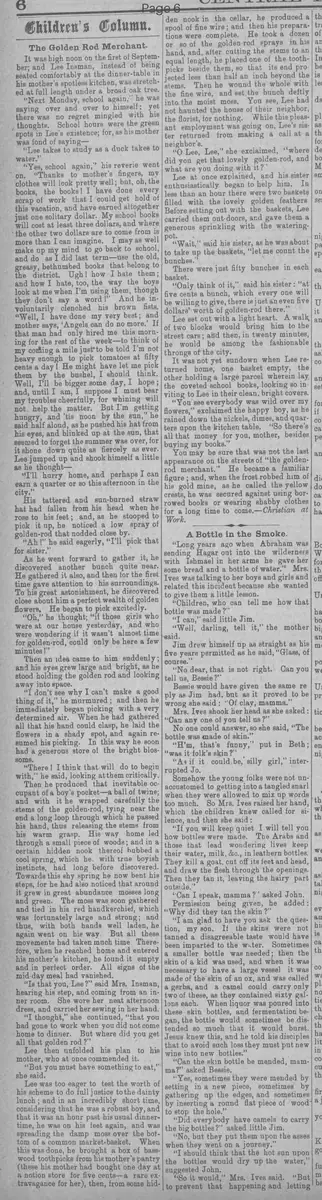
Children's Column.
The Golden Rod Merchant.
It was high noon on the first of September; and Lee Insman, instead of being seated comfortably at the dinner-table in his mother's spotless kitchen, was stretched at full length under a broad oak tree.
"Next Monday, school again," he was saying over and over to himself; yet there was no regret mingled with his thoughts. School hours were the green spots in Lee's existence; for, as his mother was fond of saying—
"Lee takes to study as a duck takes to water."
"Yes, school again," his reverie went on. "Thanks to mother's fingers, my clothes will look pretty well; but, oh, the books, the books! I have done every scrap of work that I could get hold of this vacation, and have earned altogether just one solitary dollar. My school books will cost at least three dollars, and where the other two dollars are to come from is more than I can imagine. I may as well make up my mind to go back to school and do as I did last term—use the old, greasy, bethumbed books that belong to the district. Ugh! how I hate them: and how I hate, too, the way the boys look at me when I'm using them, though they don't say a word!" And he involuntarily clenched his brown fists.
"Well, I have done my very best; and mother says, 'Angels can do no more.' If that man had only hired me this morning for the rest of the week—to think of my coming a mile just to be told I'm not heavy enough to pick tomatoes at fifty cents a day! He might have let me pick them by the bushel, I should think.
Well, I'll be bigger some day, I hope; and, until I am, I suppose I must bear my troubles cheerfully, for whining will not help the matter. But I'm getting hungry, and 'tis noon by the sun," he said half aloud, as he pushed his hat from his eyes, and blinked up at the sun, that seemed to forget the summer was over, for it shone down quite as fiercely as ever.
Lee jumped up and shook himself a little as he thought,
"I'll hurry home, and perhaps I can earn a quarter or so this afternoon in the city."
His tattered and sun-burned straw hat had fallen from his head when he rose to his feet; and, as he stooped to pick it up, he noticed a low spray of golden-rod that nodded close by.
"Ah!" he said eagerly, "I'll pick that for sister."
As he went forward to gather it, he discovered another bunch quite near. He gathered it also, and then for the first time gave attention to his surroundings.
To his great astonishment, he discovered close about him a perfect wealth of golden flowers. He began to pick excitedly.
"Oh," he thought; "if those girls who were at our house yesterday, and who were wondering if it wasn't almost time for golden-rod, could only be here a few minutes!"
Then an idea came to him suddenly: and his eyes grew large and bright, as he stood holding the golden rod and looking away into space.
"I don't see why I can't make a good thing of it," he murmured; and then he immediately began picking with a very determined air. When he had gathered all that his hand could clasp, he laid the flowers in a shady spot, and again resumed his picking. In this way he soon had a generous store of the bright blossoms.
"There! I think that will do to begin with," he said, looking at them critically.
Then he produced that inevitable occupant of a boy's pocket—a ball of twine; and with it he wrapped carefully the stems of the golden-rod, tying near the end a long loop through which he passed his hand, thus releasing the stems from his warm grasp. His way home led through a small piece of woods; and in a certain hidden nook thereof bubbled a cool spring, which he, with true boyish instincts, had long before discovered.
Towards this shy spring he now bent his steps, for he had also noticed that around it grew in great abundance mosses long and green. The moss was soon gathered and tied in his red handkerchief, which was fortunately large and strong; and thus, with both hands well laden, he again went on his way. But all these movements had taken much time. Therefore, when he reached home and entered his mother's kitchen, he found it empty and in perfect order. All signs of the mid-day meal had vanished.
"Is that you, Lee?" said Mrs. Insman, hearing his step, and coming from an inner room. She wore her neat afternoon dress, and carried her sewing in her hand.
"I thought," she continued, "that you had gone to work when you did not come home to dinner. But where did you get all that golden rod?"
Lee then unfolded his plan to his mother, who at once commended it.
"But you must have something to eat," she said.
Lee was too eager to test the worth of his scheme to do full justice to the dainty lunch; and in an incredibly short time, considering that he was a robust boy, and that it was an hour past his usual dinner time, he was on his feet again, and was spreading the damp moss over the bottom of a common market-basket. When this was done, he brought a box of basswood toothpicks from his mother's pantry (these his mother had bought one day at a notion store for five cents—a rare extravagance for her), then, from some hidden nook in the cellar, he produced a spool of fine wire; and then his preparations were complete. He took a dozen or so of the golden-rod sprays in his hand, and, after cutting the stems to an equal length, he placed one of the toothpicks beside them, so that its end projected less than half an inch beyond the stems. Then he wound the whole with the fine wire, and set the bunch deftly into the moist moss. You see, Lee had not haunted the house of their neighbor, the florist, for nothing. While this pleasant employment was going on, Lee's sister returned from making a call at a neighbor's.
"O Lee, Lee," she exclaimed, "where did you get that lovely golden-rod, and what are you doing with it?"
Lee at once explained, and his sister enthusiastically began to help him. In less than an hour there were two baskets filled with the lovely golden feathers. Before setting out with the baskets, Lee carried them out-doors, and gave them a generous sprinkling with the watering pot.
"Wait," said his sister, as he was about to take up the baskets, "let me count the bunches."
There were just fifty bunches in each basket.
"Only think of it," said his sister: "at five cents a bunch, which every one will be willing to give, there is just an even five dollars' worth of golden-rod there."
Lee set out with a light heart. A walk of two blocks would bring him to the street cars; and then, in twenty minutes, he would be among the fashionable throngs of the city.
It was not yet sundown when Lee returned home, one basket empty, the other holding a large parcel wherein lay the coveted school books, looking so inviting to Lee in their clean, bright covers.
"You see everybody was wild over my flowers," exclaimed the happy boy, as he rained down the nickels, dimes, and quarters upon the kitchen table. "So there's all that money for you, mother, besides buying my books."
You may be sure that was not the last appearance on the streets of "the golden-rod merchant." He became a familiar figure; and, when the frost robbed him of his gold mine, as he called the yellow crests, he was secured against using borrowed books or wearing shabby clothes for a long time to come.—Christian at Work.
The Golden Rod Merchant.
It was high noon on the first of September; and Lee Insman, instead of being seated comfortably at the dinner-table in his mother's spotless kitchen, was stretched at full length under a broad oak tree.
"Next Monday, school again," he was saying over and over to himself; yet there was no regret mingled with his thoughts. School hours were the green spots in Lee's existence; for, as his mother was fond of saying—
"Lee takes to study as a duck takes to water."
"Yes, school again," his reverie went on. "Thanks to mother's fingers, my clothes will look pretty well; but, oh, the books, the books! I have done every scrap of work that I could get hold of this vacation, and have earned altogether just one solitary dollar. My school books will cost at least three dollars, and where the other two dollars are to come from is more than I can imagine. I may as well make up my mind to go back to school and do as I did last term—use the old, greasy, bethumbed books that belong to the district. Ugh! how I hate them: and how I hate, too, the way the boys look at me when I'm using them, though they don't say a word!" And he involuntarily clenched his brown fists.
"Well, I have done my very best; and mother says, 'Angels can do no more.' If that man had only hired me this morning for the rest of the week—to think of my coming a mile just to be told I'm not heavy enough to pick tomatoes at fifty cents a day! He might have let me pick them by the bushel, I should think.
Well, I'll be bigger some day, I hope; and, until I am, I suppose I must bear my troubles cheerfully, for whining will not help the matter. But I'm getting hungry, and 'tis noon by the sun," he said half aloud, as he pushed his hat from his eyes, and blinked up at the sun, that seemed to forget the summer was over, for it shone down quite as fiercely as ever.
Lee jumped up and shook himself a little as he thought,
"I'll hurry home, and perhaps I can earn a quarter or so this afternoon in the city."
His tattered and sun-burned straw hat had fallen from his head when he rose to his feet; and, as he stooped to pick it up, he noticed a low spray of golden-rod that nodded close by.
"Ah!" he said eagerly, "I'll pick that for sister."
As he went forward to gather it, he discovered another bunch quite near. He gathered it also, and then for the first time gave attention to his surroundings.
To his great astonishment, he discovered close about him a perfect wealth of golden flowers. He began to pick excitedly.
"Oh," he thought; "if those girls who were at our house yesterday, and who were wondering if it wasn't almost time for golden-rod, could only be here a few minutes!"
Then an idea came to him suddenly: and his eyes grew large and bright, as he stood holding the golden rod and looking away into space.
"I don't see why I can't make a good thing of it," he murmured; and then he immediately began picking with a very determined air. When he had gathered all that his hand could clasp, he laid the flowers in a shady spot, and again resumed his picking. In this way he soon had a generous store of the bright blossoms.
"There! I think that will do to begin with," he said, looking at them critically.
Then he produced that inevitable occupant of a boy's pocket—a ball of twine; and with it he wrapped carefully the stems of the golden-rod, tying near the end a long loop through which he passed his hand, thus releasing the stems from his warm grasp. His way home led through a small piece of woods; and in a certain hidden nook thereof bubbled a cool spring, which he, with true boyish instincts, had long before discovered.
Towards this shy spring he now bent his steps, for he had also noticed that around it grew in great abundance mosses long and green. The moss was soon gathered and tied in his red handkerchief, which was fortunately large and strong; and thus, with both hands well laden, he again went on his way. But all these movements had taken much time. Therefore, when he reached home and entered his mother's kitchen, he found it empty and in perfect order. All signs of the mid-day meal had vanished.
"Is that you, Lee?" said Mrs. Insman, hearing his step, and coming from an inner room. She wore her neat afternoon dress, and carried her sewing in her hand.
"I thought," she continued, "that you had gone to work when you did not come home to dinner. But where did you get all that golden rod?"
Lee then unfolded his plan to his mother, who at once commended it.
"But you must have something to eat," she said.
Lee was too eager to test the worth of his scheme to do full justice to the dainty lunch; and in an incredibly short time, considering that he was a robust boy, and that it was an hour past his usual dinner time, he was on his feet again, and was spreading the damp moss over the bottom of a common market-basket. When this was done, he brought a box of basswood toothpicks from his mother's pantry (these his mother had bought one day at a notion store for five cents—a rare extravagance for her), then, from some hidden nook in the cellar, he produced a spool of fine wire; and then his preparations were complete. He took a dozen or so of the golden-rod sprays in his hand, and, after cutting the stems to an equal length, he placed one of the toothpicks beside them, so that its end projected less than half an inch beyond the stems. Then he wound the whole with the fine wire, and set the bunch deftly into the moist moss. You see, Lee had not haunted the house of their neighbor, the florist, for nothing. While this pleasant employment was going on, Lee's sister returned from making a call at a neighbor's.
"O Lee, Lee," she exclaimed, "where did you get that lovely golden-rod, and what are you doing with it?"
Lee at once explained, and his sister enthusiastically began to help him. In less than an hour there were two baskets filled with the lovely golden feathers. Before setting out with the baskets, Lee carried them out-doors, and gave them a generous sprinkling with the watering pot.
"Wait," said his sister, as he was about to take up the baskets, "let me count the bunches."
There were just fifty bunches in each basket.
"Only think of it," said his sister: "at five cents a bunch, which every one will be willing to give, there is just an even five dollars' worth of golden-rod there."
Lee set out with a light heart. A walk of two blocks would bring him to the street cars; and then, in twenty minutes, he would be among the fashionable throngs of the city.
It was not yet sundown when Lee returned home, one basket empty, the other holding a large parcel wherein lay the coveted school books, looking so inviting to Lee in their clean, bright covers.
"You see everybody was wild over my flowers," exclaimed the happy boy, as he rained down the nickels, dimes, and quarters upon the kitchen table. "So there's all that money for you, mother, besides buying my books."
You may be sure that was not the last appearance on the streets of "the golden-rod merchant." He became a familiar figure; and, when the frost robbed him of his gold mine, as he called the yellow crests, he was secured against using borrowed books or wearing shabby clothes for a long time to come.—Christian at Work.
What sub-type of article is it?
Prose Fiction
What themes does it cover?
Moral Virtue
What keywords are associated?
Goldenrod Merchant
Schoolbooks
Boy Ingenuity
Hard Work
Resourcefulness
Children's Story
Selling Flowers
What entities or persons were involved?
Christian At Work
Literary Details
Title
The Golden Rod Merchant.
Author
Christian At Work
Key Lines
Lee Takes To Study As A Duck Takes To Water.
Angels Can Do No More.
You See Everybody Was Wild Over My Flowers
So There's All That Money For You, Mother, Besides Buying My Books.
You May Be Sure That Was Not The Last Appearance On The Streets Of "The Golden Rod Merchant."