Thank you for visiting SNEWPapers!
Sign up free
Literary
October 19, 1961
Atlanta Daily World
Atlanta, Fulton County, Georgia
What is this article about?
In Chapter 30 of Edmond Hamilton's sci-fi novel, explorer DeWitt leads his team through harsh terrain on planet Ryn toward the mysterious Hall of Suns, guided by native Thrayn. Crew members Fairlie and Raab debate the risks of DeWitt discovering advanced powers or weapons that could spark interstellar war. Native Aral urges Thrayn to flee, fearing the awakening of legendary Llorn. Tensions mount as they reach their goal.
Clipping
OCR Quality
85%
Good
Full Text
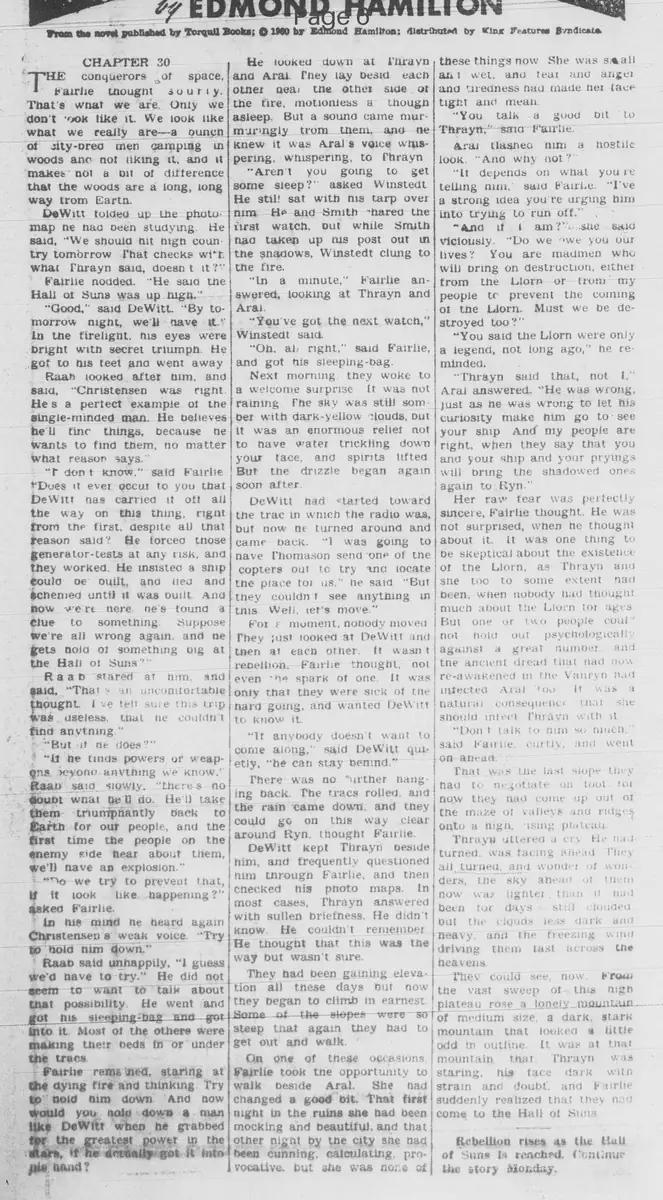
From the novel published by Torquill Books; © 1960 by Edmond Hamilton; Distributed by King Features Syndicate
CHAPTER 30
The Fairlie conquerors' thoughts of space.
That's what we are. Only we don't look like it. We look like what we really are: a bunch of sixty-odd men camping in woods and not liking it, and it makes not a bit of difference that the woods are a long, long way from Earth.
DeWitt showed him the photo map he had been studying. He said, "We should hit high country tomorrow. That checks with what Thrayn said, doesn't it?"
Fairlie nodded. "He said the Hall of Suns was up high."
"Good," said DeWitt. "By tomorrow night, we'll have it."
In the firelight, his eyes were bright with secret triumph. He got to his feet and went away.
Raab looked after him, and said,
"Christensen was right. He's a perfect example of the single-minded man. He believes he'll find things, because he wants to find them, no matter what reason says."
"I don't know," said Fairlie. "Does it ever occur to you that DeWitt has carried it off all the way on this thing, right from the first, despite all that reason said? He forced those generator-tests at any risk, and they worked. He insisted a ship could be built, and schemed until it was built. And now we're here, next to a clue to something. Suppose we're all wrong again, and he gets hold of something big at the Hall of Suns?"
Raab stared at him and said, "That's an uncomfortable thought. I've felt sure this trip was useless, that he couldn't find anything.
"But if he does? If he finds powers or weapons beyond anything we know?"
Raab said slowly, "There's no doubt what he'd do. He'd take them triumphantly back to Earth for our people, and the first time the people on the enemy side heard about them, we'd have an explosion."
"Or do we try to prevent that, if it looks like happening?" asked Fairlie.
In his mind he heard again Christensen's weak voice: "Try to hold him down."
Raab said unhappily, "I guess we'd have to try." He did not seem to want to talk about that possibility. He went and got his sleeping-bag and got into it. Most of the others were making their beds in or under the tracs.
Fairlie remained, staring at the dying fire and thinking: Try to hold him down. And how would you hold down a man like DeWitt when he grabbed for the greatest power in the universe, if he actually got it into his hand?
He looked down at Thrayn and Aral; they lay beside each other on the other side of the fire, motionless as though asleep. But a sound came murmuringly from them, and he knew it was Aral's voice whispering, whispering, to Thrayn.
"Aren't you going to get some sleep?" asked Winstedt.
He still sat with his tarp over him. He and Smith shared the first watch; while Smith had taken up his post out in the shadows, Winstedt clung to the fire.
"In a minute," Fairlie answered, looking at Thrayn and Aral.
"You've got the next watch," Winstedt said.
"Oh, all right," said Fairlie, and got his sleeping-bag.
Next morning they woke to a welcome surprise. It was not raining. The sky was still somber with dark-yellow clouds, but it was an enormous relief not to have water trickling down your neck, and spirits lifted.
But the drizzle began again soon after. DeWitt had started toward the trac in which the radio was, but now he turned around and came back.
"I was going to have Thomason send one of the copters out to try and locate the place for us," he said. "But they couldn't see anything in this. Well, let's move."
For a moment, nobody moved. They just looked at DeWitt and then at each other. It wasn't rebellion, Fairlie thought, not even the spark of one. It was only that they were sick of the hard going, and wanted DeWitt to know it.
"If anybody doesn't want to come along," said DeWitt quietly, "he can stay behind."
There was no further hanging back. The tracs rolled and the rain came down, and they could go on this way clear around Ryn, thought Fairlie.
DeWitt kept Thrayn beside him, and frequently questioned him through Fairlie, and then checked his photo maps. In most cases, Thrayn answered with sullen briefness. He didn't know. He couldn't remember. He thought that this was the way but wasn't sure.
They had been gaining elevation all these days, but now they began to climb in earnest. Some of the slopes were so steep that again they had to get out and walk.
On one of these occasions Fairlie took the opportunity to walk beside Aral. She had changed a good bit. That first night in the ruins she had been mocking and beautiful, and that other night by the city she had been cunning, calculating, provocative. But she was none of these things now. She was small and wet, and fear and anger and tiredness had made her face tight and mean.
"You talk a good bit to Thrayn," said Fairlie.
Aral flashed him a hostile look. "And why not?"
"It depends on what you're telling him," said Fairlie. "I've a strong idea you're urging him into trying to run off."
"And if I am?" she said viciously. "Do we owe you our lives? You are madmen who will bring on destruction, either from the Llorn or from my people to prevent the coming of the Llorn. Must we be destroyed too?"
"You said the Llorn were only a legend, not long ago," he reminded.
"Thrayn said that, not I," Aral answered. "He was wrong, just as he was wrong to let his curiosity make him go to see your ship. And my people are right, when they say that you and your ship and your pryings will bring the shadowed ones again to Ryn."
Her raw fear was perfectly sincere, Fairlie thought. He was not surprised, when he thought about it. It was one thing to be skeptical about the existence of the Llorn, as Thrayn and she too to some extent had been, when nobody had thought much about the Llorn for ages. But one or two people could not hold out psychologically against a great number, and the ancient dread that had now re-awakened in the Vanryn had infected Aral too. It was a natural consequence that she should infect Thrayn with it.
"Don't talk to him so much," said Fairlie curtly, and went on ahead.
That was the last slope they had to negotiate—on foot, too, for now they had come up out of the maze of valleys and ridges onto a high, rising plateau.
Thrayn uttered a cry. He had turned, was facing ahead. They all turned, and wonder of wonders, the sky ahead of them now was lighter than it had been for days—still clouded, but the clouds less dark and heavy, and the freezing wind driving them fast across the heavens.
They could see now. From the vast sweep of this high plateau rose a lonely mountain of medium size, a dark, stark mountain that looked a little odd in outline. It was at that mountain that Thrayn was staring, his face dark with strain and doubt, and Fairlie suddenly realized that they had come to the Hall of Suns.
Rebellion rises as the Hall of Suns is reached. (Continue the story Monday.)
CHAPTER 30
The Fairlie conquerors' thoughts of space.
That's what we are. Only we don't look like it. We look like what we really are: a bunch of sixty-odd men camping in woods and not liking it, and it makes not a bit of difference that the woods are a long, long way from Earth.
DeWitt showed him the photo map he had been studying. He said, "We should hit high country tomorrow. That checks with what Thrayn said, doesn't it?"
Fairlie nodded. "He said the Hall of Suns was up high."
"Good," said DeWitt. "By tomorrow night, we'll have it."
In the firelight, his eyes were bright with secret triumph. He got to his feet and went away.
Raab looked after him, and said,
"Christensen was right. He's a perfect example of the single-minded man. He believes he'll find things, because he wants to find them, no matter what reason says."
"I don't know," said Fairlie. "Does it ever occur to you that DeWitt has carried it off all the way on this thing, right from the first, despite all that reason said? He forced those generator-tests at any risk, and they worked. He insisted a ship could be built, and schemed until it was built. And now we're here, next to a clue to something. Suppose we're all wrong again, and he gets hold of something big at the Hall of Suns?"
Raab stared at him and said, "That's an uncomfortable thought. I've felt sure this trip was useless, that he couldn't find anything.
"But if he does? If he finds powers or weapons beyond anything we know?"
Raab said slowly, "There's no doubt what he'd do. He'd take them triumphantly back to Earth for our people, and the first time the people on the enemy side heard about them, we'd have an explosion."
"Or do we try to prevent that, if it looks like happening?" asked Fairlie.
In his mind he heard again Christensen's weak voice: "Try to hold him down."
Raab said unhappily, "I guess we'd have to try." He did not seem to want to talk about that possibility. He went and got his sleeping-bag and got into it. Most of the others were making their beds in or under the tracs.
Fairlie remained, staring at the dying fire and thinking: Try to hold him down. And how would you hold down a man like DeWitt when he grabbed for the greatest power in the universe, if he actually got it into his hand?
He looked down at Thrayn and Aral; they lay beside each other on the other side of the fire, motionless as though asleep. But a sound came murmuringly from them, and he knew it was Aral's voice whispering, whispering, to Thrayn.
"Aren't you going to get some sleep?" asked Winstedt.
He still sat with his tarp over him. He and Smith shared the first watch; while Smith had taken up his post out in the shadows, Winstedt clung to the fire.
"In a minute," Fairlie answered, looking at Thrayn and Aral.
"You've got the next watch," Winstedt said.
"Oh, all right," said Fairlie, and got his sleeping-bag.
Next morning they woke to a welcome surprise. It was not raining. The sky was still somber with dark-yellow clouds, but it was an enormous relief not to have water trickling down your neck, and spirits lifted.
But the drizzle began again soon after. DeWitt had started toward the trac in which the radio was, but now he turned around and came back.
"I was going to have Thomason send one of the copters out to try and locate the place for us," he said. "But they couldn't see anything in this. Well, let's move."
For a moment, nobody moved. They just looked at DeWitt and then at each other. It wasn't rebellion, Fairlie thought, not even the spark of one. It was only that they were sick of the hard going, and wanted DeWitt to know it.
"If anybody doesn't want to come along," said DeWitt quietly, "he can stay behind."
There was no further hanging back. The tracs rolled and the rain came down, and they could go on this way clear around Ryn, thought Fairlie.
DeWitt kept Thrayn beside him, and frequently questioned him through Fairlie, and then checked his photo maps. In most cases, Thrayn answered with sullen briefness. He didn't know. He couldn't remember. He thought that this was the way but wasn't sure.
They had been gaining elevation all these days, but now they began to climb in earnest. Some of the slopes were so steep that again they had to get out and walk.
On one of these occasions Fairlie took the opportunity to walk beside Aral. She had changed a good bit. That first night in the ruins she had been mocking and beautiful, and that other night by the city she had been cunning, calculating, provocative. But she was none of these things now. She was small and wet, and fear and anger and tiredness had made her face tight and mean.
"You talk a good bit to Thrayn," said Fairlie.
Aral flashed him a hostile look. "And why not?"
"It depends on what you're telling him," said Fairlie. "I've a strong idea you're urging him into trying to run off."
"And if I am?" she said viciously. "Do we owe you our lives? You are madmen who will bring on destruction, either from the Llorn or from my people to prevent the coming of the Llorn. Must we be destroyed too?"
"You said the Llorn were only a legend, not long ago," he reminded.
"Thrayn said that, not I," Aral answered. "He was wrong, just as he was wrong to let his curiosity make him go to see your ship. And my people are right, when they say that you and your ship and your pryings will bring the shadowed ones again to Ryn."
Her raw fear was perfectly sincere, Fairlie thought. He was not surprised, when he thought about it. It was one thing to be skeptical about the existence of the Llorn, as Thrayn and she too to some extent had been, when nobody had thought much about the Llorn for ages. But one or two people could not hold out psychologically against a great number, and the ancient dread that had now re-awakened in the Vanryn had infected Aral too. It was a natural consequence that she should infect Thrayn with it.
"Don't talk to him so much," said Fairlie curtly, and went on ahead.
That was the last slope they had to negotiate—on foot, too, for now they had come up out of the maze of valleys and ridges onto a high, rising plateau.
Thrayn uttered a cry. He had turned, was facing ahead. They all turned, and wonder of wonders, the sky ahead of them now was lighter than it had been for days—still clouded, but the clouds less dark and heavy, and the freezing wind driving them fast across the heavens.
They could see now. From the vast sweep of this high plateau rose a lonely mountain of medium size, a dark, stark mountain that looked a little odd in outline. It was at that mountain that Thrayn was staring, his face dark with strain and doubt, and Fairlie suddenly realized that they had come to the Hall of Suns.
Rebellion rises as the Hall of Suns is reached. (Continue the story Monday.)
What sub-type of article is it?
Prose Fiction
What themes does it cover?
Political
War Peace
What keywords are associated?
Space Exploration
Alien Planet
Hall Of Suns
Dewhitt Expedition
Llorn Legend
Weapons Discovery
Expedition Tension
What entities or persons were involved?
© 1960 By Edmond Hamilton
Literary Details
Title
Chapter 30
Author
© 1960 By Edmond Hamilton
Key Lines
"Try To Hold Him Down."
"But If He Does... He Finds Powers Or Weapons Beyond Anything We Know... He'd Take Them Triumphantly Back To Earth For Our People, And The First Time The People On The Enemy Side Heard About Them, We'd Have An Explosion."
"You Are Madmen Who Will Bring On Destruction, Either From The Llorn Or From My People To Prevent The Coming Of The Llorn."