Thank you for visiting SNEWPapers!
Sign up free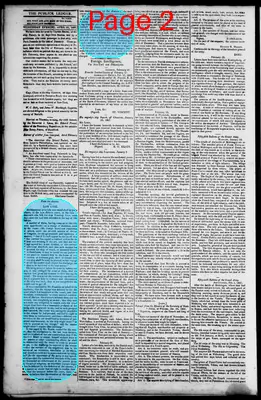
Story
April 22, 1807
Norfolk Gazette And Publick Ledger
Norfolk, Virginia
What is this article about?
In a district court case, Judge Peters ruled that mariners who left the stranded ship Woodrop Sims in Delaware Bay were not guilty of desertion under the Act of Congress, as the stranding dissolved their contract, ordering their release from prison despite the owner's objection.
Clipping
OCR Quality
95%
Excellent
Full Text
From the Aurora.
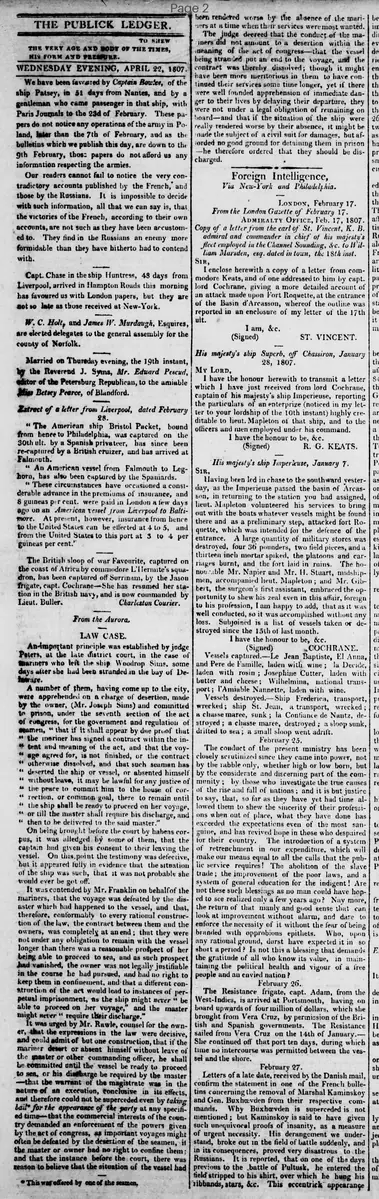
LAW CASE.
An important principle was established by judge Peters, at the late district court, in the case of mariners who left the ship Woodrop Sims, some days after she had been stranded in the bay of Delaware.
A number of them, having come up to the city, were apprehended on a charge of desertion, made by the owner, (Mr. Joseph Sims) and committed to prison, under the seventh section of the act of congress, for the government and regulation of seamen, "that if it shall appear by due proof that the mariner has signed a contract within the intent and meaning of the act, and that the voyage agreed for, is not finished, or the contract otherwise dissolved, and that such seaman has deserted the ship or vessel, or absented himself without leave, it may be lawful for any justice of the peace to commit him to the house of correction, or common gaol, there to remain until the ship shall be ready to proceed on her voyage, or till the master shall require his discharge, and then to be delivered to the said master."
On being brought before the court by habeas corpus, it was alledged by some of them, that the captain had given his consent to their leaving the vessel. On this point the testimony was defective, but it appeared fully in evidence that the situation of the ship was such, that it was not probable she would ever be got off.
It was contended by Mr. Franklin on behalf of the mariners, that the voyage was defeated by the disaster which had happened to the vessel, and that, therefore, conformably to every rational construction of the law, the contract between them and the owners, was completely at an end; that they were not under any obligation to remain with the vessel longer than there was a reasonable prospect of her being able to proceed to sea, and as such prospect had vanished, the owner was not legally justifiable in the course he had pursued, and had no right to keep them in confinement, and that a different construction of the act would lead to instances of perpetual imprisonment, as the ship might never "be able to proceed on her voyage," and the master might never "require their discharge."
It was urged by Mr. Rawle, counsel for the owner, that the expressions in the law were decisive, and could admit of but one construction, that if the mariner desert or absent himself without leave of the master or other commanding officer, he shall be committed until the vessel be ready to proceed to sea, or his discharge be required by the master---that the warrant of the magistrate was in the nature of an execution, conclusive in its effects, and therefore could not be superceded even by taking bail* for the appearance of the party at any specified time that the commercial interests of the country demanded an enforcement of the powers given by the act of congress, as important voyages might often be defeated by the desertion of the seamen, if the master or owner had no right to confine them; and that in the instance before the court, there was reason to believe that the situation of the vessel had
been rendered worse by the absence of the mariners at a time when their services were most wanted.
The judge decreed that the conduct of the mariners did not amount to a desertion within the meaning of the act of congress---that the vessel being stranded put an end to the voyage, and the contract was thereby dissolved; though it might have been more meritorious in them to have continued their services some time longer, yet if there were well founded apprehension of immediate danger to their lives by delaying their departure, they were not under a legal obligation of remaining on board---and that if the situation of the ship were really rendered worse by their absence, it might be made the subject of a civil suit for damages, but afforded no good ground for detaining them in prison---he therefore ordered that they should be discharged.
* This was offered by one of the seamen.
LAW CASE.
An important principle was established by judge Peters, at the late district court, in the case of mariners who left the ship Woodrop Sims, some days after she had been stranded in the bay of Delaware.
A number of them, having come up to the city, were apprehended on a charge of desertion, made by the owner, (Mr. Joseph Sims) and committed to prison, under the seventh section of the act of congress, for the government and regulation of seamen, "that if it shall appear by due proof that the mariner has signed a contract within the intent and meaning of the act, and that the voyage agreed for, is not finished, or the contract otherwise dissolved, and that such seaman has deserted the ship or vessel, or absented himself without leave, it may be lawful for any justice of the peace to commit him to the house of correction, or common gaol, there to remain until the ship shall be ready to proceed on her voyage, or till the master shall require his discharge, and then to be delivered to the said master."
On being brought before the court by habeas corpus, it was alledged by some of them, that the captain had given his consent to their leaving the vessel. On this point the testimony was defective, but it appeared fully in evidence that the situation of the ship was such, that it was not probable she would ever be got off.
It was contended by Mr. Franklin on behalf of the mariners, that the voyage was defeated by the disaster which had happened to the vessel, and that, therefore, conformably to every rational construction of the law, the contract between them and the owners, was completely at an end; that they were not under any obligation to remain with the vessel longer than there was a reasonable prospect of her being able to proceed to sea, and as such prospect had vanished, the owner was not legally justifiable in the course he had pursued, and had no right to keep them in confinement, and that a different construction of the act would lead to instances of perpetual imprisonment, as the ship might never "be able to proceed on her voyage," and the master might never "require their discharge."
It was urged by Mr. Rawle, counsel for the owner, that the expressions in the law were decisive, and could admit of but one construction, that if the mariner desert or absent himself without leave of the master or other commanding officer, he shall be committed until the vessel be ready to proceed to sea, or his discharge be required by the master---that the warrant of the magistrate was in the nature of an execution, conclusive in its effects, and therefore could not be superceded even by taking bail* for the appearance of the party at any specified time that the commercial interests of the country demanded an enforcement of the powers given by the act of congress, as important voyages might often be defeated by the desertion of the seamen, if the master or owner had no right to confine them; and that in the instance before the court, there was reason to believe that the situation of the vessel had
been rendered worse by the absence of the mariners at a time when their services were most wanted.
The judge decreed that the conduct of the mariners did not amount to a desertion within the meaning of the act of congress---that the vessel being stranded put an end to the voyage, and the contract was thereby dissolved; though it might have been more meritorious in them to have continued their services some time longer, yet if there were well founded apprehension of immediate danger to their lives by delaying their departure, they were not under a legal obligation of remaining on board---and that if the situation of the ship were really rendered worse by their absence, it might be made the subject of a civil suit for damages, but afforded no good ground for detaining them in prison---he therefore ordered that they should be discharged.
* This was offered by one of the seamen.
What sub-type of article is it?
Crime Story
Historical Event
What themes does it cover?
Justice
Crime Punishment
Catastrophe
What keywords are associated?
Seamen Desertion
Ship Stranding
Legal Ruling
Act Of Congress
Habeas Corpus
What entities or persons were involved?
Judge Peters
Joseph Sims
Mr. Franklin
Mr. Rawle
Mariners
Where did it happen?
Bay Of Delaware, District Court
Story Details
Key Persons
Judge Peters
Joseph Sims
Mr. Franklin
Mr. Rawle
Mariners
Location
Bay Of Delaware, District Court
Story Details
Mariners left the stranded ship Woodrop Sims and were charged with desertion by owner Joseph Sims. Court ruled the stranding ended the voyage and contract, discharging them from prison.