Thank you for visiting SNEWPapers!
Sign up free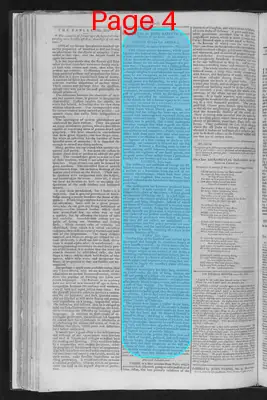
Literary
September 12, 1789
Gazette Of The United States
New York, New York County, New York
What is this article about?
Fictional 2440 gazette excerpts envision a virtuous American republic under Washington's legacy, a reformed England post-colonial losses honoring Cromwell, and a free France with abolished despotism, emphasizing liberty, justice, and public virtue across nations.
Clipping
OCR Quality
95%
Excellent
Full Text
FROM THE NEWPORT HERALD.
Translated from the PARIS GAZETTE, printed the year of our Lord, 2440.
UNITED STATES OF AMERICA.
WASHINGTON, the capital of the Union, May, 2440.
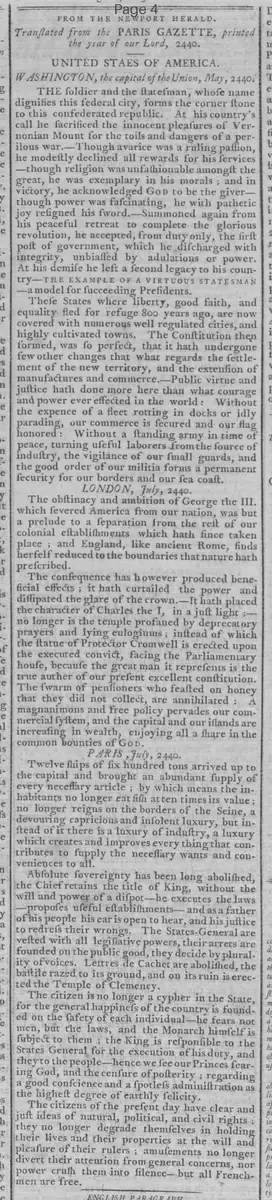
The soldier and the statesman, whose name dignifies this federal city, forms the corner stone to this confederated republic. At his country's call he sacrificed the innocent pleasures of Vernonian Mount for the toils and dangers of a perilous war. Though avarice was a ruling passion, he modestly declined all rewards for his services—though religion was unfashionable amongst the great, he was exemplary in his morals; and in victory, he acknowledged God to be the giver—though power was fascinating, he with pathetic joy resigned his sword. Summoned again from his peaceful retreat to complete the glorious revolution, he accepted, from duty only, the first post of government, which he discharged with integrity, unbiased by adulations or power. At his demise he left a second legacy to his country—THE EXAMPLE OF A VIRTUOUS STATESMAN—a model for succeeding Presidents.
These States where liberty, good faith, and equality fled for refuge 800 years ago, are now covered with numerous well regulated cities, and highly cultivated towns. The Constitution then formed, was so perfect, that it hath undergone few other changes than what regards the settlement of the new territory, and the extension of manufactures and commerce. Public virtue and justice hath done more here than what courage and power ever effected in the world: Without the expense of a fleet rotting in docks or idly parading, our commerce is secured and our flag honored: Without a standing army in time of peace, turning useful laborers from the source of industry, the vigilance of our small guards, and the good order of our militia forms a permanent security for our borders and our sea coast.
LONDON, July, 2440.
The obstinacy and ambition of George the III. which severed America from our nation, was but a prelude to a separation from the rest of our colonial establishments which hath since taken place; and England, like ancient Rome, finds herself reduced to the boundaries that nature hath prescribed.
The consequence has however produced beneficial effects; it hath curtailed the power and dissipated the glare of the crown. It hath placed the character of Charles the I, in a just light; no longer is the temple profaned by deprecatory prayers and lying eulogiums; instead of which the statue of Protector Cromwell is erected upon the executed convict, facing the Parliamentary house, because the great man it represents is the true author of our present excellent constitution. The swarm of pensioners who feasted on honey that they did not collect, are annihilated: A magnanimous and free policy pervades our commercial system, and the capital and our islands are increasing in wealth, enjoying all a share in the common bounties of GOD.
PARIS, July, 2440.
Twelve ships of six hundred tons arrived up to the capital and brought an abundant supply of every necessary article; by which means the inhabitants no longer eat fish ten times its value; no longer reigns on the borders of the Seine, a devouring capricious and insolent luxury, but instead of it there is a luxury of industry, a luxury which creates and improves every thing that contributes to supply the necessary wants and conveniences to all.
Absolute sovereignty has been long abolished, the Chief retains the title of King, without the will and power of a despot—he executes the laws—proposes useful establishments—and as a father of his people his ear is open to hear, and his justice to redress their wrongs. The States-General are vested with all legislative powers, their arrets are founded on the public good, they decide by plurality of voices. Lettres de Cachet are abolished, the bastile razed to its ground, and on its ruin is erected the Temple of Clemency.
The citizen is no longer a cypher in the State, for the general happiness of the country is founded on the safety of each individual—he fears not men, but the laws, and the Monarch himself is subject to them; the King is responsible to the States General for the execution of his duty, and they to the people—hence we see our Princes fearing God, and the censure of posterity; regarding a good conscience and a spotless administration as the highest degree of earthly felicity.
The citizens of the present day have clear and just ideas of natural, political, and civil rights; they no longer degrade themselves in holding their lives and their properties at the will and pleasure of their rulers; amusements no longer divert their attention from general concerns, nor power crush them into silence—but all Frenchmen are free.
Translated from the PARIS GAZETTE, printed the year of our Lord, 2440.
UNITED STATES OF AMERICA.
WASHINGTON, the capital of the Union, May, 2440.
The soldier and the statesman, whose name dignifies this federal city, forms the corner stone to this confederated republic. At his country's call he sacrificed the innocent pleasures of Vernonian Mount for the toils and dangers of a perilous war. Though avarice was a ruling passion, he modestly declined all rewards for his services—though religion was unfashionable amongst the great, he was exemplary in his morals; and in victory, he acknowledged God to be the giver—though power was fascinating, he with pathetic joy resigned his sword. Summoned again from his peaceful retreat to complete the glorious revolution, he accepted, from duty only, the first post of government, which he discharged with integrity, unbiased by adulations or power. At his demise he left a second legacy to his country—THE EXAMPLE OF A VIRTUOUS STATESMAN—a model for succeeding Presidents.
These States where liberty, good faith, and equality fled for refuge 800 years ago, are now covered with numerous well regulated cities, and highly cultivated towns. The Constitution then formed, was so perfect, that it hath undergone few other changes than what regards the settlement of the new territory, and the extension of manufactures and commerce. Public virtue and justice hath done more here than what courage and power ever effected in the world: Without the expense of a fleet rotting in docks or idly parading, our commerce is secured and our flag honored: Without a standing army in time of peace, turning useful laborers from the source of industry, the vigilance of our small guards, and the good order of our militia forms a permanent security for our borders and our sea coast.
LONDON, July, 2440.
The obstinacy and ambition of George the III. which severed America from our nation, was but a prelude to a separation from the rest of our colonial establishments which hath since taken place; and England, like ancient Rome, finds herself reduced to the boundaries that nature hath prescribed.
The consequence has however produced beneficial effects; it hath curtailed the power and dissipated the glare of the crown. It hath placed the character of Charles the I, in a just light; no longer is the temple profaned by deprecatory prayers and lying eulogiums; instead of which the statue of Protector Cromwell is erected upon the executed convict, facing the Parliamentary house, because the great man it represents is the true author of our present excellent constitution. The swarm of pensioners who feasted on honey that they did not collect, are annihilated: A magnanimous and free policy pervades our commercial system, and the capital and our islands are increasing in wealth, enjoying all a share in the common bounties of GOD.
PARIS, July, 2440.
Twelve ships of six hundred tons arrived up to the capital and brought an abundant supply of every necessary article; by which means the inhabitants no longer eat fish ten times its value; no longer reigns on the borders of the Seine, a devouring capricious and insolent luxury, but instead of it there is a luxury of industry, a luxury which creates and improves every thing that contributes to supply the necessary wants and conveniences to all.
Absolute sovereignty has been long abolished, the Chief retains the title of King, without the will and power of a despot—he executes the laws—proposes useful establishments—and as a father of his people his ear is open to hear, and his justice to redress their wrongs. The States-General are vested with all legislative powers, their arrets are founded on the public good, they decide by plurality of voices. Lettres de Cachet are abolished, the bastile razed to its ground, and on its ruin is erected the Temple of Clemency.
The citizen is no longer a cypher in the State, for the general happiness of the country is founded on the safety of each individual—he fears not men, but the laws, and the Monarch himself is subject to them; the King is responsible to the States General for the execution of his duty, and they to the people—hence we see our Princes fearing God, and the censure of posterity; regarding a good conscience and a spotless administration as the highest degree of earthly felicity.
The citizens of the present day have clear and just ideas of natural, political, and civil rights; they no longer degrade themselves in holding their lives and their properties at the will and pleasure of their rulers; amusements no longer divert their attention from general concerns, nor power crush them into silence—but all Frenchmen are free.
What sub-type of article is it?
Vision Or Dream
Essay
Satire
What themes does it cover?
Liberty Freedom
Political
Moral Virtue
What keywords are associated?
Futuristic Vision
American Republic
Washington Legacy
English Reform
French Liberty
Political Virtue
Constitutional Government
Literary Details
Title
Translated From The Paris Gazette, Printed The Year Of Our Lord, 2440.
Subject
Futuristic Visions Of Republican Governance In America, England, And France
Form / Style
Speculative Prose Dispatches From The Year 2440
Key Lines
The Soldier And The Statesman, Whose Name Dignifies This Federal City, Forms The Corner Stone To This Confederated Republic.
Public Virtue And Justice Hath Done More Here Than What Courage And Power Ever Effected In The World
Absolute Sovereignty Has Been Long Abolished, The Chief Retains The Title Of King, Without The Will And Power Of A Despot
But All Frenchmen Are Free.