Thank you for visiting SNEWPapers!
Sign up free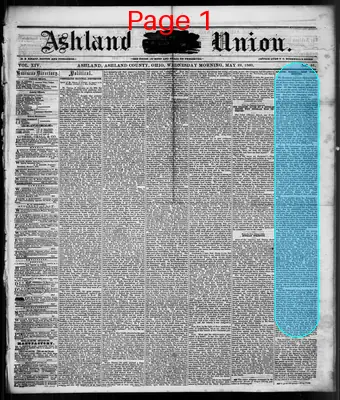
Domestic News
May 23, 1860
The Ashland Union
Ashland, Ashland County, Ohio
What is this article about?
Newspaper commentary praises excerpts from Senator Wigfall of Texas's speech, critiquing Republicans for hypocrisy on forgiveness and coveting, and contrasting historical Whig and Democratic parties' views on government, liberty, and slavery.
Clipping

OCR Quality
95%
Excellent
Full Text
SENATOR WIGFALL GEMS WORTH READING.
The Republican papers are clipping disjointed sentences from the speeches of Senator Wigfall, of Texas—some of which, thus disconnected, make him appear as a rather queer genius. We have been tempted, by these notices, to read his speech, and find many gems in it which glitter like diamonds on a beauty's brow. Here are two paragraphs, which, for truth and force, are seldom equalled:
The Senator complains that if the Lord's prayer was introduced here it would be objected to by somebody. I have no doubt about it; and I have no doubt the objection would come from the other side of the Chamber, and with a degree of good sound sense and discretion that does not usually characterize them. 'Forgive us our trespasses as we forgive those who trespass against us,' is a prayer they cannot pray. They do not only not forgive those who have trespassed against them, but they are unrelenting against those who have never injured them. They or their ancestors and they are all the time talking about 'the fathers,' brought to us, for the love of gold, the very negroes that they are now stealing from us for the love of God. He says that if the ten commandments were introduced there would be objection. I have no doubt there would be, because one of the commandments is that you shall not covet your neighbor's wife, nor his ox, nor his slave, nor anything that is his; and to that they would object. When this Government was organized no questions were sectional. They are all sectional now. At that time the people of one section had not made war upon the people of another section. There was then no party in this country determined on destroying the Government or civil liberty. Now there is. The parties differed not upon sectional questions, but upon the mode of administering the Government. One party the old National, then Federal, then Whig party, and in that name it died out—that party was full of patriotism, if not wisdom. It had genius, and heart, and love of country; it had sail, if it had not ballast; it loved its country, and it wanted to see our eagles spread their wings; it wanted to see a great powerful nation made out of these States that have confederated together. It wanted foreign power and dominion. It wanted to gild the pages of our history. It wanted the American name as one, the name of one people, to go down to posterity emblazoned upon the pages of history. That was the patriotic, though I have always thought, misguided feeling of that old Whig party. There was another party; the Democratic; first it was called the Federal, then the Republican, then the Democratic, and still the Democratic party. That was for a homespun Government. It believed that if you attempted to do too much, you might fail in doing anything; that by establishing a great national reputation, and becoming a great Power, we might pay the price of liberty. That party and Mr. Jefferson, its great teacher, believed that the best of all Governments was one that secured to the citizen the right to live in peace and prosperity, under his own vine and under his own fig tree, that whatever he might secure by his labor should be his own, excepting only so much as was required to defray the necessary expenses of the Government. These were the views of the two parties, there being no war of classes, of races, or sections; they differed from each other as one man happened to have more imagination, and the other more sense. The old Whigs had the imagination and the heart, and the Democrats had the brains. That was the difference. What has been the result? I said the Democrats had the brains. The result is, that the Democratic party stands intact in every State of this Union. There that old guard stands fighting for the Constitution, organized, and now ready for the conflict again; and the Whig party has died out, and is gone—where? First, into Know Nothingism, and now into Republicanism. Why is this? To my mind, there is no difficulty about it. A party that starts out with the theory of Government that the Whig party had, that the Constitution meant nothing, and the preamble meant all; that whatever was for the common defense and general welfare, could be done by this Government—a party starting out on that theory, advocating a tariff for protection, a bank to regulate the currency; internal improvements, and such measures, could very naturally fall into the error of discussing the question of whether slavery was an evil or not, and if it were an evil, then to go for striking at it directly or indirectly. But the democratic party, denying that the Government could do anything unless that thing was found enumerated, or was both necessary and proper for carrying out the enumerated powers—denying, therefore, that Congress could pass a tariff law for any other purpose than for the purpose of raising revenue for defraying the expenses of the Government; denying that Congress could interfere with the currency in any manner, except to declare the value of the coin—denying these propositions, and others of the same sort, very naturally came to the conclusion that, as to the slavery question, it was a matter that they had no concern with. Hence, the Democratic party has never been induced to inquire into the question as to whether slavery was good, bad or indifferent; whether it was 'fish, flesh, or good red herring.' They had nothing more to do with it than they had to do with the slave trade or slavery in Constantinople; hence it is that one party has been absorbed by others, and that the other party stands intact, as it did in the better days of the Republic.
The Republican papers are clipping disjointed sentences from the speeches of Senator Wigfall, of Texas—some of which, thus disconnected, make him appear as a rather queer genius. We have been tempted, by these notices, to read his speech, and find many gems in it which glitter like diamonds on a beauty's brow. Here are two paragraphs, which, for truth and force, are seldom equalled:
The Senator complains that if the Lord's prayer was introduced here it would be objected to by somebody. I have no doubt about it; and I have no doubt the objection would come from the other side of the Chamber, and with a degree of good sound sense and discretion that does not usually characterize them. 'Forgive us our trespasses as we forgive those who trespass against us,' is a prayer they cannot pray. They do not only not forgive those who have trespassed against them, but they are unrelenting against those who have never injured them. They or their ancestors and they are all the time talking about 'the fathers,' brought to us, for the love of gold, the very negroes that they are now stealing from us for the love of God. He says that if the ten commandments were introduced there would be objection. I have no doubt there would be, because one of the commandments is that you shall not covet your neighbor's wife, nor his ox, nor his slave, nor anything that is his; and to that they would object. When this Government was organized no questions were sectional. They are all sectional now. At that time the people of one section had not made war upon the people of another section. There was then no party in this country determined on destroying the Government or civil liberty. Now there is. The parties differed not upon sectional questions, but upon the mode of administering the Government. One party the old National, then Federal, then Whig party, and in that name it died out—that party was full of patriotism, if not wisdom. It had genius, and heart, and love of country; it had sail, if it had not ballast; it loved its country, and it wanted to see our eagles spread their wings; it wanted to see a great powerful nation made out of these States that have confederated together. It wanted foreign power and dominion. It wanted to gild the pages of our history. It wanted the American name as one, the name of one people, to go down to posterity emblazoned upon the pages of history. That was the patriotic, though I have always thought, misguided feeling of that old Whig party. There was another party; the Democratic; first it was called the Federal, then the Republican, then the Democratic, and still the Democratic party. That was for a homespun Government. It believed that if you attempted to do too much, you might fail in doing anything; that by establishing a great national reputation, and becoming a great Power, we might pay the price of liberty. That party and Mr. Jefferson, its great teacher, believed that the best of all Governments was one that secured to the citizen the right to live in peace and prosperity, under his own vine and under his own fig tree, that whatever he might secure by his labor should be his own, excepting only so much as was required to defray the necessary expenses of the Government. These were the views of the two parties, there being no war of classes, of races, or sections; they differed from each other as one man happened to have more imagination, and the other more sense. The old Whigs had the imagination and the heart, and the Democrats had the brains. That was the difference. What has been the result? I said the Democrats had the brains. The result is, that the Democratic party stands intact in every State of this Union. There that old guard stands fighting for the Constitution, organized, and now ready for the conflict again; and the Whig party has died out, and is gone—where? First, into Know Nothingism, and now into Republicanism. Why is this? To my mind, there is no difficulty about it. A party that starts out with the theory of Government that the Whig party had, that the Constitution meant nothing, and the preamble meant all; that whatever was for the common defense and general welfare, could be done by this Government—a party starting out on that theory, advocating a tariff for protection, a bank to regulate the currency; internal improvements, and such measures, could very naturally fall into the error of discussing the question of whether slavery was an evil or not, and if it were an evil, then to go for striking at it directly or indirectly. But the democratic party, denying that the Government could do anything unless that thing was found enumerated, or was both necessary and proper for carrying out the enumerated powers—denying, therefore, that Congress could pass a tariff law for any other purpose than for the purpose of raising revenue for defraying the expenses of the Government; denying that Congress could interfere with the currency in any manner, except to declare the value of the coin—denying these propositions, and others of the same sort, very naturally came to the conclusion that, as to the slavery question, it was a matter that they had no concern with. Hence, the Democratic party has never been induced to inquire into the question as to whether slavery was good, bad or indifferent; whether it was 'fish, flesh, or good red herring.' They had nothing more to do with it than they had to do with the slave trade or slavery in Constantinople; hence it is that one party has been absorbed by others, and that the other party stands intact, as it did in the better days of the Republic.
What sub-type of article is it?
Politics
Slave Related
What keywords are associated?
Senator Wigfall
Political Speech
Whig Party
Democratic Party
Slavery Debate
Republican Criticism
What entities or persons were involved?
Senator Wigfall
Mr. Jefferson
Domestic News Details
Key Persons
Senator Wigfall
Mr. Jefferson
Event Details
Newspaper praises excerpts from Senator Wigfall's speech criticizing Republicans for hypocrisy regarding the Lord's Prayer, Ten Commandments, and coveting slaves; contrasts Whig and Democratic parties' historical views on government administration, patriotism, liberty, and non-interference in slavery.