Thank you for visiting SNEWPapers!
Sign up free
Story
October 15, 1869
The Conservative
Mcconnelsville, Morgan County, Ohio
What is this article about?
Dr. Munroe of Hull, England, shares a cautionary anecdote: prescribing stout as medicine to a teetotaler patient with a hand abscess leads to the man's relapse into drunkenness, family ruin, and loss of faith; the doctor later helps him recover and recommit to temperance.
Clipping
OCR Quality
95%
Excellent
Full Text
MISCELLANEOUS.
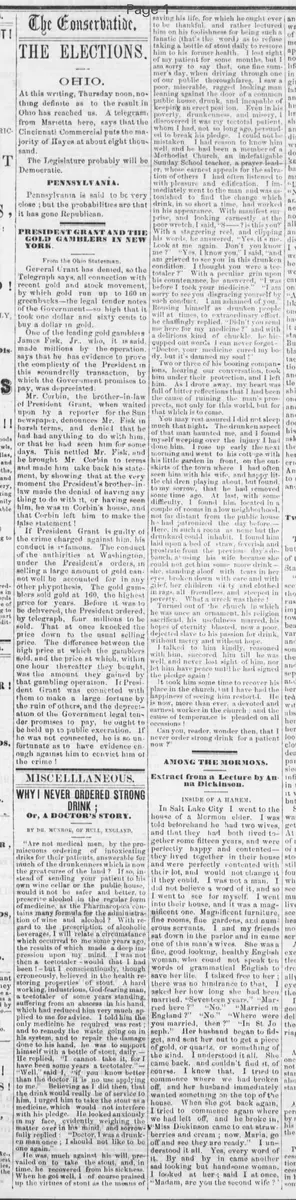
WHY I NEVER ORDERED STRONG
DRINK:
Or, A DOCTOR'S STORY.
BY DR. MUNROE, OF HULL, ENGLAND,
"Are not medical men, by the promiscuous ordering of intoxicating drinks for their patients, answerable for much of the drunkenness which is now the great curse of the land? If so, instead of sending your patient to his own wine cellar or the public house, would it not be safer and better, to prescribe alcohol in the regular form of medicine, as the Pharmacopoeia contains many formula for the administration of wine and alcohol? With regard to the prescription of alcoholic beverages, I will relate a circumstance which occurred to me some years ago, the results of which made a deep impression upon my mind. I was not then a teetotaler -would that I had been! -but I conscientiously, though erroneously, believed in the health restoring properties of stout. A hard working, industrious, God-fearing man, a teetotaler of some years standing, suffering from an abscess in his hand, which had reduced him very much applied to me for advice. I told him the only medicine he required was rest: and to remedy the waste going on in his system, and to repair the damage done to his hand, he was to support himself with a bottle of stout, daily.-
He replied, "I cannot take it, for I have been some years a teetotaler."
"Well," said I, if you know better than the doctor it is no use applying to me." Believing as I did then, that the drink would really be of service to him, I urged him to take the stout as a medicine, which would not interfere with his pledge. He looked anxiously in my face, evidently weighing the matter over in his mind, and sorrowfully replied: "Doctor, I was a drunken man once; I should not like to be one again."
He was, much against his will, prevailed on to take the stout, and, in time, he recovered from his sickness.
When he got well, I of course praised up the virtues of stout as the means of saving his life, for which he ought ever to be thankful, and rather lectured him on his foolishness for being such a fanatic (that's the word) as to refuse taking a bottle of stout daily to restore him to his former health. I lost sight of my patient for some months, but I am sorry to say that, one fine summer's day, when driving through one of our public thoroughfares, I saw a poor, miserable, ragged looking man leaning against the door of a common public house, drunk, and incapable of keeping an erect position. Even in his poverty, drunkenness, and misery, discovered it was my teetotal patient, whom I had, not so long ago, persuaded to break his pledge. I could not be mistaken. I had reason to know him well, and he had been a member of a Methodist Church, an indefatigable Sunday School teacher, a prayer leader, whose earnest appeals for the salvation of others I had often listened to with pleasure and edification. I immediately went to the man and was astonished to find the change which drink, in so short a time, had worked in his appearance. With manifest surprise, and looking earnestly at the poor wretch, I said, "S—? is this you?"
With a staggering reel, and clipping his words, he answered, "Yes, it's me. Look at me again. Don't you know me?" "Yes, I know you," I said, "and am grieved to see you in this drunken condition. I thought you were a teetotaler?" With a peculiar grin upon his countenance, he answered, "I was before I took your medicine." "I am sorry to see you disgracing yourself by such conduct. I am ashamed of you."
Rousing himself as drunken people will at times, to extraordinary effort, he chidingly replied, "Didn't you send me here for my medicine?" and with a delirious kind of chuckle, he hiccuffed out words I can never forget- "Doctor, your medicine cured my body, but it's damned my soul!
Two or three of his boozing companions, hearing our conversation, took him under their protection, and I left him. As I drove away, my heart was full of bitter reflections that I had been the cause of ruining the man's prospects, not only for this world, but for that which is to come.
You may rest assured I did not sleep much that night. The drunken aspect of that man haunted me, and I found myself weeping over the injury I had done him. I rose up early the next morning and went to his cottage with his little garden in front, on the outskirts of the town where I had often seen him with his wife, and happy little children playing about, but found, to my sorrow, that he had removed some time ago. At last, with some difficulty, I found him, located in a couple of rooms in a low neighborhood, not far distant from the public house he had patronized the day before- Here, in such a room as none but the drunkard could inhabit, I found him laid upon a bed of straw, feverish and prostrate from the previous day's debauch, abusing his wife because she could not get him some more drink- she, standing aloof with tears in her eyes, broken down with care and with grief, her children dirty and clothed in rags, all friendless, and steeped in poverty. What a wreck was there!
Turned out of the church in which he was once an ornament, his religion sacrificed, his usefulness marred, his hopes of eternity blasted, now a poor, dejected slave to his passion for drink, without mercy and without hope.
I talked to him kindly, reasoned with him, succored him till he was well, and never lost sight of him, nor let him have peace until he had signed the pledge again!
It took him some time to recover his place in the church, but I have had the happiness of seeing him restored. He is now, more than ever, a devoted and earnest worker in the church; and the cause of temperance is pleaded on all occasions!
Can you, reader, wonder then, that I never order strong drink for a patient now?
WHY I NEVER ORDERED STRONG
DRINK:
Or, A DOCTOR'S STORY.
BY DR. MUNROE, OF HULL, ENGLAND,
"Are not medical men, by the promiscuous ordering of intoxicating drinks for their patients, answerable for much of the drunkenness which is now the great curse of the land? If so, instead of sending your patient to his own wine cellar or the public house, would it not be safer and better, to prescribe alcohol in the regular form of medicine, as the Pharmacopoeia contains many formula for the administration of wine and alcohol? With regard to the prescription of alcoholic beverages, I will relate a circumstance which occurred to me some years ago, the results of which made a deep impression upon my mind. I was not then a teetotaler -would that I had been! -but I conscientiously, though erroneously, believed in the health restoring properties of stout. A hard working, industrious, God-fearing man, a teetotaler of some years standing, suffering from an abscess in his hand, which had reduced him very much applied to me for advice. I told him the only medicine he required was rest: and to remedy the waste going on in his system, and to repair the damage done to his hand, he was to support himself with a bottle of stout, daily.-
He replied, "I cannot take it, for I have been some years a teetotaler."
"Well," said I, if you know better than the doctor it is no use applying to me." Believing as I did then, that the drink would really be of service to him, I urged him to take the stout as a medicine, which would not interfere with his pledge. He looked anxiously in my face, evidently weighing the matter over in his mind, and sorrowfully replied: "Doctor, I was a drunken man once; I should not like to be one again."
He was, much against his will, prevailed on to take the stout, and, in time, he recovered from his sickness.
When he got well, I of course praised up the virtues of stout as the means of saving his life, for which he ought ever to be thankful, and rather lectured him on his foolishness for being such a fanatic (that's the word) as to refuse taking a bottle of stout daily to restore him to his former health. I lost sight of my patient for some months, but I am sorry to say that, one fine summer's day, when driving through one of our public thoroughfares, I saw a poor, miserable, ragged looking man leaning against the door of a common public house, drunk, and incapable of keeping an erect position. Even in his poverty, drunkenness, and misery, discovered it was my teetotal patient, whom I had, not so long ago, persuaded to break his pledge. I could not be mistaken. I had reason to know him well, and he had been a member of a Methodist Church, an indefatigable Sunday School teacher, a prayer leader, whose earnest appeals for the salvation of others I had often listened to with pleasure and edification. I immediately went to the man and was astonished to find the change which drink, in so short a time, had worked in his appearance. With manifest surprise, and looking earnestly at the poor wretch, I said, "S—? is this you?"
With a staggering reel, and clipping his words, he answered, "Yes, it's me. Look at me again. Don't you know me?" "Yes, I know you," I said, "and am grieved to see you in this drunken condition. I thought you were a teetotaler?" With a peculiar grin upon his countenance, he answered, "I was before I took your medicine." "I am sorry to see you disgracing yourself by such conduct. I am ashamed of you."
Rousing himself as drunken people will at times, to extraordinary effort, he chidingly replied, "Didn't you send me here for my medicine?" and with a delirious kind of chuckle, he hiccuffed out words I can never forget- "Doctor, your medicine cured my body, but it's damned my soul!
Two or three of his boozing companions, hearing our conversation, took him under their protection, and I left him. As I drove away, my heart was full of bitter reflections that I had been the cause of ruining the man's prospects, not only for this world, but for that which is to come.
You may rest assured I did not sleep much that night. The drunken aspect of that man haunted me, and I found myself weeping over the injury I had done him. I rose up early the next morning and went to his cottage with his little garden in front, on the outskirts of the town where I had often seen him with his wife, and happy little children playing about, but found, to my sorrow, that he had removed some time ago. At last, with some difficulty, I found him, located in a couple of rooms in a low neighborhood, not far distant from the public house he had patronized the day before- Here, in such a room as none but the drunkard could inhabit, I found him laid upon a bed of straw, feverish and prostrate from the previous day's debauch, abusing his wife because she could not get him some more drink- she, standing aloof with tears in her eyes, broken down with care and with grief, her children dirty and clothed in rags, all friendless, and steeped in poverty. What a wreck was there!
Turned out of the church in which he was once an ornament, his religion sacrificed, his usefulness marred, his hopes of eternity blasted, now a poor, dejected slave to his passion for drink, without mercy and without hope.
I talked to him kindly, reasoned with him, succored him till he was well, and never lost sight of him, nor let him have peace until he had signed the pledge again!
It took him some time to recover his place in the church, but I have had the happiness of seeing him restored. He is now, more than ever, a devoted and earnest worker in the church; and the cause of temperance is pleaded on all occasions!
Can you, reader, wonder then, that I never order strong drink for a patient now?
What sub-type of article is it?
Biography
Tragedy
Personal Triumph
What themes does it cover?
Moral Virtue
Misfortune
Recovery
What keywords are associated?
Temperance
Alcohol Prescription
Teetotaler Relapse
Moral Lesson
Redemption
Doctor Remorse
What entities or persons were involved?
Dr. Munroe
Patient S—
Where did it happen?
Hull, England
Story Details
Key Persons
Dr. Munroe
Patient S—
Location
Hull, England
Event Date
Some Years Ago
Story Details
Dr. Munroe prescribes stout to teetotaler patient S— for hand abscess recovery, persuading him to break pledge; patient relapses into alcoholism, ruining life and family; doctor, remorseful, aids his physical and spiritual recovery, leading both to advocate temperance.