Thank you for visiting SNEWPapers!
Sign up free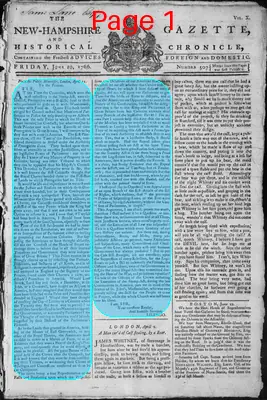
Letter to Editor
June 20, 1766
The New Hampshire Gazette And Historical Chronicle
Portsmouth, Greenland, Rockingham County, New Hampshire
What is this article about?
A letter from London defending Parliament's repeal of the Stamp Act as a balanced act of firmness and leniency, attributing American resistance to historical reliance on royal prerogative and lack of parliamentary intervention in colonial affairs until the Revolution.
Clipping
OCR Quality
95%
Excellent
Full Text
From the Public Advertiser, London, April 11.
To the Printer.
SIR,
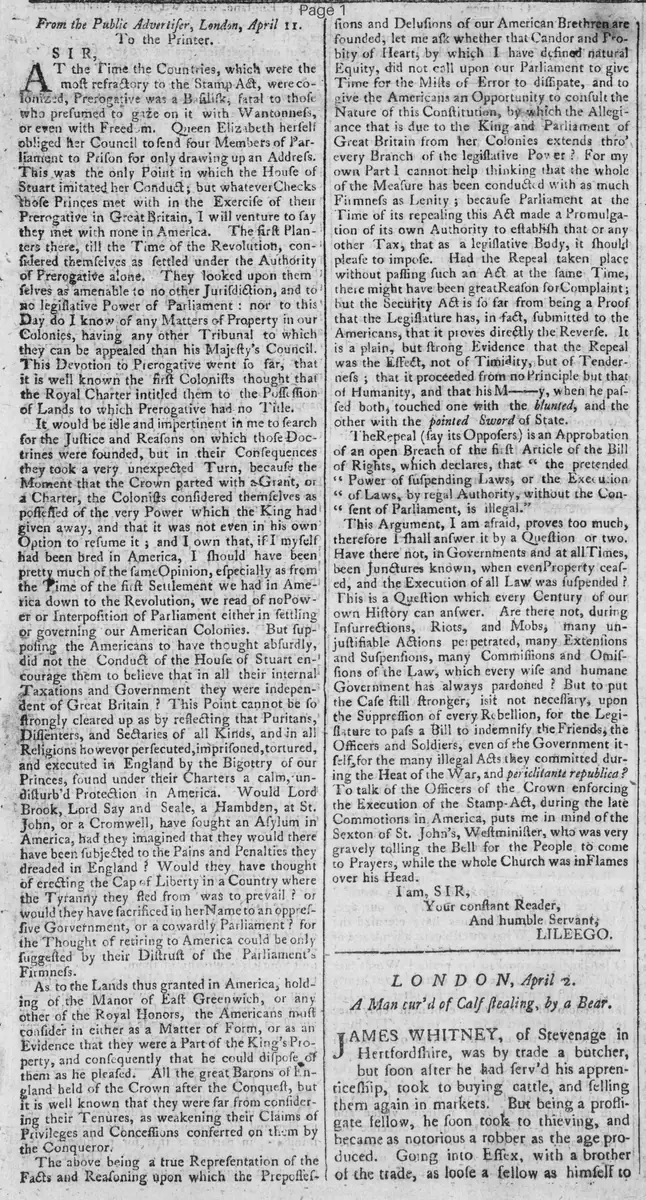
At the Time the Countries which were the most refractory to the Stamp Act. were colonized, Prerogative was a Bugbear fatal to those who presumed to gaze on it with Wantonness, or even with Freedom. Queen Elizabeth herself obliged her Council to send four Members of Parliament to Prison for only drawing up an Address. This was the only Point in which the House of Stuart imitated her Conduct: but whatever Checks Those Princes met with in the Exercise of their Prerogative in Great Britain. I will venture to say they met with none in America. The first Planters there, till the Time of the Revolution, considered themselves as settled under the Authority of Prerogative alone. They looked upon themselves as amenable to no other Jurisdiction, and to no legislative Power of Parliament : nor to this Day do I know of any Matters of Property in our Colonies, having any other Tribunal to which they can be appealed than his Majesty's Council. This Devotion to Prerogative went so far, that it is well known the first Colonies thought that the Royal Charter intitled them to the Possession of Lands to which Prerogative had no Title. It would be idle and impertinent in me to search for the Justice and Reasons on which those Doctrines were founded. but in their Consequences they took a very unexpected Turn, because the Moment that the Crown parted with a Grant, or a Charter. the Colonies considered themselves as possessed of the very Power which the King had given away, and that it was not even in his own Option to resume it : and I own that, if I myself had been bred in America, I should have been pretty much of the same Opinion, especially as from the Time of the first Settlement we had in America down to the Revolution, we read of no Power or Interposition of Parliament either in settling or governing our American Colonies. But supposing the Americans to have thought absurdly, did not the Conduct of the House of Stuart encourage them to believe that in all their internal Taxations and Government they were independent of Great Britain ? This Point cannot be so strongly cleared up as by reflecting that Puritans, Dissenters, and Sectaries of all Kinds, and in all Religions however persecuted, imprisoned, tortured, and executed in England by the Bigotry of our Princes, found under their Charters a calm, undisturbed Protection in America. Would Lord Brook. Lord Say and Seale, a Hampden, at St. John, or a Cromwell, have sought an Asylum in America, had they imagined that they would there have been subjected to the Pains and Penalties they dreaded in England ? Would they have thought of erecting the Cap of Liberty in a Country where the Tyranny they fled from 'was to prevail ? or would they have sacrificed in her Name to an oppressive Government, or a cowardly Parliament? for the Thought of retiring to America could be only suggested by their Distrust of the Parliament's Firmness. As to the Lands thus granted in America, holding of the Manor of East Greenwich, or any other of the Royal Honors, the Americans must consider it either as a Matter of Form, or as an Evidence that they were a Part of the King's Property, and consequently that he could dispose of them as he pleased. All the great Barons of England held of the Crown after the Conquest, but it is well known that they were far from considering their Tenures, as weakening their Claims of Privileges and Concessions conferred on them by the Conqueror. The above being a true Representation of the Facts and Reasoning upon which the Prepossessions and Delusions of our American Brethren are founded. let me ask whether that Candor and Probity of Heart, by which I have defined natural Equity, did not call upon our Parliament to give Time for the Mists of Error to dissipate, and to give the Americans an Opportunity to consult the Nature of this Constitution, by which the Allegiance that is due to the King and Parliament of Great Britain from her Colonies extends thro' every Branch of the legislative Power ? For my own Part I cannot help thinking that the whole of the Measure has been conducted with as much Firmness as Lenity : because Parliament at the Time of its repealing this Act made a Promulgation of its own Authority to establish that or any other Tax, that as a legislative Body, it should please to impose. Had the Repeal taken place without passing such an Act at the same Time, there might have been great Reason for Complaint; but the Security Act is so far from being a Proof that the Legislature has, in fact, submitted to the Americans. that it proves directly the Reverse. It is a plain, but strong Evidence that the Repeal was the Effect. not of Timidity, but of Tenderness : that it proceeded from no Principle but that of Humanity, and that his Majesty, when he passed both, touched one with the blunted, and the other with the pointed Sword of State. The Repeal (say its Opposers) is an Approbation of an open Breach of the first Article of the Bill of Rights. which declares, that " the pretended Power of suspending Laws, or the Execution of Laws. by regal Authority, without the Consent of Parliament. is illegal." This Argument, I am afraid, proves too much, therefore I shall answer it by a Question or two. Have there not, in Governments and at all Times, been Junctures known, when even Property ceased, and the Execution of all Law was suspended ? This is a Question which every Century of our own History can answer. Are there not, during Insurrections, Riots, and Mobs, many unjustifiable Actions perpetrated, many Extensions and Suspensions, many Commissions and Omissions of the Law, which every wise and humane Government has always pardoned ? But to put the Case still stronger; is it not necessary, upon the Suppression of every Rebellion, for the Legislature to pass a Bill to indemnify the Friends: the Officers and Soldiers, even of the Government itself. for the many illegal Acts they committed during the Heat of the War, and pericula rei publicae? To talk of the Officers of the Crown enforcing the Execution of the Stamp-Act, during the late Commotions in, America, puts me in mind of the Sexton of St. John's, Westminster, who was very gravely tolling the Bell for the People to come to Prayers; while the whole Church was in Flames over his Head.
I am, SIR,
Your constant Reader,
And humble Servant,
LILEGO.
To the Printer.
SIR,
At the Time the Countries which were the most refractory to the Stamp Act. were colonized, Prerogative was a Bugbear fatal to those who presumed to gaze on it with Wantonness, or even with Freedom. Queen Elizabeth herself obliged her Council to send four Members of Parliament to Prison for only drawing up an Address. This was the only Point in which the House of Stuart imitated her Conduct: but whatever Checks Those Princes met with in the Exercise of their Prerogative in Great Britain. I will venture to say they met with none in America. The first Planters there, till the Time of the Revolution, considered themselves as settled under the Authority of Prerogative alone. They looked upon themselves as amenable to no other Jurisdiction, and to no legislative Power of Parliament : nor to this Day do I know of any Matters of Property in our Colonies, having any other Tribunal to which they can be appealed than his Majesty's Council. This Devotion to Prerogative went so far, that it is well known the first Colonies thought that the Royal Charter intitled them to the Possession of Lands to which Prerogative had no Title. It would be idle and impertinent in me to search for the Justice and Reasons on which those Doctrines were founded. but in their Consequences they took a very unexpected Turn, because the Moment that the Crown parted with a Grant, or a Charter. the Colonies considered themselves as possessed of the very Power which the King had given away, and that it was not even in his own Option to resume it : and I own that, if I myself had been bred in America, I should have been pretty much of the same Opinion, especially as from the Time of the first Settlement we had in America down to the Revolution, we read of no Power or Interposition of Parliament either in settling or governing our American Colonies. But supposing the Americans to have thought absurdly, did not the Conduct of the House of Stuart encourage them to believe that in all their internal Taxations and Government they were independent of Great Britain ? This Point cannot be so strongly cleared up as by reflecting that Puritans, Dissenters, and Sectaries of all Kinds, and in all Religions however persecuted, imprisoned, tortured, and executed in England by the Bigotry of our Princes, found under their Charters a calm, undisturbed Protection in America. Would Lord Brook. Lord Say and Seale, a Hampden, at St. John, or a Cromwell, have sought an Asylum in America, had they imagined that they would there have been subjected to the Pains and Penalties they dreaded in England ? Would they have thought of erecting the Cap of Liberty in a Country where the Tyranny they fled from 'was to prevail ? or would they have sacrificed in her Name to an oppressive Government, or a cowardly Parliament? for the Thought of retiring to America could be only suggested by their Distrust of the Parliament's Firmness. As to the Lands thus granted in America, holding of the Manor of East Greenwich, or any other of the Royal Honors, the Americans must consider it either as a Matter of Form, or as an Evidence that they were a Part of the King's Property, and consequently that he could dispose of them as he pleased. All the great Barons of England held of the Crown after the Conquest, but it is well known that they were far from considering their Tenures, as weakening their Claims of Privileges and Concessions conferred on them by the Conqueror. The above being a true Representation of the Facts and Reasoning upon which the Prepossessions and Delusions of our American Brethren are founded. let me ask whether that Candor and Probity of Heart, by which I have defined natural Equity, did not call upon our Parliament to give Time for the Mists of Error to dissipate, and to give the Americans an Opportunity to consult the Nature of this Constitution, by which the Allegiance that is due to the King and Parliament of Great Britain from her Colonies extends thro' every Branch of the legislative Power ? For my own Part I cannot help thinking that the whole of the Measure has been conducted with as much Firmness as Lenity : because Parliament at the Time of its repealing this Act made a Promulgation of its own Authority to establish that or any other Tax, that as a legislative Body, it should please to impose. Had the Repeal taken place without passing such an Act at the same Time, there might have been great Reason for Complaint; but the Security Act is so far from being a Proof that the Legislature has, in fact, submitted to the Americans. that it proves directly the Reverse. It is a plain, but strong Evidence that the Repeal was the Effect. not of Timidity, but of Tenderness : that it proceeded from no Principle but that of Humanity, and that his Majesty, when he passed both, touched one with the blunted, and the other with the pointed Sword of State. The Repeal (say its Opposers) is an Approbation of an open Breach of the first Article of the Bill of Rights. which declares, that " the pretended Power of suspending Laws, or the Execution of Laws. by regal Authority, without the Consent of Parliament. is illegal." This Argument, I am afraid, proves too much, therefore I shall answer it by a Question or two. Have there not, in Governments and at all Times, been Junctures known, when even Property ceased, and the Execution of all Law was suspended ? This is a Question which every Century of our own History can answer. Are there not, during Insurrections, Riots, and Mobs, many unjustifiable Actions perpetrated, many Extensions and Suspensions, many Commissions and Omissions of the Law, which every wise and humane Government has always pardoned ? But to put the Case still stronger; is it not necessary, upon the Suppression of every Rebellion, for the Legislature to pass a Bill to indemnify the Friends: the Officers and Soldiers, even of the Government itself. for the many illegal Acts they committed during the Heat of the War, and pericula rei publicae? To talk of the Officers of the Crown enforcing the Execution of the Stamp-Act, during the late Commotions in, America, puts me in mind of the Sexton of St. John's, Westminster, who was very gravely tolling the Bell for the People to come to Prayers; while the whole Church was in Flames over his Head.
I am, SIR,
Your constant Reader,
And humble Servant,
LILEGO.
What sub-type of article is it?
Persuasive
Historical
Political
What themes does it cover?
Taxation
Constitutional Rights
Politics
What keywords are associated?
Stamp Act
American Colonies
Parliament Authority
Royal Prerogative
Tax Repeal
Declaratory Act
Bill Of Rights
Colonial History
What entities or persons were involved?
Lilego
The Printer
Letter to Editor Details
Author
Lilego
Recipient
The Printer
Main Argument
parliament's repeal of the stamp act was conducted with firmness and leniency, affirming its legislative authority over the colonies despite historical misconceptions rooted in royal prerogative; the accompanying declaratory act proves this was not submission but humanity.
Notable Details
References Queen Elizabeth Imprisoning Mps
House Of Stuart's Imitation
Puritans And Dissenters Finding Protection In America
Names: Lord Brook, Lord Say And Seale, Hampden, St. John, Cromwell
Analogy To Sexton Tolling Bell In Burning Church
Quotes Bill Of Rights On Suspending Laws