Thank you for visiting SNEWPapers!
Sign up free
Literary
September 16, 1876
Bradford Opinion
Bradford, Orange County, Vermont
What is this article about?
The essay critiques commonplace taste in everyday design and manufacturing, arguing it pervades household items like carpets, furniture, and textiles, leading to vulgar, unartistic products. It contrasts modern decline with superior past quality, blaming cheap production and competition.
Clipping
OCR Quality
95%
Excellent
Full Text
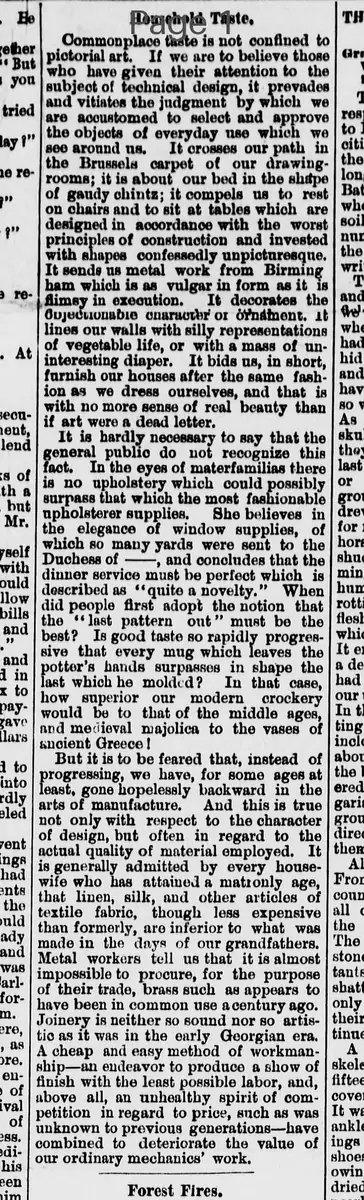
Commonplace taste is not confined to pictorial art. If we are to believe those who have given their attention to the subject of technical design, it pervades and vitiates the judgment by which we are accustomed to select and approve the objects of everyday use which we see around us. It crosses our path in the Brussels carpet of our drawing-rooms; it is about our bed in the shape of gaudy chintz; it compels us to rest on chairs and to sit at tables which are designed in accordance with the worst principles of construction and invested with shapes confessedly unpicturesque. It sends us metal work from Birmingham which is as vulgar in form as it is flimsy in execution. It decorates the objectionable character of ornament. It lines our walls with silly representations of vegetable life, or with a mass of uninteresting diaper. It bids us, in short, furnish our houses after the same fashion as we dress ourselves, and that is with no more sense of real beauty than if art were a dead letter.
It is hardly necessary to say that the general public do not recognize this fact. In the eyes of materfamilias there is no upholstery which could possibly surpass that which the most fashionable upholsterer supplies. She believes in the elegance of window supplies, of which so many yards were sent to the Duchess of , and concludes that the dinner service must be perfect which is described as "quite a novelty." When did people first adopt the notion that the "last pattern out" must be the best? Is good taste so rapidly progressive that every mug which leaves the potter's hands surpasses in shape the last which he molded? In that case, how superior our modern crockery would be to that of the middle ages, and medieval majolica to the vases of ancient Greece!
But it is to be feared that, instead of progressing, we have, for some ages at least, gone hopelessly backward in the arts of manufacture. And this is true not only with respect to the character of design, but often in regard to the actual quality of material employed. It is generally admitted by every housewife who has attained a matronly age, that linen, silk, and other articles of textile fabric, though less expensive than formerly, are inferior to what was made in the days of our grandfathers. Metal workers tell us that it is almost impossible to procure, for the purpose of their trade, brass such as appears to have been in common use a century ago. Joinery is neither so sound nor so artistic as it was in the early Georgian era. A cheap and easy method of workmanship-an endeavor to produce a show of finish with the least possible labor, and, above all, an unhealthy spirit of competition in regard to price, such as was unknown to previous generations-have combined to deteriorate the value of our ordinary mechanics' work.
It is hardly necessary to say that the general public do not recognize this fact. In the eyes of materfamilias there is no upholstery which could possibly surpass that which the most fashionable upholsterer supplies. She believes in the elegance of window supplies, of which so many yards were sent to the Duchess of , and concludes that the dinner service must be perfect which is described as "quite a novelty." When did people first adopt the notion that the "last pattern out" must be the best? Is good taste so rapidly progressive that every mug which leaves the potter's hands surpasses in shape the last which he molded? In that case, how superior our modern crockery would be to that of the middle ages, and medieval majolica to the vases of ancient Greece!
But it is to be feared that, instead of progressing, we have, for some ages at least, gone hopelessly backward in the arts of manufacture. And this is true not only with respect to the character of design, but often in regard to the actual quality of material employed. It is generally admitted by every housewife who has attained a matronly age, that linen, silk, and other articles of textile fabric, though less expensive than formerly, are inferior to what was made in the days of our grandfathers. Metal workers tell us that it is almost impossible to procure, for the purpose of their trade, brass such as appears to have been in common use a century ago. Joinery is neither so sound nor so artistic as it was in the early Georgian era. A cheap and easy method of workmanship-an endeavor to produce a show of finish with the least possible labor, and, above all, an unhealthy spirit of competition in regard to price, such as was unknown to previous generations-have combined to deteriorate the value of our ordinary mechanics' work.
What sub-type of article is it?
Essay
Satire
What themes does it cover?
Social Manners
Commerce Trade
What keywords are associated?
Commonplace Taste
Design Critique
Manufacturing Decline
Aesthetic Judgment
Household Ornament
Textile Quality
Industrial Competition
Literary Details
Subject
Critique Of Commonplace Taste In Design And Manufacturing
Key Lines
Commonplace Taste Is Not Confined To Pictorial Art.
It Bids Us, In Short, Furnish Our Houses After The Same Fashion As We Dress Ourselves, And That Is With No More Sense Of Real Beauty Than If Art Were A Dead Letter.
When Did People First Adopt The Notion That The "Last Pattern Out" Must Be The Best?
But It Is To Be Feared That, Instead Of Progressing, We Have, For Some Ages At Least, Gone Hopelessly Backward In The Arts Of Manufacture.
A Cheap And Easy Method Of Workmanship... Have Combined To Deteriorate The Value Of Our Ordinary Mechanics' Work.