Thank you for visiting SNEWPapers!
Sign up free
Literary
April 10, 1841
The Congregational Observer
Hartford, New Haven, Hartford County, New Haven County, Connecticut
What is this article about?
In a framed narrative, Uncle Parsons reads a story to his family about Mr. M., a traveler in 1797 Vermont who gives his last dollar to a poor woman for a Bible during a storm. A year later, he learns this act led to her conversion and a religious revival in her community, affirming his faith in divine reward.
Clipping
OCR Quality
95%
Excellent
Full Text
CHILDREN'S CORNER.
No. LX.
"What's the matter, husband," said my aunt Parsons, as she saw the tear trickling down the cheek of my good uncle, as he closed a little volume published by the London Religious Tract Society—"what's the matter?"
"Oh," exclaimed he—"I feel condemned, condemned, condemned, I can assure you wife, and my heart bleeds when I think of my wicked unbelief and selfishness." "But why are you thinking of that particularly at this time?" "Oh my dear, this little book contains one of the most affecting stories I ever read, and reminds me of many an opportunity of doing good I have misimproved, because I was afraid to trust God, and cast my bread upon the waters." It was Sabbath afternoon, and the children were seated around the room reading their Bibles—but having listened to the conversation had all become deeply interested in the father's confessions and tears. "Father," said James, "why will you not let us hear that story?" "Well my son, here it is; read it aloud, and I hope we shall all profit by it." James took the volume and read the story, although he was obliged to stop several times to weep because his heart was so full.
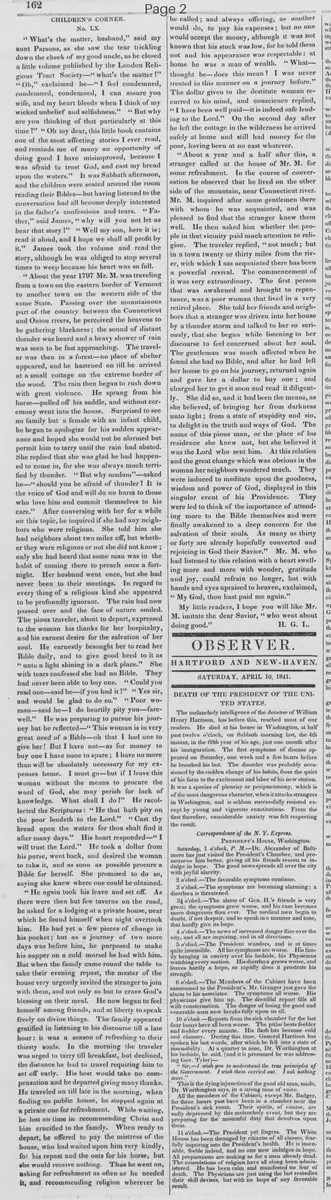
"About the year 1797 Mr. M. was traveling from a town on the eastern border of Vermont to another town on the western side of the same State. Passing over the mountainous part of the country between the Connecticut and Onion rivers, he perceived the heavens to be gathering blackness; the sound of distant thunder was heard and a heavy shower of rain was seen to be fast approaching. The traveler was then in a forest—no place of shelter appeared, and he hastened on till he arrived at a small cottage on the extreme border of the wood. The rain then began to rush down with great violence. He sprang from his horse—pulled off his saddle, and without ceremony went into the house. Surprised to see no family but a female with an infant child, he began to apologize for his sudden appearance and hoped she would not be alarmed but permit him to tarry until the rain had abated. She replied that she was glad he had happened to come in, for she was always much terrified by thunder. "But why madam" asked he—"should you be afraid of thunder? It is the voice of God and will do no harm to those who love him and commit themselves to his care." After conversing with her for a while on this topic, he inquired if she had any neighbors who were religious. She told him she had neighbors about two miles off, but whether they were religious or not she did not know; only she had heard that some man was in the habit of coming there to preach once a fortnight. Her husband went once, but she had never been to their meetings. In regard to every thing of a religious kind she appeared to be profoundly ignorant. The rain had now passed over and the face of nature smiled. The pious traveler, about to depart, expressed to the woman his thanks for her hospitality, and his earnest desire for the salvation of her soul. He earnestly besought her to read her Bible daily, and to give good heed to it as "unto a light shining in a dark place." She with tears confessed she had no Bible. They had never been able to buy one. "Could you read one—said he—if you had it?" "Yes sir, and would be glad to do so." "Poor woman—said he—I do heartily pity you—farewell." He was preparing to pursue his journey but he reflected—"This woman is in very great need of a Bible—oh that I had one to give her! But I have not—as for money to buy one I have none to spare; I have no more than will be absolutely necessary for my expenses home. I must go—but if I leave this woman without the means to procure the word of God, she may perish for lack of knowledge. What shall I do?" He recollected the Scriptures: "He that hath pity on the poor lendeth to the Lord." "Cast thy bread upon the waters for thou shalt find it after many days." His heart responded—"I will trust the Lord." He took a dollar from his purse, went back, and desired the woman to take it, and as soon as possible procure a Bible for herself. She promised to do so, saying she knew where one could be obtained. "He again took his leave and set off. As there were then but few taverns on the road, he asked for a lodging at a private house, near which he found himself when night overtook him. He had yet a few pieces of change in his pocket; but as a journey of two more days was before him, he purposed to make his supper on a cold morsel he had with him. But when the family came round the table to take their evening repast, the master of the house very urgently invited the stranger to join with them, and not only so but to crave God's blessing on their meal. He now began to feel himself among friends, and at liberty to speak freely on divine things. The family appeared gratified in listening to his discourse till a late hour: it was a season of refreshing to their thirsty souls. In the morning the traveler was urged to tarry till breakfast, but declined, the distance he had to travel requiring him to set off early. His host would take no compensation and he departed giving many thanks. He traveled on till late in the morning, when finding no public house, he stopped again at a private one for refreshment. While waiting, he lost no time in recommending Christ and him crucified to the family. When ready to depart, he offered to pay the mistress of the house, who had waited upon him very kindly, for his repast and the oats for his horse, but she would receive nothing. Thus he went on, asking for refreshment as often as he needed it, and recommending religion wherever he called; and always offering, as another would do, to pay his expenses; but no one would accept the money, although it was not known that his stock was low, for he told them not and his appearance was respectable: at home he was a man of wealth. "What—thought he—does this mean? I was never treated in this manner on a journey before." The dollar given to the destitute woman recurred to his mind, and conscience replied, "I have been well paid—it is indeed safe lending to the Lord." On the second day after he left the cottage in the wilderness he arrived safely at home and still had money for the poor, having been at no cost whatever.
"About a year and a half after this, a stranger called at the house of Mr. M. for some refreshment. In the course of conversation he observed that he lived on the other side of the mountain, near Connecticut river. Mr. M. inquired after some gentlemen there with whom he was acquainted, and was pleased to find that the stranger knew them well. He then asked him whether the people in that vicinity paid much attention to religion. The traveler replied, "not much; but in a town twenty or thirty miles from the river, with which I am acquainted there has been a powerful revival. The commencement of it was very extraordinary. The first person that was awakened and brought to repentance, was a poor woman that lived in a very retired place. She told her friends and neighbors that a stranger was driven into her house by a thunder storm and talked to her so seriously, that she began while listening to his discourse to feel concerned about her soul. The gentleman was much affected when he found she had no Bible, and after he had left her house to go on his journey, returned again and gave her a dollar to buy one; and charged her to get it soon and read it diligently. She did so, and it had been the means, as she believed, of bringing her from darkness unto light; from a state of stupidity and sin, to delight in the truth and ways of God. The name of this pious man, or the place of his residence she knew not, but she believed it was the Lord who sent him. At this relation and the great change which was obvious in the woman her neighbors wondered much. They were induced to meditate upon the goodness, wisdom and power of God, displayed in this singular event of his Providence. They were led to think of the importance of attending more to the Bible themselves and were finally awakened to a deep concern for the salvation of their souls. As many as thirty or forty are already hopefully converted and rejoicing in God their Savior." Mr. M. who had listened to this relation with a heart swelling more and more with wonder, gratitude and joy, could refrain no longer, but with hands and eyes upraised to heaven, exclaimed, "My God, thou hast paid me again."
My little readers, I hope you will like Mr. M. imitate the dear Savior, "who went about doing good."
H. G. L.
No. LX.
"What's the matter, husband," said my aunt Parsons, as she saw the tear trickling down the cheek of my good uncle, as he closed a little volume published by the London Religious Tract Society—"what's the matter?"
"Oh," exclaimed he—"I feel condemned, condemned, condemned, I can assure you wife, and my heart bleeds when I think of my wicked unbelief and selfishness." "But why are you thinking of that particularly at this time?" "Oh my dear, this little book contains one of the most affecting stories I ever read, and reminds me of many an opportunity of doing good I have misimproved, because I was afraid to trust God, and cast my bread upon the waters." It was Sabbath afternoon, and the children were seated around the room reading their Bibles—but having listened to the conversation had all become deeply interested in the father's confessions and tears. "Father," said James, "why will you not let us hear that story?" "Well my son, here it is; read it aloud, and I hope we shall all profit by it." James took the volume and read the story, although he was obliged to stop several times to weep because his heart was so full.
"About the year 1797 Mr. M. was traveling from a town on the eastern border of Vermont to another town on the western side of the same State. Passing over the mountainous part of the country between the Connecticut and Onion rivers, he perceived the heavens to be gathering blackness; the sound of distant thunder was heard and a heavy shower of rain was seen to be fast approaching. The traveler was then in a forest—no place of shelter appeared, and he hastened on till he arrived at a small cottage on the extreme border of the wood. The rain then began to rush down with great violence. He sprang from his horse—pulled off his saddle, and without ceremony went into the house. Surprised to see no family but a female with an infant child, he began to apologize for his sudden appearance and hoped she would not be alarmed but permit him to tarry until the rain had abated. She replied that she was glad he had happened to come in, for she was always much terrified by thunder. "But why madam" asked he—"should you be afraid of thunder? It is the voice of God and will do no harm to those who love him and commit themselves to his care." After conversing with her for a while on this topic, he inquired if she had any neighbors who were religious. She told him she had neighbors about two miles off, but whether they were religious or not she did not know; only she had heard that some man was in the habit of coming there to preach once a fortnight. Her husband went once, but she had never been to their meetings. In regard to every thing of a religious kind she appeared to be profoundly ignorant. The rain had now passed over and the face of nature smiled. The pious traveler, about to depart, expressed to the woman his thanks for her hospitality, and his earnest desire for the salvation of her soul. He earnestly besought her to read her Bible daily, and to give good heed to it as "unto a light shining in a dark place." She with tears confessed she had no Bible. They had never been able to buy one. "Could you read one—said he—if you had it?" "Yes sir, and would be glad to do so." "Poor woman—said he—I do heartily pity you—farewell." He was preparing to pursue his journey but he reflected—"This woman is in very great need of a Bible—oh that I had one to give her! But I have not—as for money to buy one I have none to spare; I have no more than will be absolutely necessary for my expenses home. I must go—but if I leave this woman without the means to procure the word of God, she may perish for lack of knowledge. What shall I do?" He recollected the Scriptures: "He that hath pity on the poor lendeth to the Lord." "Cast thy bread upon the waters for thou shalt find it after many days." His heart responded—"I will trust the Lord." He took a dollar from his purse, went back, and desired the woman to take it, and as soon as possible procure a Bible for herself. She promised to do so, saying she knew where one could be obtained. "He again took his leave and set off. As there were then but few taverns on the road, he asked for a lodging at a private house, near which he found himself when night overtook him. He had yet a few pieces of change in his pocket; but as a journey of two more days was before him, he purposed to make his supper on a cold morsel he had with him. But when the family came round the table to take their evening repast, the master of the house very urgently invited the stranger to join with them, and not only so but to crave God's blessing on their meal. He now began to feel himself among friends, and at liberty to speak freely on divine things. The family appeared gratified in listening to his discourse till a late hour: it was a season of refreshing to their thirsty souls. In the morning the traveler was urged to tarry till breakfast, but declined, the distance he had to travel requiring him to set off early. His host would take no compensation and he departed giving many thanks. He traveled on till late in the morning, when finding no public house, he stopped again at a private one for refreshment. While waiting, he lost no time in recommending Christ and him crucified to the family. When ready to depart, he offered to pay the mistress of the house, who had waited upon him very kindly, for his repast and the oats for his horse, but she would receive nothing. Thus he went on, asking for refreshment as often as he needed it, and recommending religion wherever he called; and always offering, as another would do, to pay his expenses; but no one would accept the money, although it was not known that his stock was low, for he told them not and his appearance was respectable: at home he was a man of wealth. "What—thought he—does this mean? I was never treated in this manner on a journey before." The dollar given to the destitute woman recurred to his mind, and conscience replied, "I have been well paid—it is indeed safe lending to the Lord." On the second day after he left the cottage in the wilderness he arrived safely at home and still had money for the poor, having been at no cost whatever.
"About a year and a half after this, a stranger called at the house of Mr. M. for some refreshment. In the course of conversation he observed that he lived on the other side of the mountain, near Connecticut river. Mr. M. inquired after some gentlemen there with whom he was acquainted, and was pleased to find that the stranger knew them well. He then asked him whether the people in that vicinity paid much attention to religion. The traveler replied, "not much; but in a town twenty or thirty miles from the river, with which I am acquainted there has been a powerful revival. The commencement of it was very extraordinary. The first person that was awakened and brought to repentance, was a poor woman that lived in a very retired place. She told her friends and neighbors that a stranger was driven into her house by a thunder storm and talked to her so seriously, that she began while listening to his discourse to feel concerned about her soul. The gentleman was much affected when he found she had no Bible, and after he had left her house to go on his journey, returned again and gave her a dollar to buy one; and charged her to get it soon and read it diligently. She did so, and it had been the means, as she believed, of bringing her from darkness unto light; from a state of stupidity and sin, to delight in the truth and ways of God. The name of this pious man, or the place of his residence she knew not, but she believed it was the Lord who sent him. At this relation and the great change which was obvious in the woman her neighbors wondered much. They were induced to meditate upon the goodness, wisdom and power of God, displayed in this singular event of his Providence. They were led to think of the importance of attending more to the Bible themselves and were finally awakened to a deep concern for the salvation of their souls. As many as thirty or forty are already hopefully converted and rejoicing in God their Savior." Mr. M. who had listened to this relation with a heart swelling more and more with wonder, gratitude and joy, could refrain no longer, but with hands and eyes upraised to heaven, exclaimed, "My God, thou hast paid me again."
My little readers, I hope you will like Mr. M. imitate the dear Savior, "who went about doing good."
H. G. L.
What sub-type of article is it?
Prose Fiction
What themes does it cover?
Religious
Moral Virtue
What keywords are associated?
Moral Tale
Bible Charity
Religious Revival
Faith Reward
Vermont Traveler
What entities or persons were involved?
H. G. L.
Literary Details
Author
H. G. L.
Subject
Moral Tale Of Faith And Charity Leading To Revival
Key Lines
"He That Hath Pity On The Poor Lendeth To The Lord." "Cast Thy Bread Upon The Waters For Thou Shalt Find It After Many Days."
"My God, Thou Hast Paid Me Again."
My Little Readers, I Hope You Will Like Mr. M. Imitate The Dear Savior, "Who Went About Doing Good."