Thank you for visiting SNEWPapers!
Sign up free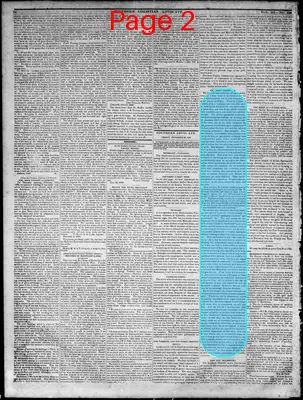
Editorial
November 29, 1839
Southern Christian Advocate
Charleston, Charleston County, South Carolina
What is this article about?
The editorial laments the hardships of editors, who face subscriber backlash for correcting errors or omitting uninteresting details. It defends criticizing 'heathenish' phrases like 'getting up a revival' in Methodist writings to uphold sound doctrine amid accusations of Pelagian heresy.
Clipping

OCR Quality
98%
Excellent
Full Text
EDITORIAL HARDSHIPS.
We have not had experience of many avocations, but it does seem to us that there can be none which subjects one to such numerous trials as that of an Editor. There is a class of persons, (and a numerous one it is,) who seem to work by the reverse of the rule which charity prescribes, and view things which concern them in another, not in a favorable but unfavorable light. The Editor has spoiled an obituary, and given prodigious umbrage, by striking out the passages, which told that the sick man asked for water, lay on his back, turned on his side, groaned, turned back again, complained of his head, asked the hour, and such like not very interesting particulars. Stop my paper. Another obituary, (or no matter what,) having been lost by the way, or got mislaid, or having been sent to another paper, with a request for us to copy, and been overlooked in that paper, it follows of course that the editor has meant it for an insult. Stop my paper. But the hardest case of all is, that, we are not allowed to do our duty for the prevention or cure of evils, without being made offenders. Now if we were wise enough to foresee all the wrong and silly things which men do stumble upon, so as to give our admonitions before any blunder should be made, we might escape this hardship; but for not being gifted with prescience, but correcting errors which have actually been committed, and are likely to become frequent, poor Editors do sometimes get sadly buffetted. Take the following letter for a specimen. We give it exactly to a point, as we got it, except the name and date only.
"Rev. and dear Sir I herein inclose to you the two dollars remaining in my hand as due the S Christian Advocate, and submit to what I have struggled against, that you will not send it to me any longer, or expect me to act in any way for it. Explanations are needless to a sensitive and sensible man in doing this you will much oblige me, both in my feelings and wishes, which I hope you want to do; and I shall remain as ever to you "a heathen man and a publican."
Our readers may remember that some weeks ago, we objected to the use of such phrases as "to get up a revival," "getting up a revival," "got up a revival," &c. The only reason we can imagine for the production of such a letter as the above, is, that we called it "heathenish" to use such phrases; and the reason for this conjecture of ours as to the cause of the letter, is, the use the letter-writer makes of the words "a heathen man and a publican," seeming to admit of no other interpretation. How much better would it have been for him to reflect, that we could have no interest in offending him, and probably meant no offence—that it was our duty to watch within as well as without the walls of Zion; and to promote her interests by correcting what was likely to do harm by the inadvertence of her friends as well as the opposition of her enemies. And that whilst at all times it is important for her friends to use "sound speech that cannot be condemned," it is especially so at a time, when, as at present, great pains are taken in some influential quarters, to cause it to be believed that Methodists are tainted with the Pelagian heresy. If our friend will be corrected, and cease from the use of Pelagian or "heathenish" expressions, we shall have done him a service; or if not, and he persists in the use of such phrases, he may rest assured he will do the church a greater disservice than by withdrawing his patronage from the Advocate.
But we will not give up, or compromise, our sacred duty, for this peevishness of some correspondents. Whenever, and by whomsoever, errors are publicly committed which might work mischief and blot "the form of sound words" proper to the truth, let it be remembered, we will say Nay. And we will do it in every case, with like plainness of speech and reasonable inoffensiveness of manner, as we have done in the matter of a "heathenish" phrase being applied to revivals. In that case, we first blotted the improper words out of the article, leaving it without any vestige of the heterodoxy, so that no one might know, save the writer himself, to whom we alluded; and then we exposed the impropriety of such expressions as had been used, and we had blotted out, in an editorial, where we treated them as they deserved, but without a syllable to signify whether we had seen them written, or heard them spoken, when, or by whom. Correspondents are free to express themselves in their own way, but not to the degree of "getting up revivals;" or other forms of speech indicative of a criminal carelessness, or actual unsoundness.
We have not had experience of many avocations, but it does seem to us that there can be none which subjects one to such numerous trials as that of an Editor. There is a class of persons, (and a numerous one it is,) who seem to work by the reverse of the rule which charity prescribes, and view things which concern them in another, not in a favorable but unfavorable light. The Editor has spoiled an obituary, and given prodigious umbrage, by striking out the passages, which told that the sick man asked for water, lay on his back, turned on his side, groaned, turned back again, complained of his head, asked the hour, and such like not very interesting particulars. Stop my paper. Another obituary, (or no matter what,) having been lost by the way, or got mislaid, or having been sent to another paper, with a request for us to copy, and been overlooked in that paper, it follows of course that the editor has meant it for an insult. Stop my paper. But the hardest case of all is, that, we are not allowed to do our duty for the prevention or cure of evils, without being made offenders. Now if we were wise enough to foresee all the wrong and silly things which men do stumble upon, so as to give our admonitions before any blunder should be made, we might escape this hardship; but for not being gifted with prescience, but correcting errors which have actually been committed, and are likely to become frequent, poor Editors do sometimes get sadly buffetted. Take the following letter for a specimen. We give it exactly to a point, as we got it, except the name and date only.
"Rev. and dear Sir I herein inclose to you the two dollars remaining in my hand as due the S Christian Advocate, and submit to what I have struggled against, that you will not send it to me any longer, or expect me to act in any way for it. Explanations are needless to a sensitive and sensible man in doing this you will much oblige me, both in my feelings and wishes, which I hope you want to do; and I shall remain as ever to you "a heathen man and a publican."
Our readers may remember that some weeks ago, we objected to the use of such phrases as "to get up a revival," "getting up a revival," "got up a revival," &c. The only reason we can imagine for the production of such a letter as the above, is, that we called it "heathenish" to use such phrases; and the reason for this conjecture of ours as to the cause of the letter, is, the use the letter-writer makes of the words "a heathen man and a publican," seeming to admit of no other interpretation. How much better would it have been for him to reflect, that we could have no interest in offending him, and probably meant no offence—that it was our duty to watch within as well as without the walls of Zion; and to promote her interests by correcting what was likely to do harm by the inadvertence of her friends as well as the opposition of her enemies. And that whilst at all times it is important for her friends to use "sound speech that cannot be condemned," it is especially so at a time, when, as at present, great pains are taken in some influential quarters, to cause it to be believed that Methodists are tainted with the Pelagian heresy. If our friend will be corrected, and cease from the use of Pelagian or "heathenish" expressions, we shall have done him a service; or if not, and he persists in the use of such phrases, he may rest assured he will do the church a greater disservice than by withdrawing his patronage from the Advocate.
But we will not give up, or compromise, our sacred duty, for this peevishness of some correspondents. Whenever, and by whomsoever, errors are publicly committed which might work mischief and blot "the form of sound words" proper to the truth, let it be remembered, we will say Nay. And we will do it in every case, with like plainness of speech and reasonable inoffensiveness of manner, as we have done in the matter of a "heathenish" phrase being applied to revivals. In that case, we first blotted the improper words out of the article, leaving it without any vestige of the heterodoxy, so that no one might know, save the writer himself, to whom we alluded; and then we exposed the impropriety of such expressions as had been used, and we had blotted out, in an editorial, where we treated them as they deserved, but without a syllable to signify whether we had seen them written, or heard them spoken, when, or by whom. Correspondents are free to express themselves in their own way, but not to the degree of "getting up revivals;" or other forms of speech indicative of a criminal carelessness, or actual unsoundness.
What sub-type of article is it?
Press Freedom
Moral Or Religious
What keywords are associated?
Editorial Hardships
Subscriber Complaints
Religious Language
Methodist Revivals
Pelagian Heresy
Sound Speech
What entities or persons were involved?
Editors
Subscribers
Methodists
S Christian Advocate
Editorial Details
Primary Topic
Hardships Of Editorial Correction In Religious Contexts
Stance / Tone
Defensive Of Editorial Duty To Correct Errors
Key Figures
Editors
Subscribers
Methodists
S Christian Advocate
Key Arguments
Editors Face Backlash For Omitting Uninteresting Obituary Details
Lost Items Lead To Accusations Of Insult
Duty To Correct Errors After They Occur, Despite Lack Of Prescience
Criticism Of 'Getting Up A Revival' As Heathenish To Protect Methodist Doctrine
Refusal To Compromise Editorial Standards Despite Subscriber Peevishness