Thank you for visiting SNEWPapers!
Sign up free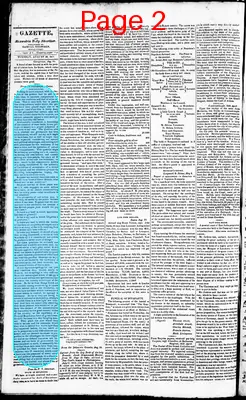
Editorial
August 28, 1821
Alexandria Gazette & Daily Advertiser
Alexandria, Virginia
What is this article about?
Editorial critiques US government administration post-revolution, arguing prosperity stems from constitution and resources, not rulers' merit, using comparisons to Britain and hypotheticals on war, taxes, speculation, litigation, and currency issues.
Clipping

OCR Quality
95%
Excellent
Full Text
From the Philadelphia Union.
OUR COUNTRY.
Nothing is more common with the fautorers of the powers that be and have been, than to institute comparisons between our condition and that of other nations. This is very well; but in justice the circumstances under which the parties have been placed ought also to be compared; and when this is fairly done, we feel persuaded that certain men will not rise in their character for wisdom, nor certain measures appear a whit more judicious than they did before.
Abstractedly considered, a knowledge of the situation of other lands, is not, perhaps, necessary to a proper judgment of the state of our own. The question with us is, whether our government has been administered, we will not say as it ought to have been, but as well as might have been expected considering our natural and political advantages, and making suitable allowances for the weakness of human nature, and the operation of untoward circumstances. This question might be settled by surveying our own country, reviewing our own history, and contemplating our own people; but since all direct views of the case are forbidden, we must resort to the comparative method of judging established by the authority of the editors of newspapers of a certain description and we therefore propose the following interrogatories, hoping they may serve to elicit the truth.
Suppose our natural resources were no greater than those of Great Britain, what would now be our condition?
Suppose, instead of three years war, we had been engaged, as some nations have been, in an almost unintermitting war for thirty years—what would now be our situation?
The prosperity of our nation may, in one way, be tested by the public burdens which it can bear. Suppose that we were assessed to but one fourth the amount of the British people: how should we pay our taxes?
Is there any land in which speculation has been so general?
Is there any land in which litigation is so prevalent?
Is there any land in which the currency has been so completely deranged, and in which so many of the evils resulting from this source have been suffered?
Is there any instance on record of a nation so long disordered, in which so little was done by the constituted authorities to produce a better order of things?
Let these questions be seriously considered and candidly answered, and, unless we are in a very great error, it will become apparent, that, all things considered, our rulers in general have no great merit than the potentates of other lands and that the peculiar blessings we enjoy are to be attributed to the excellency of our constitution, our local situation, and the natural wealth of the country.
A very ingenious apology for our present condition may, indeed, easily be framed; but an apology is very different from that extravagant strain of eulogy in which some writers and speakers indulge, whenever the country is the topic of discourse. So far as those things which are censurable among us are owing to causes which existed before the revolution, or which have not been within the bounds of human means to control, no apology is necessary. So far as they are owing to errors in national or state policy, attempts to exhibit them in a false light are criminal. And here we cannot help observing that those persons who endeavor to palliate the conduct of the administration by descanting on the great natural riches of the country, or the excellency of a Federal Republican form of government, do their business in a very bungling manner. They place the men whom they wish to excuse and the measures which they wish to defend in a worse light than they appeared before: for our merit rises in proportion to the difficulties we surmount, and our demerit increases in proportion to the advantages we have slighted: and as our natural resources are immense, and our form of government the most excellent on earth, it necessarily follows that those men must have been very ill qualified for their station, and those measures very ill concerted, which could reduce a nation possessed of every natural and political advantage, to a situation resembling that of a nation whose natural resources are limited and whose form of government is intrinsically bad.
OUR COUNTRY.
Nothing is more common with the fautorers of the powers that be and have been, than to institute comparisons between our condition and that of other nations. This is very well; but in justice the circumstances under which the parties have been placed ought also to be compared; and when this is fairly done, we feel persuaded that certain men will not rise in their character for wisdom, nor certain measures appear a whit more judicious than they did before.
Abstractedly considered, a knowledge of the situation of other lands, is not, perhaps, necessary to a proper judgment of the state of our own. The question with us is, whether our government has been administered, we will not say as it ought to have been, but as well as might have been expected considering our natural and political advantages, and making suitable allowances for the weakness of human nature, and the operation of untoward circumstances. This question might be settled by surveying our own country, reviewing our own history, and contemplating our own people; but since all direct views of the case are forbidden, we must resort to the comparative method of judging established by the authority of the editors of newspapers of a certain description and we therefore propose the following interrogatories, hoping they may serve to elicit the truth.
Suppose our natural resources were no greater than those of Great Britain, what would now be our condition?
Suppose, instead of three years war, we had been engaged, as some nations have been, in an almost unintermitting war for thirty years—what would now be our situation?
The prosperity of our nation may, in one way, be tested by the public burdens which it can bear. Suppose that we were assessed to but one fourth the amount of the British people: how should we pay our taxes?
Is there any land in which speculation has been so general?
Is there any land in which litigation is so prevalent?
Is there any land in which the currency has been so completely deranged, and in which so many of the evils resulting from this source have been suffered?
Is there any instance on record of a nation so long disordered, in which so little was done by the constituted authorities to produce a better order of things?
Let these questions be seriously considered and candidly answered, and, unless we are in a very great error, it will become apparent, that, all things considered, our rulers in general have no great merit than the potentates of other lands and that the peculiar blessings we enjoy are to be attributed to the excellency of our constitution, our local situation, and the natural wealth of the country.
A very ingenious apology for our present condition may, indeed, easily be framed; but an apology is very different from that extravagant strain of eulogy in which some writers and speakers indulge, whenever the country is the topic of discourse. So far as those things which are censurable among us are owing to causes which existed before the revolution, or which have not been within the bounds of human means to control, no apology is necessary. So far as they are owing to errors in national or state policy, attempts to exhibit them in a false light are criminal. And here we cannot help observing that those persons who endeavor to palliate the conduct of the administration by descanting on the great natural riches of the country, or the excellency of a Federal Republican form of government, do their business in a very bungling manner. They place the men whom they wish to excuse and the measures which they wish to defend in a worse light than they appeared before: for our merit rises in proportion to the difficulties we surmount, and our demerit increases in proportion to the advantages we have slighted: and as our natural resources are immense, and our form of government the most excellent on earth, it necessarily follows that those men must have been very ill qualified for their station, and those measures very ill concerted, which could reduce a nation possessed of every natural and political advantage, to a situation resembling that of a nation whose natural resources are limited and whose form of government is intrinsically bad.
What sub-type of article is it?
Partisan Politics
Economic Policy
Constitutional
What keywords are associated?
Government Administration
National Prosperity
Comparative Judgment
Public Burdens
Currency Derangement
Political Advantages
What entities or persons were involved?
Rulers
Administration
British People
Editorial Details
Primary Topic
Critique Of Government Administration Compared To Other Nations
Stance / Tone
Critical Of Rulers And Measures, Praising Constitution And Resources
Key Figures
Rulers
Administration
British People
Key Arguments
Comparisons To Other Nations Must Consider Circumstances
Us Government Not Administered As Well As Possible Given Advantages
Hypothetical: With Britain's Resources, Us Condition Would Be Worse
Hypothetical: 30 Years Of War Would Ruin Us
Us Bears Lower Taxes Than Britain Yet Prospers
Speculation, Litigation, And Currency Derangement Prevalent In Us
Little Done By Authorities To Restore Order
Prosperity Due To Constitution, Location, And Natural Wealth, Not Rulers
Apologies For Condition Worsen View Of Administration Given Advantages