Thank you for visiting SNEWPapers!
Sign up free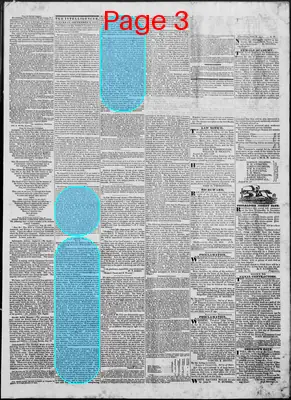
Literary
September 3, 1831
Alabama State Intelligencer
Tuscaloosa, Tuscaloosa County, Alabama
What is this article about?
Article on French emigrants' efforts to cultivate grape vines in Alabama, focusing on Corneille Roudet's success with the Madeira vine despite initial failures. Details history, wine production in 1824, and advice on plant selection for the region's climate.
Merged-components note: Introductory announcement followed by the first installment of a serialized essay on grape vine cultivation by Corneille Roudet; merged as a single coherent literary component.
Clipping
OCR Quality
95%
Excellent
Full Text
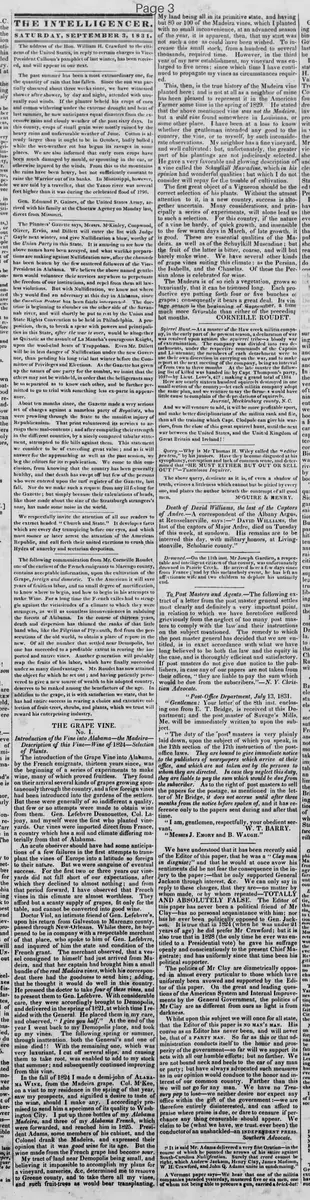
The following communication from Mr. Corneille Roudet one of the earliest of the French emigrants to Marengo county, contains acceptable information upon the cultivation of the Grape, foreign and domestic. To the American it will save years of fruitless labor, and no small degree of mortification, to know where to begin, and how to begin in his attempts to make Wine. For a long time the French exiles had to struggle against the vicissitudes of a climate to which they were strangers, as well as countless inconveniences in subduing the forests of Alabama. In the course of thirteen years death and dispersion has thinned the ranks of that little band who, like the Pilgrims of Plymouth, fled from the persecutions of the old world, to obtain a place of repose in the new. Of all the number that settled near Demopolis, but one has succeeded to a profitable extent in rearing the imported and native vines. Another generation will probably reap the fruits of his labor, which have finally succeeded under so many disadvantages. Mr. Roudet has now attained the object for which he set out; and having patiently persevered to give a new source of wealth to his adopted country, deserves to be ranked among the benefactors of the age. In addition to the grape, it is with satisfaction we state, that he has had entire success in rearing a choice and extensive collection of fruit-trees, shrubs, and plants, which we trust will reward his enterprising industry.
THE GRAPE VINE.
No. I.
Introduction of the Vine into Alabama—the Madeira—Description of this Vine—Wine of 1824—Selection of Plants.
The introduction of the Grape Vine into Alabama, by the French emigrants, thirteen years since, was the beginning of a series of experiments to make wine, many of which proved fruitless. They found on their arrival several kinds of grapes growing spontaneously through the country, and a few foreign vines had been introduced into the gardens of the settlers. But these were generally of so indifferent a quality, that few or no attempts were made to obtain wine from them. Gen. Lefebvre Desnouettes, Col. La jony, and myself were the first who planted vineyards. Our vines were imported direct from France, a country which has a soil and climate differing materially from that of Alabama.
An acute observer should have had some anticipations of a few failures in the first attempts to transplant the vines of Europe into a latitude so foreign to their nature. But we were sanguine of eventual success. For the first two or three years our vineyards did not fall short of our expectations, after which they declined to almost nothing; and from that period forward, I have observed that French vines in this climate are almost worthless. They afford but a scanty supply of grapes, fit only for the table, and cannot be converted into good wine.
Doctor Viol, an intimate friend of Gen. Lefebvre's, upon his return from Galveston to Marengo county, passed through New-Orleans. Whilst there, he happened to be in company with a respectable merchant of that place, who spoke to him of Gen. Lefebvre, and inquired of him the state and condition of the French grant. The merchant observed, that a vessel consigned to himself had just arrived from Madeira, and that her captain had brought him a small bundle of the real Madeira vines, which his correspondent there had the goodness to send him; adding that he thought it would do well in this country. He pressed the doctor to take four of these vines, and to present them to Gen. Lefebvre. With considerable care, they were accordingly brought to Demopolis, and delivered in the spring of 1821, at which time I resided with the General. He placed them in my care, and observed, "I give you half." At the end of the year I went back to my Demopolis place, and took up my vines. The following spring or summer, through inattention, both the General's and one of mine died!! With the remaining one, which was very luxuriant, I cut off several slips, and causing them to take root, was enabled to add to my stock that summer; and subsequently continued improving from this vine.
In the fall of 1824 I made a demi-john of ALABAMA Wine, from the Madeira grape. Col. M'Kee, on a visit to my residence in the spring of that year, saw my prospects, and signified a desire to taste of the wine, should I make any. I accordingly promised to send him a specimen of its quality to Washington City. I put up three bottles of my Alabama Madeira, and three of my Alabama French, which were forwarded, and reached him in 1825. President Adams, some members of his cabinet, and the Colonel drank the Madeira, and expressed their opinion that it was good wine for its age. But the wine made from the French grape had become sour.
My tract of land near Demopolis being small, and believing it impossible to accomplish my plans for a vineyard, nurseries, &c, determined me to remove to Greene county, and to take there all my vines, and such fruit-trees as would bear transplanting.
My land being all in its primitive state, and having but 80 or 100 of the Madeira vines, which I planted with no small inconvenience, at an advanced season of the year, it is apparent, then, that my start was not such a one as could have been wished. To increase this small stock, from a hundred to several thousands, required time. However, in the third year of my new establishment, my vineyard was enlarged to five acres; since which time I have continued to propagate my vines as circumstances required.
This, then, is the true history of the Madeira vine planted here; and is not at all as a neighbor of mine has been pleased to represent it in the American Farmer some time in the spring of 1829. He stated that the above mentioned vine was not the Madeira, but a wild vine found somewhere in Louisiana, or some other place. I have been at a loss to know whether the gentleman intended any good to the country, the vine, or to myself, by such inconsiderate observations. My neighbor has a fine vineyard, and well cultivated; but, unfortunately, the greater part of his plantings are not judiciously selected. He gave a very favorable and glowing description of a vine called the Schuylkill Muscadine, which in his opinion had wonderful qualities; but which I do not consider will repay for the trouble of cultivation.
The first great object of a Vigneron should be the correct selection of his plants. Without the utmost attention to it, in a new country, success is altogether uncertain. Many considerations, and principally a series of experiments, will alone lead us to such a selection. For this country, if the nature of a vine be hardy, of quick growth, and insensible to the few warm days in March, of late growth, it is good. These are essential qualities of the Madeira, as well as of the Schuylkill Muscadine; but the fruit of the latter is bitter, coarse, and will but barely make wine. We have several other kinds of grape vines suiting this climate: as the Persian, the Isabella, and the Catawba. Of these the Persian alone is celebrated for wine.
The Madeira is of so rich a vegetation, grows so luxuriantly, that it can be trimmed long. Each productive eye putting forth four or five bunches of grapes; consequently it bears a great deal. Its vintage season is the beginning of September, a time much more favorable than either of the preceding hot months.
CORNEILLE ROUDET.
THE GRAPE VINE.
No. I.
Introduction of the Vine into Alabama—the Madeira—Description of this Vine—Wine of 1824—Selection of Plants.
The introduction of the Grape Vine into Alabama, by the French emigrants, thirteen years since, was the beginning of a series of experiments to make wine, many of which proved fruitless. They found on their arrival several kinds of grapes growing spontaneously through the country, and a few foreign vines had been introduced into the gardens of the settlers. But these were generally of so indifferent a quality, that few or no attempts were made to obtain wine from them. Gen. Lefebvre Desnouettes, Col. La jony, and myself were the first who planted vineyards. Our vines were imported direct from France, a country which has a soil and climate differing materially from that of Alabama.
An acute observer should have had some anticipations of a few failures in the first attempts to transplant the vines of Europe into a latitude so foreign to their nature. But we were sanguine of eventual success. For the first two or three years our vineyards did not fall short of our expectations, after which they declined to almost nothing; and from that period forward, I have observed that French vines in this climate are almost worthless. They afford but a scanty supply of grapes, fit only for the table, and cannot be converted into good wine.
Doctor Viol, an intimate friend of Gen. Lefebvre's, upon his return from Galveston to Marengo county, passed through New-Orleans. Whilst there, he happened to be in company with a respectable merchant of that place, who spoke to him of Gen. Lefebvre, and inquired of him the state and condition of the French grant. The merchant observed, that a vessel consigned to himself had just arrived from Madeira, and that her captain had brought him a small bundle of the real Madeira vines, which his correspondent there had the goodness to send him; adding that he thought it would do well in this country. He pressed the doctor to take four of these vines, and to present them to Gen. Lefebvre. With considerable care, they were accordingly brought to Demopolis, and delivered in the spring of 1821, at which time I resided with the General. He placed them in my care, and observed, "I give you half." At the end of the year I went back to my Demopolis place, and took up my vines. The following spring or summer, through inattention, both the General's and one of mine died!! With the remaining one, which was very luxuriant, I cut off several slips, and causing them to take root, was enabled to add to my stock that summer; and subsequently continued improving from this vine.
In the fall of 1824 I made a demi-john of ALABAMA Wine, from the Madeira grape. Col. M'Kee, on a visit to my residence in the spring of that year, saw my prospects, and signified a desire to taste of the wine, should I make any. I accordingly promised to send him a specimen of its quality to Washington City. I put up three bottles of my Alabama Madeira, and three of my Alabama French, which were forwarded, and reached him in 1825. President Adams, some members of his cabinet, and the Colonel drank the Madeira, and expressed their opinion that it was good wine for its age. But the wine made from the French grape had become sour.
My tract of land near Demopolis being small, and believing it impossible to accomplish my plans for a vineyard, nurseries, &c, determined me to remove to Greene county, and to take there all my vines, and such fruit-trees as would bear transplanting.
My land being all in its primitive state, and having but 80 or 100 of the Madeira vines, which I planted with no small inconvenience, at an advanced season of the year, it is apparent, then, that my start was not such a one as could have been wished. To increase this small stock, from a hundred to several thousands, required time. However, in the third year of my new establishment, my vineyard was enlarged to five acres; since which time I have continued to propagate my vines as circumstances required.
This, then, is the true history of the Madeira vine planted here; and is not at all as a neighbor of mine has been pleased to represent it in the American Farmer some time in the spring of 1829. He stated that the above mentioned vine was not the Madeira, but a wild vine found somewhere in Louisiana, or some other place. I have been at a loss to know whether the gentleman intended any good to the country, the vine, or to myself, by such inconsiderate observations. My neighbor has a fine vineyard, and well cultivated; but, unfortunately, the greater part of his plantings are not judiciously selected. He gave a very favorable and glowing description of a vine called the Schuylkill Muscadine, which in his opinion had wonderful qualities; but which I do not consider will repay for the trouble of cultivation.
The first great object of a Vigneron should be the correct selection of his plants. Without the utmost attention to it, in a new country, success is altogether uncertain. Many considerations, and principally a series of experiments, will alone lead us to such a selection. For this country, if the nature of a vine be hardy, of quick growth, and insensible to the few warm days in March, of late growth, it is good. These are essential qualities of the Madeira, as well as of the Schuylkill Muscadine; but the fruit of the latter is bitter, coarse, and will but barely make wine. We have several other kinds of grape vines suiting this climate: as the Persian, the Isabella, and the Catawba. Of these the Persian alone is celebrated for wine.
The Madeira is of so rich a vegetation, grows so luxuriantly, that it can be trimmed long. Each productive eye putting forth four or five bunches of grapes; consequently it bears a great deal. Its vintage season is the beginning of September, a time much more favorable than either of the preceding hot months.
CORNEILLE ROUDET.
What sub-type of article is it?
Essay
What themes does it cover?
Agriculture Rural
Commerce Trade
Liberty Freedom
What keywords are associated?
Grape Vine
Madeira Vine
Alabama Wine
French Emigrants
Viticulture
Vine Selection
Demopolis
Marengo County
What entities or persons were involved?
Corneille Roudet
Literary Details
Title
The Grape Vine. No. I.
Author
Corneille Roudet
Subject
Introduction Of The Vine Into Alabama—The Madeira—Description Of This Vine—Wine Of 1824—Selection Of Plants.
Key Lines
The Introduction Of The Grape Vine Into Alabama, By The French Emigrants, Thirteen Years Since, Was The Beginning Of A Series Of Experiments To Make Wine, Many Of Which Proved Fruitless.
In The Fall Of 1824 I Made A Demi John Of Alabama Wine, From The Madeira Grape.
President Adams, Some Members Of His Cabinet, And The Colonel Drank The Madeira, And Expressed Their Opinion That It Was Good Wine For Its Age.
The First Great Object Of A Vigneron Should Be The Correct Selection Of His Plants.
The Madeira Is Of So Rich A Vegetation, Grows So Luxuriantly, That It Can Be Trimmed Long.