Thank you for visiting SNEWPapers!
Sign up free
The Coolidge Examiner
Coolidge, Pinal County, Arizona
What is this article about?
On January 13, Hungary joined the German-Italo-Japanese anti-Comintern pact under pressure, leading to a Soviet diplomatic break-off accusing Hungary of lost independence. This sparked martial law in Hungary after a synagogue bombing, a defensive pact between Romania and Yugoslavia, and the resignation of Yugoslavia's pro-Nazi premier Milan Stoyadinovitch, replaced by anti-dictatorship leader Dragisha Tsvetkovitch.
Clipping
OCR Quality
Full Text
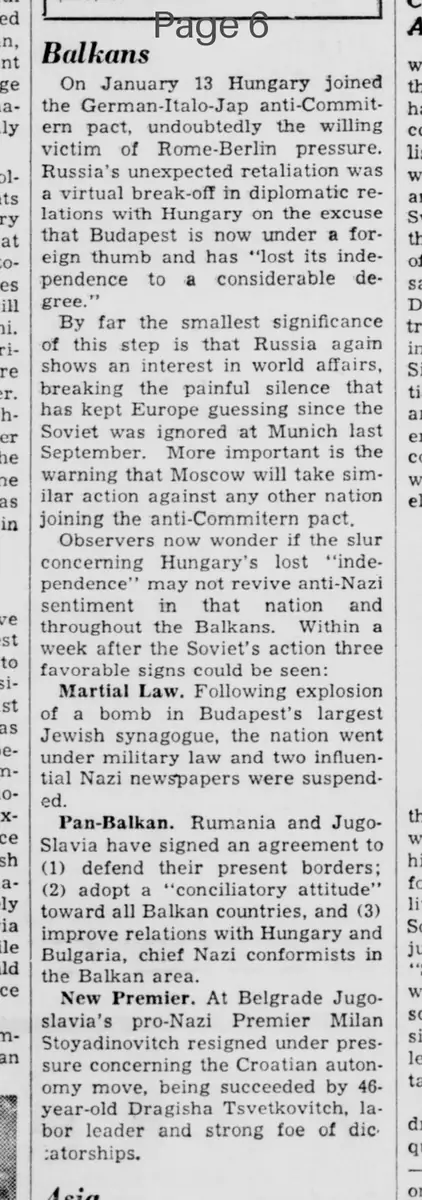
On January 13 Hungary joined the German-Italo-Jap anti-Comintern pact, undoubtedly the willing victim of Rome-Berlin pressure. Russia's unexpected retaliation was a virtual break-off in diplomatic relations with Hungary on the excuse that Budapest is now under a foreign thumb and has "lost its independence to a considerable degree."
By far the smallest significance of this step is that Russia again shows an interest in world affairs, breaking the painful silence that has kept Europe guessing since the Soviet was ignored at Munich last September. More important is the warning that Moscow will take similar action against any other nation joining the anti-Comintern pact. Observers now wonder if the slur concerning Hungary's lost "independence" may not revive anti-Nazi sentiment in that nation and throughout the Balkans. Within a week after the Soviet's action three favorable signs could be seen:
Martial Law. Following explosion of a bomb in Budapest's largest Jewish synagogue, the nation went under military law and two influential Nazi newspapers were suspended.
Pan-Balkan. Rumania and Jugoslavia have signed an agreement to (1) defend their present borders; (2) adopt a "conciliatory attitude" toward all Balkan countries, and (3) improve relations with Hungary and Bulgaria, chief Nazi conformists in the Balkan area.
New Premier. At Belgrade Jugoslavia's pro-Nazi Premier Milan Stoyadinovitch resigned under pressure concerning the Croatian autonomy move, being succeeded by 46-year-old Dragisha Tsvetkovitch, labor leader and strong foe of dictatorships.
What sub-type of article is it?
What keywords are associated?
What entities or persons were involved?
Where did it happen?
Foreign News Details
Primary Location
Balkans
Event Date
January 13
Key Persons
Outcome
soviet break-off of diplomatic relations with hungary; martial law imposed in hungary; romania and yugoslavia sign defensive agreement; yugoslavia's pro-nazi premier resigns and is replaced by anti-dictatorship leader.
Event Details
Hungary joined the German-Italo-Japanese anti-Comintern pact on January 13 under Rome-Berlin pressure. Soviet Union retaliated by virtually breaking diplomatic relations, claiming Hungary lost independence. This action warned other nations against joining the pact and potentially revived anti-Nazi sentiment in the Balkans. Within a week: bomb explosion in Budapest's Jewish synagogue led to martial law and suspension of Nazi newspapers; Romania and Yugoslavia signed agreement to defend borders, adopt conciliatory attitude toward Balkan countries, and improve ties with Hungary and Bulgaria; Yugoslavia's Premier Milan Stoyadinovitch resigned over Croatian autonomy and was succeeded by Dragisha Tsvetkovitch.