Thank you for visiting SNEWPapers!
Sign up free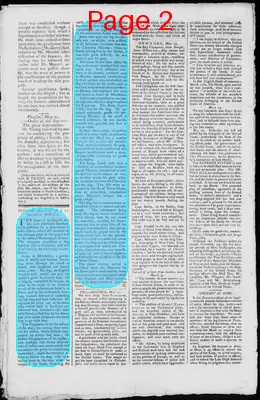
Literary
June 4, 1789
The New Hampshire Gazette And General Advertiser
Portsmouth, Rockingham County, New Hampshire
What is this article about?
Historical anecdote of Aubri de Montdidier's murder in the forest of Bondi, avenged by his loyal English blood-hound against the Chevalier Macaire. The dog leads friends to the body, attacks the assassin, and in a royal judgment combat on the Isle of Notre-Dame, forces Macaire's confession, leading to his execution under King Lewis VIII.
Clipping
OCR Quality
98%
Excellent
Full Text
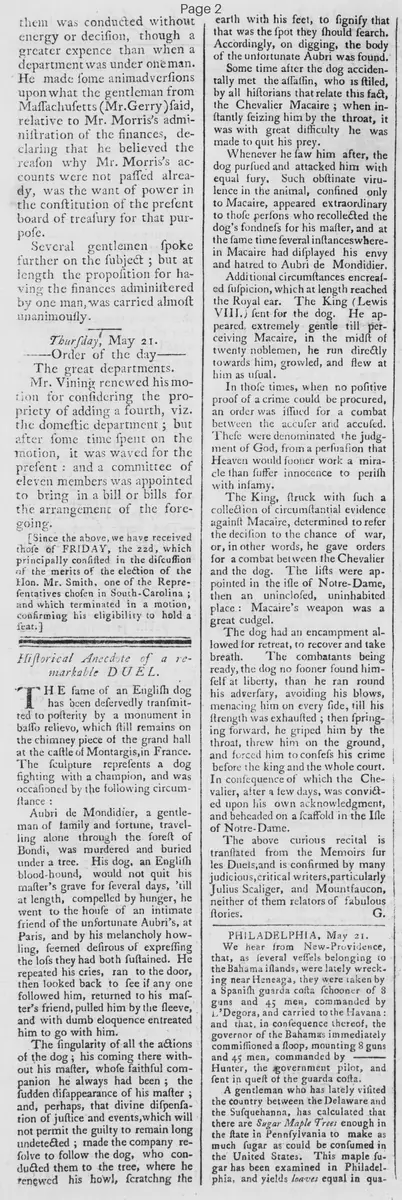
HISTORICAL ANECDOTE OF A REMARKABLE DUEL.
THE fame of an English dog has been deservedly transmitted to posterity by a monument in basso relievo, which still remains on the chimney piece of the grand hall at the castle of Montargis, in France. The sculpture represents a dog fighting with a champion, and was occasioned by the following circumstance:
Aubri de Montdidier, a gentleman of family and fortune, travelling alone through the forest of Bondi, was murdered and buried under a tree. His dog, an English blood-hound, would not quit his master's grave for several days, 'till at length, compelled by hunger, he went to the house of an intimate friend of the unfortunate Aubri's, at Paris, and by his melancholy howling, seemed desirous of expressing the loss they had both sustained. He repeated his cries, ran to the door, then looked back to see if any one followed him, returned to his master's friend, pulled him by the sleeve, and with dumb eloquence entreated him to go with him.
The singularity of all the actions of the dog; his coming there without his master, whose faithful companion he always had been; the sudden disappearance of his master; and, perhaps, that divine dispensation of justice and events, which will not permit the guilty to remain long undetected; made the company resolve to follow the dog, who conducted them to the tree, where he renewed his howl, scratching the earth with his feet, to signify that was the spot they should search.
Accordingly, on digging, the body of the unfortunate Aubri was found. Some time after the dog accidentally met the assassin, who is styled, by all historians that relate this fact, the Chevalier Macaire; when instantly seizing him by the throat, it was with great difficulty he was made to quit his prey. Whenever he saw him after, the dog pursued and attacked him with equal fury. Such obstinate virulence in the animal, confined only to Macaire, appeared extraordinary to those persons who recollected the dog's fondness for his master, and at the same time several instances wherein Macaire had displayed his envy and hatred to Aubri de Montdidier.
Additional circumstances encreased suspicion, which at length reached the Royal ear. The King (Lewis VIII.) sent for the dog. He appeared, extremely gentle till perceiving Macaire, in the midst of twenty noblemen, he ran directly towards him, growled, and flew at him as usual.
In those times, when no positive proof of a crime could be procured, an order was issued for a combat between the accuser and accused. These were denominated the judgment of God, from a persuasion that Heaven would sooner work a miracle than suffer innocence to perish with infamy.
The King, struck with such a collection of circumstantial evidence against Macaire, determined to refer the decision to the chance of war, or, in other words, he gave orders for a combat between the Chevalier and the dog. The lists were appointed in the isle of Notre-Dame, then an uninclosed, uninhabited place: Macaire's weapon was a great cudgel. The dog had an emplacement allowed for retreat, to recover and take breath. The combatants being ready, the dog no sooner found himself at liberty, than he ran round his adversary, avoiding his blows, menacing him on every side, till his strength was exhausted; then springing forward, he griped him by the throat, threw him on the ground, and forced him to confess his crime before the king and the whole court.
In consequence of which the Chevalier, after a few days, was convicted upon his own acknowledgment, and beheaded on a scaffold in the Isle of Notre-Dame.
The above curious recital is translated from the Memoirs sur les Duels, and is confirmed by many judicious, critical writers, particularly Julius Scaliger, and Montfaucon, neither of them relators of fabulous stories.
G.
THE fame of an English dog has been deservedly transmitted to posterity by a monument in basso relievo, which still remains on the chimney piece of the grand hall at the castle of Montargis, in France. The sculpture represents a dog fighting with a champion, and was occasioned by the following circumstance:
Aubri de Montdidier, a gentleman of family and fortune, travelling alone through the forest of Bondi, was murdered and buried under a tree. His dog, an English blood-hound, would not quit his master's grave for several days, 'till at length, compelled by hunger, he went to the house of an intimate friend of the unfortunate Aubri's, at Paris, and by his melancholy howling, seemed desirous of expressing the loss they had both sustained. He repeated his cries, ran to the door, then looked back to see if any one followed him, returned to his master's friend, pulled him by the sleeve, and with dumb eloquence entreated him to go with him.
The singularity of all the actions of the dog; his coming there without his master, whose faithful companion he always had been; the sudden disappearance of his master; and, perhaps, that divine dispensation of justice and events, which will not permit the guilty to remain long undetected; made the company resolve to follow the dog, who conducted them to the tree, where he renewed his howl, scratching the earth with his feet, to signify that was the spot they should search.
Accordingly, on digging, the body of the unfortunate Aubri was found. Some time after the dog accidentally met the assassin, who is styled, by all historians that relate this fact, the Chevalier Macaire; when instantly seizing him by the throat, it was with great difficulty he was made to quit his prey. Whenever he saw him after, the dog pursued and attacked him with equal fury. Such obstinate virulence in the animal, confined only to Macaire, appeared extraordinary to those persons who recollected the dog's fondness for his master, and at the same time several instances wherein Macaire had displayed his envy and hatred to Aubri de Montdidier.
Additional circumstances encreased suspicion, which at length reached the Royal ear. The King (Lewis VIII.) sent for the dog. He appeared, extremely gentle till perceiving Macaire, in the midst of twenty noblemen, he ran directly towards him, growled, and flew at him as usual.
In those times, when no positive proof of a crime could be procured, an order was issued for a combat between the accuser and accused. These were denominated the judgment of God, from a persuasion that Heaven would sooner work a miracle than suffer innocence to perish with infamy.
The King, struck with such a collection of circumstantial evidence against Macaire, determined to refer the decision to the chance of war, or, in other words, he gave orders for a combat between the Chevalier and the dog. The lists were appointed in the isle of Notre-Dame, then an uninclosed, uninhabited place: Macaire's weapon was a great cudgel. The dog had an emplacement allowed for retreat, to recover and take breath. The combatants being ready, the dog no sooner found himself at liberty, than he ran round his adversary, avoiding his blows, menacing him on every side, till his strength was exhausted; then springing forward, he griped him by the throat, threw him on the ground, and forced him to confess his crime before the king and the whole court.
In consequence of which the Chevalier, after a few days, was convicted upon his own acknowledgment, and beheaded on a scaffold in the Isle of Notre-Dame.
The above curious recital is translated from the Memoirs sur les Duels, and is confirmed by many judicious, critical writers, particularly Julius Scaliger, and Montfaucon, neither of them relators of fabulous stories.
G.
What sub-type of article is it?
Prose Fiction
What themes does it cover?
Moral Virtue
Friendship
Death Mortality
What keywords are associated?
Historical Anecdote
Loyal Dog
Murder Vengeance
Judgment Of God
Chevalier Macaire
Aubri De Montdidier
Lewis Viii
Isle Of Notre Dame
What entities or persons were involved?
G.
Literary Details
Title
Historical Anecdote Of A Remarkable Duel.
Author
G.
Subject
The Duel Between The Dog And Chevalier Macaire Over Aubri De Montdidier's Murder.
Form / Style
Historical Prose Narrative Anecdote.
Key Lines
His Dog, An English Blood Hound, Would Not Quit His Master's Grave For Several Days, 'Till At Length, Compelled By Hunger, He Went To The House Of An Intimate Friend Of The Unfortunate Aubri's, At Paris, And By His Melancholy Howling, Seemed Desirous Of Expressing The Loss They Had Both Sustained.
The Dog No Sooner Found Himself At Liberty, Than He Ran Round His Adversary, Avoiding His Blows, Menacing Him On Every Side, Till His Strength Was Exhausted; Then Springing Forward, He Griped Him By The Throat, Threw Him On The Ground, And Forced Him To Confess His Crime Before The King And The Whole Court.
The Above Curious Recital Is Translated From The Memoirs Sur Les Duels, And Is Confirmed By Many Judicious, Critical Writers, Particularly Julius Scaliger, And Montfaucon, Neither Of Them Relators Of Fabulous Stories.