Thank you for visiting SNEWPapers!
Sign up free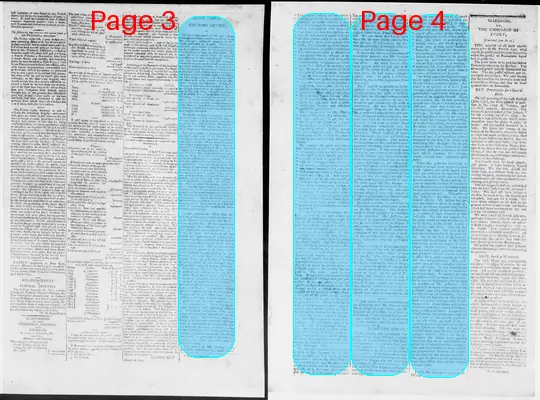
Editorial
March 27, 1802
The Recorder, Or, Lady's And Gentleman's Miscellany
Richmond, Virginia
What is this article about?
Editorial criticizes Postmaster General Granger for dismissing Augusta postmaster Hobby over political correspondence with federalists, accusing him of hypocrisy on press freedom and political purges, contrasting with Jefferson's stated policy.
Merged-components note: Merged continuation of the editorial on the post office across pages; text flows directly from one to the next.
Clippings

1 of 2
OCR Quality
95%
Excellent
Full Text
MORE ABOUT THE POST OFFICE
IN the "Recorder" of the 6th instant, there appeared some remarks on a letter from Mr. Granger, postmaster general, to Mr. Hobby postmaster of Augusta. We therein observed, what indeed required no great sagacity to discover, that Mr. Granger betrayed a disposition to keep up old quarrels. He went out of his way to attack the personal characters of the late administration. Whether these were good or bad, Mr. Granger had no decent pretence for thrusting them into his epistle about the dismission of a postmaster. This democrat of Connecticut represented it as improper in Mr. Hobby to have corresponded upon political subjects, with men holding the reins of government. He did not consider them as fit to be trusted with an office under the new administration. In fact, Mr. Granger's doctrine, when pushed to its proper length, amounted to an absolute extinction of the post office. For, if it was criminal in Hobby to correspond with Adams, or Pickering, it was as much so in every other man. We have looked into the post office laws : and we do not find an obligation upon postmasters that they shall not correspond with presidents, or with any body else, upon whatever topics they choose.
We should not have taken any farther notice of this matter, if it had not been revived by some friend to the post-master general, in one of the last numbers of the National Intelligencer. For this reason, we have resolved to go quite through with the subject.
This letter exhibits a glorious evidence of Granger's attachment to the liberty of the press, about which the republican party have made such a racket! What would Granger have said, two years ago, if he had been turned out of a New England post office, upon the suspicion of his writing letters to Mr. Gallatin? Would not Mr. Adams have been upbraided, in all the democratical newspapers, as worse than a Portuguese inquisitor? Yes! and with some justice, if he had been privy to such a transaction. The sedition act itself, that pitch-pipe of republican indignation, did not extend its talons to private correspondence. Colonel Lyon sent a private letter, which was printed without his knowledge, or intention; and for this, and other crimes of equal magnitude, a member of congress, a man who had served his country, in the last war, a man who had eminently promoted the manufactures of Vermont, was dismissed to a residence of four winter months in a necessary. So much, by the bye, for the independence of a federal judge. But if the colonel's letter had never been published, then he could not have been tried. He could not have had the merit of preventing his constituents from knocking down his jail.
On this ground we affirm that the doctrine of Granger trenches farther upon the freedom of the press than the sedition act ever did. If this republican could arrange circumstances to his wish, if he could persuade or inflame the public to the guilt and madness of the French war trumpeters of ninety-eight, his own expressions prove that we should soon see something much worse than a second sedition act. All persons filling public offices would be directed, under pain of dismission, and perhaps of prosecution, to send their letters, before sealing them, to a board of censors.
Take the words of Mr. Granger himself, and then judge if they are distorted :
"Knowing as I did," says he, "that most of the officers under me, from their official stations, had been in the habits of associating and corresponding as well on politics as on business," &c.,-We have formerly printed the passage at full length. On account of this association and correspondence, our present monarch of the post office thinks it necessary to discharge all such culprits "to preserve and maintain confidence in the department." Here is a much more complete and degrading system of intellectual despotism than any thing that was ever thought of by the federal party. And so every new president is to turn out every man that has held an office under his predecessor, for the doctrine amounts to that! A man is not to associate or correspond with his friends, or patrons, upon any subject but what shall be agreeable to the administration, that comes next after that for the time being.
The answer of Mr. Hobby to this part of his indictment has these words
* William Patterson.
& I have heard indeed, the late administration proscribed as a political sect unworthy of public esteem; I do hear it intimated that to have associated or corresponded with them was improper; and hereafter perhaps, we may be told that it is unjust to live in the same country with them, or suffer them to live in the same country with those, who claim the merit of enjoying exclusively the public confidence. If it was unwarrantable to associate or correspond with the officers of the late administration, it must be equally unwarrantable to associate or correspond with those of the present; and then the heads of departments in the true stile of eastern despotism, secluded from an intercourse with the people over whom they preside, may consider their own opinions as the standard of perfection, may require servile submission to their wills, and may finally proceed to arrest, with a high hand, any officer of the United States: that any disrespect towards them, or any deviation from the principles they establish, constitutes treason and rebellion against the government."
Mr. Granger says to Mr. Hobby, "You are the editor of a newspaper."
The latter answers, "I am not, nor was I ever the printer of a paper: nor am I, or was I ever interested in a printing office." It since appears that this is really the case. Hence, the actual crime of Mr. Hobby was that of associating and corresponding with--his friends:
Mr. Granger also gives this important information, that as the printers of newspapers ought not to be employed as post-masters, because they have a special interest in suppressing for a time the intelligence forwarded to rival printers, which generates suspicions, mutual recriminations, and party bickerings, unfriendly to social intercourse and civil order. And because they have an uncommon interest in using the right of franking to an extent never contemplated by law, if not, to the destruction of a fellow craftsman. I have therefore refused to appoint a republican printer post-master in every instance where applications have been made, although they have neither been few, nor badly supported."
This part of the letter is rather shallow. If one of the news-printers of Norfolk or Baltimore wishes to get the start of his brethren, and if he does not hold the post office himself, it is still in his power to attempt the purchase of the partiality of the post-master. If he is an honest and honorable man, his probity will not be extinguished by holding this place himself. And the other person, that actually holds it, is quite as likely to be disposed to sell his conscience, as the printer is to be disposed to buy it.
You will not employ a republican printer, as post-master; but you take a violent republican, a person that is of course disposed to prefer the printer of his own political party to the printers that oppose it. This comes to much the same thing. If the republican printer himself has not much influence with the post-master, he can get others of his own opinion to support his application: Mr. Granger makes a parade about the hardship of this principle of impartiality. That part of his letter we are sorry at being compelled to consider as a piece of gross quackery. He had just before told us that he was to expect every post-master, whose private society and confidential correspondence he did not like: for that is the proper extent of his idea. Yet here Mr. Granger is afraid of republicans. A post-master must in future be a sort of neutralized being; a hie jacet mortuus, in the scale of life. But, Mr. Hobby shall be turned out, because you are the friend of Mr. Adams. And you, Mr. republican printer, shall not get in, because you are the friend of Mr. Jefferson. Pish!
The republican printers are not much obliged to Mr. Granger for the side wind compliment that he so politely pays them. Before this worm's bosom is well warmed in its case he takes leave to tell the world that he regards them as hardly, if at all, better than rascals. Not fit to be trusted, gentlemen!
You are not fit to be trusted with an office, which, in ten, or perhaps twenty cases to one, is not worth an hundred dollars a year! If this be not a faithful version of Mr. Granger's text, the reader has the original before him. Translate for yourself. We are much at a loss to know what Mr. Granger means when he says that a printer if post-master, may convert his privilege of franking to the DESTRUCTION of a fellow craftsman.
It was to the talents and exertions of republican printers that Mr. Granger became very much indebted for his present office. All other sorts of influence cannot make the best man president, if the whole press of America have been, for four years, embattled against him. So harsh a reflection, therefore, was at least ungracious, if not ungrateful.
But if republican printers are so formidable to the freedom of the press, federal printers are quite as much so. And upon Mr. Granger's own principle, for we do not profess it as ours, we should be glad to hear why this work of reformation did not begin thirteen months ago? Why was not Mr. Hobby, as well as all other federal post-masters, discharged in March eighteen hundred and one? If the measure is proper now, it was quite as proper then? Very numerous complaints had, for years past, been made against that establishment. Whole bagfulls of letters had been broke up, read, and burnt, on the score of politicks. The Aurora, the Examiner, the Bee, and other news-papers of that stamp, had met with the worst reception. It has recently been proved in one of the courts of this state that the Aurora had, for a considerable time, been regularly stopped by one of the country post-masters, and sold as waste paper! We had this fact from the plaintiff.
As the highest pitch of audacity, a letter to one of the republican printers of New England, was not only intercepted but printed, with impunity and with triumph. We must again ask Mr. Granger for what good reason the besom of reformation was so long kept idle, when such flagrant offenders came bolt upright in its way? In England, these fellows would most infallibly have been hanged.
But such examples of justice bear no resemblance to the proscription marked out by Mr. Granger. His doctrine stands in direct opposition to the wishes of the president, Mr. Jefferson has embraced all opportunities of declaring that he shall discharge no person from an employment, on account of his political sentiments. One reason for the present examination of this subject was to vindicate the president from the charge of being concerned with this post office project.
When the king of Ithaca gave battle to the suitors of his wife, he addressed them in these words: Dogs! Ye have had your day! This was not very polite; but the language of Ulysses is at least intelligible and manly; and, to the generous mind, the mantle of courage and frankness can, at all times, cover a multitude of faults: In the case of Mr. Hobby, Mr. Granger had no call to write a letter of more than ten words.* But, if his pity condescended to illuminate the slave-holding tastes with the radiance of Connecticut elocution, he should have assumed somewhat of the conciseness and simplicity of Homer's hero. He might have addressed the gentleman UNDER ME in something like the following terms: "You know very well that Mr. Adams put out of office every person whom he suspected as the friend of Mr. Jefferson. The wheel of popularity has turned round, and we are going to serve you, as your party formerly served us. Although not the printer of a newspaper, you have been considered as the dictator of its attacks upon us; and you cannot suppose that we shall patronize our enemies."
A letter like this, if not distinguished by prudence, might at least have claimed the merit of firmness and sincerity.
The Washington Intelligencer has an article signed "a subscriber," wherein Mr. Hobby's letter is termed insolent. Annexed is an extract of a letter from Georgia, which gives an account of the post-master's interference with the publication of the Augusta Herald. Upon some occasion, Mr. Hobby prevented the insertion of a piece in defence of Mr. Jefferson. After this behaviour, he certainly did and must have expected his discharge. In such a case, Mr. Adams would have seen it back by the return of post. And if Mr. Granger had told Hobby so, there was nothing more to be said. But when we see the supposed contents of private and confidential correspondence objected as a crime; when we see the whole band of republican printers arraigned in the lump; we cannot help reminding Mr. Granger that he had much better let such matters alone; and that if Mr. Jefferson could have foreseen such official pertness, Mr. Granger would certainly have remained below stairs.
When Mr. Jefferson succeeded, as president, we had been prepared to hear much calumny and abuse against him. This was a thing to be expected from either side, in case of the defeat of their favorite champion. Such a remark implies no particular censure of the federal party. But there was one accusation which we had not expected to hear, and which made prodigious noise. This refers to Mr. Jefferson's dismission of certain federal officers. Mr. Adams had carried that matter as far as it would go. Hence, we did not conceive that it came within the compass of human effrontery to complain of such conduct in Mr. Jefferson. We did not imagine that the party would pretend to complain of being served, as the phrase is, with a sip of their own sauce. After all, Mr. Jefferson has done very little in this way; when compared with his predecessor. We should least of all have suspected that the discharge of Mr. Habersham was to furnish matter of complaint. On the contrary, it was regarded as a very serious grievance that the new president suffered him to continue in office for so many months as he did, after his own promotion. This post-master general had conducted business most wretchedly. It was demonstrable that either he could not, or would not perform his duty. So standing the case, the public are still to learn for what reason he was not discharged instantly upon the accession of Mr. Jefferson. The motives for so much forbearance on the president's part are possibly satisfactory: but they are as yet unknown. We are sorry that the successor of Mr. Habersham has, in one instance, made so pitiful an outset. A republican post-master will never gain much honor by disparaging republican printers. Forgetfulness of past favours has always been regarded as a feature of the deepest depravity.
In the case before us, most of the republican printers have been of ten times more service and some of them of ten thousand times more service, than Mr. Granger himself. Before his late appointment the world knew nothing about him, but as an unsuccessful candidate for a Connecticut seat in congress. The time has lately been, when republican printers were flattered and courted by members of the present administration; and the period is fast approaching, when they will be flattered and courted a second time.
* Vid. Mr. Granger's letter to Mr. Hobby.
NOTES.
Just before the commencement of the American War, Mr. Fox and Lord North disagreed in the cabinet, and Mr. Fox had his dismission by a letter in these terms: "Sir, his majesty has made out a new list of the commissioners of the treasury; and I do not observe your name on it."
FREDERICK NORTH.
+ In congress, this unfortunate circumstance has often afforded a favorite theme for the exhibition of New England eloquence. It is the fixed and professed opinion of such orators that a slave-holder is not fit to be the citizen of a republic. To be sure, a great number of the people of New England condemn such things; but the party that likes them is also very numerous. On this head the New England newspapers abound, at this very day, with ungenerous aspersions.
IN the "Recorder" of the 6th instant, there appeared some remarks on a letter from Mr. Granger, postmaster general, to Mr. Hobby postmaster of Augusta. We therein observed, what indeed required no great sagacity to discover, that Mr. Granger betrayed a disposition to keep up old quarrels. He went out of his way to attack the personal characters of the late administration. Whether these were good or bad, Mr. Granger had no decent pretence for thrusting them into his epistle about the dismission of a postmaster. This democrat of Connecticut represented it as improper in Mr. Hobby to have corresponded upon political subjects, with men holding the reins of government. He did not consider them as fit to be trusted with an office under the new administration. In fact, Mr. Granger's doctrine, when pushed to its proper length, amounted to an absolute extinction of the post office. For, if it was criminal in Hobby to correspond with Adams, or Pickering, it was as much so in every other man. We have looked into the post office laws : and we do not find an obligation upon postmasters that they shall not correspond with presidents, or with any body else, upon whatever topics they choose.
We should not have taken any farther notice of this matter, if it had not been revived by some friend to the post-master general, in one of the last numbers of the National Intelligencer. For this reason, we have resolved to go quite through with the subject.
This letter exhibits a glorious evidence of Granger's attachment to the liberty of the press, about which the republican party have made such a racket! What would Granger have said, two years ago, if he had been turned out of a New England post office, upon the suspicion of his writing letters to Mr. Gallatin? Would not Mr. Adams have been upbraided, in all the democratical newspapers, as worse than a Portuguese inquisitor? Yes! and with some justice, if he had been privy to such a transaction. The sedition act itself, that pitch-pipe of republican indignation, did not extend its talons to private correspondence. Colonel Lyon sent a private letter, which was printed without his knowledge, or intention; and for this, and other crimes of equal magnitude, a member of congress, a man who had served his country, in the last war, a man who had eminently promoted the manufactures of Vermont, was dismissed to a residence of four winter months in a necessary. So much, by the bye, for the independence of a federal judge. But if the colonel's letter had never been published, then he could not have been tried. He could not have had the merit of preventing his constituents from knocking down his jail.
On this ground we affirm that the doctrine of Granger trenches farther upon the freedom of the press than the sedition act ever did. If this republican could arrange circumstances to his wish, if he could persuade or inflame the public to the guilt and madness of the French war trumpeters of ninety-eight, his own expressions prove that we should soon see something much worse than a second sedition act. All persons filling public offices would be directed, under pain of dismission, and perhaps of prosecution, to send their letters, before sealing them, to a board of censors.
Take the words of Mr. Granger himself, and then judge if they are distorted :
"Knowing as I did," says he, "that most of the officers under me, from their official stations, had been in the habits of associating and corresponding as well on politics as on business," &c.,-We have formerly printed the passage at full length. On account of this association and correspondence, our present monarch of the post office thinks it necessary to discharge all such culprits "to preserve and maintain confidence in the department." Here is a much more complete and degrading system of intellectual despotism than any thing that was ever thought of by the federal party. And so every new president is to turn out every man that has held an office under his predecessor, for the doctrine amounts to that! A man is not to associate or correspond with his friends, or patrons, upon any subject but what shall be agreeable to the administration, that comes next after that for the time being.
The answer of Mr. Hobby to this part of his indictment has these words
* William Patterson.
& I have heard indeed, the late administration proscribed as a political sect unworthy of public esteem; I do hear it intimated that to have associated or corresponded with them was improper; and hereafter perhaps, we may be told that it is unjust to live in the same country with them, or suffer them to live in the same country with those, who claim the merit of enjoying exclusively the public confidence. If it was unwarrantable to associate or correspond with the officers of the late administration, it must be equally unwarrantable to associate or correspond with those of the present; and then the heads of departments in the true stile of eastern despotism, secluded from an intercourse with the people over whom they preside, may consider their own opinions as the standard of perfection, may require servile submission to their wills, and may finally proceed to arrest, with a high hand, any officer of the United States: that any disrespect towards them, or any deviation from the principles they establish, constitutes treason and rebellion against the government."
Mr. Granger says to Mr. Hobby, "You are the editor of a newspaper."
The latter answers, "I am not, nor was I ever the printer of a paper: nor am I, or was I ever interested in a printing office." It since appears that this is really the case. Hence, the actual crime of Mr. Hobby was that of associating and corresponding with--his friends:
Mr. Granger also gives this important information, that as the printers of newspapers ought not to be employed as post-masters, because they have a special interest in suppressing for a time the intelligence forwarded to rival printers, which generates suspicions, mutual recriminations, and party bickerings, unfriendly to social intercourse and civil order. And because they have an uncommon interest in using the right of franking to an extent never contemplated by law, if not, to the destruction of a fellow craftsman. I have therefore refused to appoint a republican printer post-master in every instance where applications have been made, although they have neither been few, nor badly supported."
This part of the letter is rather shallow. If one of the news-printers of Norfolk or Baltimore wishes to get the start of his brethren, and if he does not hold the post office himself, it is still in his power to attempt the purchase of the partiality of the post-master. If he is an honest and honorable man, his probity will not be extinguished by holding this place himself. And the other person, that actually holds it, is quite as likely to be disposed to sell his conscience, as the printer is to be disposed to buy it.
You will not employ a republican printer, as post-master; but you take a violent republican, a person that is of course disposed to prefer the printer of his own political party to the printers that oppose it. This comes to much the same thing. If the republican printer himself has not much influence with the post-master, he can get others of his own opinion to support his application: Mr. Granger makes a parade about the hardship of this principle of impartiality. That part of his letter we are sorry at being compelled to consider as a piece of gross quackery. He had just before told us that he was to expect every post-master, whose private society and confidential correspondence he did not like: for that is the proper extent of his idea. Yet here Mr. Granger is afraid of republicans. A post-master must in future be a sort of neutralized being; a hie jacet mortuus, in the scale of life. But, Mr. Hobby shall be turned out, because you are the friend of Mr. Adams. And you, Mr. republican printer, shall not get in, because you are the friend of Mr. Jefferson. Pish!
The republican printers are not much obliged to Mr. Granger for the side wind compliment that he so politely pays them. Before this worm's bosom is well warmed in its case he takes leave to tell the world that he regards them as hardly, if at all, better than rascals. Not fit to be trusted, gentlemen!
You are not fit to be trusted with an office, which, in ten, or perhaps twenty cases to one, is not worth an hundred dollars a year! If this be not a faithful version of Mr. Granger's text, the reader has the original before him. Translate for yourself. We are much at a loss to know what Mr. Granger means when he says that a printer if post-master, may convert his privilege of franking to the DESTRUCTION of a fellow craftsman.
It was to the talents and exertions of republican printers that Mr. Granger became very much indebted for his present office. All other sorts of influence cannot make the best man president, if the whole press of America have been, for four years, embattled against him. So harsh a reflection, therefore, was at least ungracious, if not ungrateful.
But if republican printers are so formidable to the freedom of the press, federal printers are quite as much so. And upon Mr. Granger's own principle, for we do not profess it as ours, we should be glad to hear why this work of reformation did not begin thirteen months ago? Why was not Mr. Hobby, as well as all other federal post-masters, discharged in March eighteen hundred and one? If the measure is proper now, it was quite as proper then? Very numerous complaints had, for years past, been made against that establishment. Whole bagfulls of letters had been broke up, read, and burnt, on the score of politicks. The Aurora, the Examiner, the Bee, and other news-papers of that stamp, had met with the worst reception. It has recently been proved in one of the courts of this state that the Aurora had, for a considerable time, been regularly stopped by one of the country post-masters, and sold as waste paper! We had this fact from the plaintiff.
As the highest pitch of audacity, a letter to one of the republican printers of New England, was not only intercepted but printed, with impunity and with triumph. We must again ask Mr. Granger for what good reason the besom of reformation was so long kept idle, when such flagrant offenders came bolt upright in its way? In England, these fellows would most infallibly have been hanged.
But such examples of justice bear no resemblance to the proscription marked out by Mr. Granger. His doctrine stands in direct opposition to the wishes of the president, Mr. Jefferson has embraced all opportunities of declaring that he shall discharge no person from an employment, on account of his political sentiments. One reason for the present examination of this subject was to vindicate the president from the charge of being concerned with this post office project.
When the king of Ithaca gave battle to the suitors of his wife, he addressed them in these words: Dogs! Ye have had your day! This was not very polite; but the language of Ulysses is at least intelligible and manly; and, to the generous mind, the mantle of courage and frankness can, at all times, cover a multitude of faults: In the case of Mr. Hobby, Mr. Granger had no call to write a letter of more than ten words.* But, if his pity condescended to illuminate the slave-holding tastes with the radiance of Connecticut elocution, he should have assumed somewhat of the conciseness and simplicity of Homer's hero. He might have addressed the gentleman UNDER ME in something like the following terms: "You know very well that Mr. Adams put out of office every person whom he suspected as the friend of Mr. Jefferson. The wheel of popularity has turned round, and we are going to serve you, as your party formerly served us. Although not the printer of a newspaper, you have been considered as the dictator of its attacks upon us; and you cannot suppose that we shall patronize our enemies."
A letter like this, if not distinguished by prudence, might at least have claimed the merit of firmness and sincerity.
The Washington Intelligencer has an article signed "a subscriber," wherein Mr. Hobby's letter is termed insolent. Annexed is an extract of a letter from Georgia, which gives an account of the post-master's interference with the publication of the Augusta Herald. Upon some occasion, Mr. Hobby prevented the insertion of a piece in defence of Mr. Jefferson. After this behaviour, he certainly did and must have expected his discharge. In such a case, Mr. Adams would have seen it back by the return of post. And if Mr. Granger had told Hobby so, there was nothing more to be said. But when we see the supposed contents of private and confidential correspondence objected as a crime; when we see the whole band of republican printers arraigned in the lump; we cannot help reminding Mr. Granger that he had much better let such matters alone; and that if Mr. Jefferson could have foreseen such official pertness, Mr. Granger would certainly have remained below stairs.
When Mr. Jefferson succeeded, as president, we had been prepared to hear much calumny and abuse against him. This was a thing to be expected from either side, in case of the defeat of their favorite champion. Such a remark implies no particular censure of the federal party. But there was one accusation which we had not expected to hear, and which made prodigious noise. This refers to Mr. Jefferson's dismission of certain federal officers. Mr. Adams had carried that matter as far as it would go. Hence, we did not conceive that it came within the compass of human effrontery to complain of such conduct in Mr. Jefferson. We did not imagine that the party would pretend to complain of being served, as the phrase is, with a sip of their own sauce. After all, Mr. Jefferson has done very little in this way; when compared with his predecessor. We should least of all have suspected that the discharge of Mr. Habersham was to furnish matter of complaint. On the contrary, it was regarded as a very serious grievance that the new president suffered him to continue in office for so many months as he did, after his own promotion. This post-master general had conducted business most wretchedly. It was demonstrable that either he could not, or would not perform his duty. So standing the case, the public are still to learn for what reason he was not discharged instantly upon the accession of Mr. Jefferson. The motives for so much forbearance on the president's part are possibly satisfactory: but they are as yet unknown. We are sorry that the successor of Mr. Habersham has, in one instance, made so pitiful an outset. A republican post-master will never gain much honor by disparaging republican printers. Forgetfulness of past favours has always been regarded as a feature of the deepest depravity.
In the case before us, most of the republican printers have been of ten times more service and some of them of ten thousand times more service, than Mr. Granger himself. Before his late appointment the world knew nothing about him, but as an unsuccessful candidate for a Connecticut seat in congress. The time has lately been, when republican printers were flattered and courted by members of the present administration; and the period is fast approaching, when they will be flattered and courted a second time.
* Vid. Mr. Granger's letter to Mr. Hobby.
NOTES.
Just before the commencement of the American War, Mr. Fox and Lord North disagreed in the cabinet, and Mr. Fox had his dismission by a letter in these terms: "Sir, his majesty has made out a new list of the commissioners of the treasury; and I do not observe your name on it."
FREDERICK NORTH.
+ In congress, this unfortunate circumstance has often afforded a favorite theme for the exhibition of New England eloquence. It is the fixed and professed opinion of such orators that a slave-holder is not fit to be the citizen of a republic. To be sure, a great number of the people of New England condemn such things; but the party that likes them is also very numerous. On this head the New England newspapers abound, at this very day, with ungenerous aspersions.
What sub-type of article is it?
Partisan Politics
Press Freedom
What keywords are associated?
Post Office Politics
Granger Dismissal
Press Freedom
Political Correspondence
Republican Printers
Sedition Act Hypocrisy
What entities or persons were involved?
Mr. Granger
Mr. Hobby
Mr. Adams
Mr. Jefferson
Mr. Habersham
Colonel Lyon
Editorial Details
Primary Topic
Criticism Of Postmaster General Granger's Political Dismissals And Attacks On Press Freedom
Stance / Tone
Strongly Critical And Accusatory Of Republican Hypocrisy
Key Figures
Mr. Granger
Mr. Hobby
Mr. Adams
Mr. Jefferson
Mr. Habersham
Colonel Lyon
Key Arguments
Granger's Dismissal Of Hobby For Corresponding With Federalists Violates Post Office Laws And Press Freedom
Republican Policy Under Granger Promotes Intellectual Despotism Worse Than The Sedition Act
Granger Hypocritically Refuses To Appoint Republican Printers As Postmasters Despite Their Role In His Rise
Jefferson's Stated Policy Against Political Dismissals Is Contradicted By Granger's Actions
Federal Postmasters Previously Suppressed Republican Mail, But Reform Was Delayed Under New Administration