Thank you for visiting SNEWPapers!
Sign up free
Literary
May 11, 1811
Alexandria Daily Gazette, Commercial & Political
Alexandria, Virginia
What is this article about?
Part II of 'ARBELA' essay in Alexandria Gazette explores historical roots of Franco-English enmity, from Edward III's victories and Henry V's conquests, through Tudor peace policies, naval rises under Elizabeth and Charles II, to William III's wars against Louis XIV's ambitions.
Clipping
OCR Quality
95%
Excellent
Full Text
For the ALEXANDRIA GAZETTE.
ARBELA--No. II.
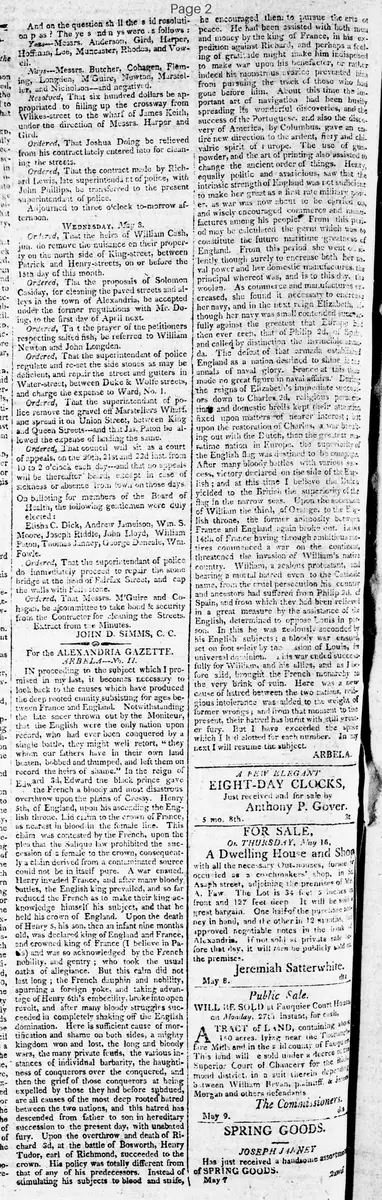
IN proceeding to the subject which I promised in my last, it becomes necessary to look back to the causes which have produced the deep rooted enmity subsisting for ages between France and England. Notwithstanding the late sneer thrown out by the Moniteur, that the English were the only nation upon record, who had ever been conquered by a single battle, they might well retort, "they whom our fathers have in their own land beaten, bobbed and thumped, and left them on record the heirs of shame." In the reign of Edward 3d, Edward the black prince gave the French a bloody and most disastrous overthrow upon the plains of Cressy. Henry 5th, of England, upon his ascending the English throne, laid claim to the crown of France, as nearest in blood-in the female line. This claim was contested by the French, upon the plea that the Salique law prohibited the succession of a female to the crown, consequently a claim derived from a contaminated source could not be in itself pure. A war ensued. Henry invaded France, and after many bloody battles, the English king prevailed, and so far reduced the French as to make their king acknowledge himself his subject, and that he held his crown of England. Upon the death of Henry 5, his son, then an infant nine months old, was declared king of England and France, and crowned king of France (I believe in Paris) and was so acknowledged by the French nobility, and gentry; who took the usual oaths of allegiance. But this calm did not last long; the French dauphin and nobility, spurning a foreign yoke, and taking advantage of Henry 6th's imbecility, broke into open revolt, and after many bloody struggles succeeded in completely shaking off the English domination. Here is sufficient cause of mortification and shame on both sides, a mighty kingdom won and lost, the long and bloody wars, the many private feuds, the various instances of individual barbarity, the haughtiness of conquerors over the conquered, and then the grief of those conquerors at being expelled by those they had before subdued, are all causes of the most deep rooted hatred between the two nations, and this hatred has descended from father to son in hereditary succession to the present day, with unabated fury. Upon the overthrow and death of Richard 3d, at the battle of Bosworth, Henry Tudor, earl of Richmond, succeeded to the crown. His policy was totally different from that of any of his predecessors. Instead of stimulating his subjects to blood and strife, he encouraged them to pursue the arts of peace. He had been assisted with both men and money by the king of France, in his expedition against Richard, and perhaps a feeling of gratitude might make him indisposed to make war upon his benefactor, or rather indeed his monstrous avarice prevented him from pursuing the track of those who had gone before him. About this time the important art of navigation had been busily spreading its wonderful discoveries, and the success of the Portuguese and also the discovery of America, by Columbus, gave an entire new direction to the ardent, fiery and chivalric spirit of Europe. The use of gunpowder, and the art of printing also assisted to change the ancient order of things. Henry, equally politic and avaricious, saw that the intrinsic strength of England was not sufficient to make her great as a first rate military power, as war was now about to be carried on, and wisely encouraged commerce and manufactures among his people. From this period may be calculated the germ which was to constitute the future maritime greatness of England. From this period she went on silently though surely to increase both her naval power and her domestic manufactures, the principal whereof was, and is to this day, the woolen. As commerce and manufactures increased, she found it necessary to increase her navy, and in the next reign Elizabeth, although her navy was small contended successfully against the greatest that Europe then ever seen, that of Philip 2d, of Spain and called by distinction the invincible armada. The defeat of that armada established England as a nation destined to shine in the annals of naval glory. France at this time made no great figure in naval affairs. During the reigns of Elizabeth's immediate successors down to Charles 2d, religious persecutions and domestic broils kept their attention fixed upon matters of nearer interest; but upon the restoration of Charles, a war breaking out with the Dutch, then the greatest maritime nation in Europe, the superiority of the English flag was destined to be complete. After many bloody battles with various success, victory declared on the side of the English: and at this time I believe the Dutch yielded to the British the superiority of the flag in the narrow seas. Upon the accession of William the third, of Orange, to the English throne, the former animosity between France and England again broke out. Louis 14th of France having through ambitious motives commenced a war on the continent, threatened the invasion of william's native country. William, a zealous protestant, and bearing a mortal hatred even to the Catholic name, from the cruel persecution his country and ancestors had suffered from Philip 2d, of Spain, and from which they had been relieved in a great measure by the assistance of the English, determined to oppose Louis in person. In this he was zealously seconded by his English subjects; a bloody war ensued, set on foot solely by the ambition of Louis, for universal dominion. This war ended successfully for William, and his allies, and as I before said, brought the French-monarchy to the very brink of ruin. Here was a new cause of hatred between the two nations, religious intolerance was added to the weight of former wrongs; and from that moment to the present, their hatred has burnt with still greater fury. But I have exceeded the space which I had allotted for each number. In my next I will resume the subject.
ARBELA.
ARBELA--No. II.
IN proceeding to the subject which I promised in my last, it becomes necessary to look back to the causes which have produced the deep rooted enmity subsisting for ages between France and England. Notwithstanding the late sneer thrown out by the Moniteur, that the English were the only nation upon record, who had ever been conquered by a single battle, they might well retort, "they whom our fathers have in their own land beaten, bobbed and thumped, and left them on record the heirs of shame." In the reign of Edward 3d, Edward the black prince gave the French a bloody and most disastrous overthrow upon the plains of Cressy. Henry 5th, of England, upon his ascending the English throne, laid claim to the crown of France, as nearest in blood-in the female line. This claim was contested by the French, upon the plea that the Salique law prohibited the succession of a female to the crown, consequently a claim derived from a contaminated source could not be in itself pure. A war ensued. Henry invaded France, and after many bloody battles, the English king prevailed, and so far reduced the French as to make their king acknowledge himself his subject, and that he held his crown of England. Upon the death of Henry 5, his son, then an infant nine months old, was declared king of England and France, and crowned king of France (I believe in Paris) and was so acknowledged by the French nobility, and gentry; who took the usual oaths of allegiance. But this calm did not last long; the French dauphin and nobility, spurning a foreign yoke, and taking advantage of Henry 6th's imbecility, broke into open revolt, and after many bloody struggles succeeded in completely shaking off the English domination. Here is sufficient cause of mortification and shame on both sides, a mighty kingdom won and lost, the long and bloody wars, the many private feuds, the various instances of individual barbarity, the haughtiness of conquerors over the conquered, and then the grief of those conquerors at being expelled by those they had before subdued, are all causes of the most deep rooted hatred between the two nations, and this hatred has descended from father to son in hereditary succession to the present day, with unabated fury. Upon the overthrow and death of Richard 3d, at the battle of Bosworth, Henry Tudor, earl of Richmond, succeeded to the crown. His policy was totally different from that of any of his predecessors. Instead of stimulating his subjects to blood and strife, he encouraged them to pursue the arts of peace. He had been assisted with both men and money by the king of France, in his expedition against Richard, and perhaps a feeling of gratitude might make him indisposed to make war upon his benefactor, or rather indeed his monstrous avarice prevented him from pursuing the track of those who had gone before him. About this time the important art of navigation had been busily spreading its wonderful discoveries, and the success of the Portuguese and also the discovery of America, by Columbus, gave an entire new direction to the ardent, fiery and chivalric spirit of Europe. The use of gunpowder, and the art of printing also assisted to change the ancient order of things. Henry, equally politic and avaricious, saw that the intrinsic strength of England was not sufficient to make her great as a first rate military power, as war was now about to be carried on, and wisely encouraged commerce and manufactures among his people. From this period may be calculated the germ which was to constitute the future maritime greatness of England. From this period she went on silently though surely to increase both her naval power and her domestic manufactures, the principal whereof was, and is to this day, the woolen. As commerce and manufactures increased, she found it necessary to increase her navy, and in the next reign Elizabeth, although her navy was small contended successfully against the greatest that Europe then ever seen, that of Philip 2d, of Spain and called by distinction the invincible armada. The defeat of that armada established England as a nation destined to shine in the annals of naval glory. France at this time made no great figure in naval affairs. During the reigns of Elizabeth's immediate successors down to Charles 2d, religious persecutions and domestic broils kept their attention fixed upon matters of nearer interest; but upon the restoration of Charles, a war breaking out with the Dutch, then the greatest maritime nation in Europe, the superiority of the English flag was destined to be complete. After many bloody battles with various success, victory declared on the side of the English: and at this time I believe the Dutch yielded to the British the superiority of the flag in the narrow seas. Upon the accession of William the third, of Orange, to the English throne, the former animosity between France and England again broke out. Louis 14th of France having through ambitious motives commenced a war on the continent, threatened the invasion of william's native country. William, a zealous protestant, and bearing a mortal hatred even to the Catholic name, from the cruel persecution his country and ancestors had suffered from Philip 2d, of Spain, and from which they had been relieved in a great measure by the assistance of the English, determined to oppose Louis in person. In this he was zealously seconded by his English subjects; a bloody war ensued, set on foot solely by the ambition of Louis, for universal dominion. This war ended successfully for William, and his allies, and as I before said, brought the French-monarchy to the very brink of ruin. Here was a new cause of hatred between the two nations, religious intolerance was added to the weight of former wrongs; and from that moment to the present, their hatred has burnt with still greater fury. But I have exceeded the space which I had allotted for each number. In my next I will resume the subject.
ARBELA.
What sub-type of article is it?
Essay
What themes does it cover?
Political
War Peace
What keywords are associated?
France England Enmity
Historical Wars
English Monarchy
Naval Power
Religious Conflict
What entities or persons were involved?
Arbela
Literary Details
Title
Arbela No. Ii.
Author
Arbela
Subject
Causes Of Enmity Between France And England
Form / Style
Historical Essay In Prose
Key Lines
Notwithstanding The Late Sneer Thrown Out By The Moniteur, That The English Were The Only Nation Upon Record, Who Had Ever Been Conquered By A Single Battle, They Might Well Retort, "They Whom Our Fathers Have In Their Own Land Beaten, Bobbed And Thumped, And Left Them On Record The Heirs Of Shame."