Thank you for visiting SNEWPapers!
Sign up free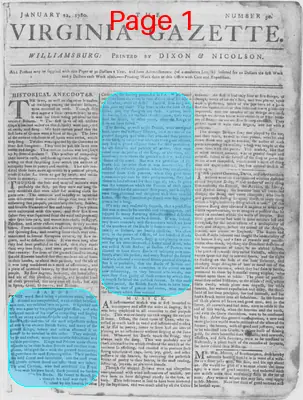
Literary
January 22, 1780
The Virginia Gazette
Richmond, Williamsburg, Richmond County, Virginia
What is this article about?
This essay describes the ancient British Bards as respected poets who composed and sang verses, enjoying high status, privileges, and protections from kings and laws. It details their exemptions, honors, and the large numbers in Ireland, referencing Ossian's poems, noting their initial virtue before later decline.
Clipping
OCR Quality
95%
Excellent
Full Text
BARDS.
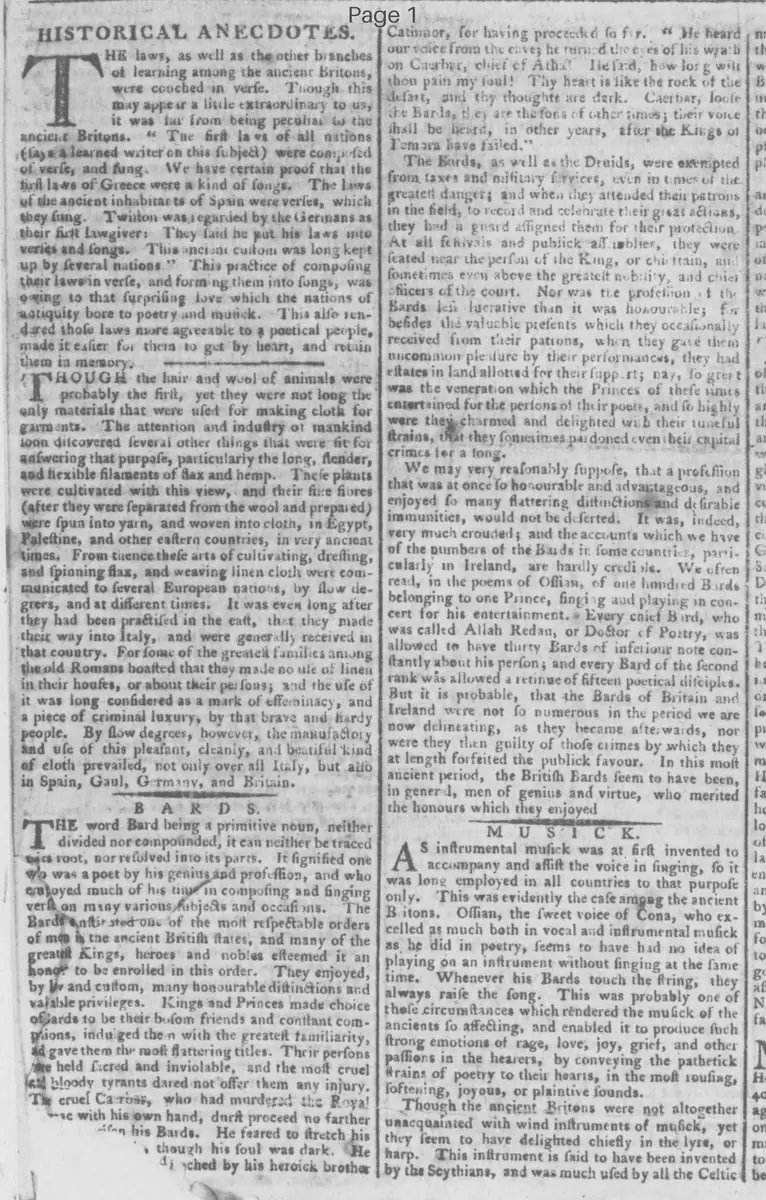
The word Bard being a primitive noun, neither derived nor compounded, it can neither be traced to its root, nor resolved into its parts. It signified one who was a poet by his genius and profession, and who employed much of his time in composing and singing verses on many various subjects and occasions. The Bards anciently constituted one of the most respectable orders of men in the ancient British states, and many of the greatest Kings, heroes and nobles esteemed it an honour to be enrolled in this order. They enjoyed, by law and custom, many honourable distinctions and valuable privileges. Kings and Princes made choice of Bards to be their bosom friends and constant companions, indulged them with the greatest familiarity, and gave them the most flattering titles. Their persons were held sacred and inviolable, and the most cruel bloody tyrants dared not offer them any injury. Cruel Carausius, who had murdered the Royal Caesar with his own hand, durst proceed no farther upon his Bards. He feared to stretch his though his soul was dark. He was checked by his heroick brother Catinmor, for having proceeded so far. He heard our voice from the cave; he hurled the trees of his wrath on Carbar, chief of Athol. He said, how long wilt thou pain my soul! Thy heart is like the rock of the desert, and thy thoughts are dark. Carbar, look to the Bards, they are the sons of other times; their voice shall be heard, in other years, after the Kings of Temora have failed."
The Bards, as well as the Druids, were exempted from taxes and military services, even in times of the greatest danger; and when they attended their patrons in the field, to record and celebrate their great actions, they had a guard assigned them for their protection. At all festivals and public assemblies, they were seated near the person of the King, or chieftain, and sometimes even above the greatest nobility, and chief officers of the court. Nor was the profession of the Bards less lucrative than it was honourable; for besides the valuable presents which they occasionally received from their patrons, when they gave them uncommon pleasure by their performances, they had estates in land allotted for their support; nay, so great was the veneration which the Princes of the times entertained for the persons of their poets, and so highly were they charmed and delighted with their tuneful strains, that they sometimes pardoned even their capital crimes for a song. We may very reasonably suppose, that a profession that was at once so honourable and advantageous, and enjoyed so many flattering distinctions and desirable immunities, would not be deserted. It was, indeed, very much crowded; and the accounts which we have of the numbers of the Bards in some countries, particularly in Ireland, are hardly credible. We often read, in the poems of Ossian, of one hundred Bards belonging to one Prince, singing and playing in concert for his entertainment. Every chief Bard, who was called Ollamh Re Dan, or Doctor of Poetry, was allowed to have thirty Bards of inferior note constantly about his person; and every Bard of the second rank was allowed a retinue of fifteen poetical disciples. But it is probable, that the Bards of Britain and Ireland were not so numerous in the period we are now delineating, as they became afterwards, nor were they then guilty of those crimes by which they at length forfeited the public favour. In this most ancient period, the British Bards seem to have been, in general, men of genius and virtue, who merited the honours which they enjoyed.
The word Bard being a primitive noun, neither derived nor compounded, it can neither be traced to its root, nor resolved into its parts. It signified one who was a poet by his genius and profession, and who employed much of his time in composing and singing verses on many various subjects and occasions. The Bards anciently constituted one of the most respectable orders of men in the ancient British states, and many of the greatest Kings, heroes and nobles esteemed it an honour to be enrolled in this order. They enjoyed, by law and custom, many honourable distinctions and valuable privileges. Kings and Princes made choice of Bards to be their bosom friends and constant companions, indulged them with the greatest familiarity, and gave them the most flattering titles. Their persons were held sacred and inviolable, and the most cruel bloody tyrants dared not offer them any injury. Cruel Carausius, who had murdered the Royal Caesar with his own hand, durst proceed no farther upon his Bards. He feared to stretch his though his soul was dark. He was checked by his heroick brother Catinmor, for having proceeded so far. He heard our voice from the cave; he hurled the trees of his wrath on Carbar, chief of Athol. He said, how long wilt thou pain my soul! Thy heart is like the rock of the desert, and thy thoughts are dark. Carbar, look to the Bards, they are the sons of other times; their voice shall be heard, in other years, after the Kings of Temora have failed."
The Bards, as well as the Druids, were exempted from taxes and military services, even in times of the greatest danger; and when they attended their patrons in the field, to record and celebrate their great actions, they had a guard assigned them for their protection. At all festivals and public assemblies, they were seated near the person of the King, or chieftain, and sometimes even above the greatest nobility, and chief officers of the court. Nor was the profession of the Bards less lucrative than it was honourable; for besides the valuable presents which they occasionally received from their patrons, when they gave them uncommon pleasure by their performances, they had estates in land allotted for their support; nay, so great was the veneration which the Princes of the times entertained for the persons of their poets, and so highly were they charmed and delighted with their tuneful strains, that they sometimes pardoned even their capital crimes for a song. We may very reasonably suppose, that a profession that was at once so honourable and advantageous, and enjoyed so many flattering distinctions and desirable immunities, would not be deserted. It was, indeed, very much crowded; and the accounts which we have of the numbers of the Bards in some countries, particularly in Ireland, are hardly credible. We often read, in the poems of Ossian, of one hundred Bards belonging to one Prince, singing and playing in concert for his entertainment. Every chief Bard, who was called Ollamh Re Dan, or Doctor of Poetry, was allowed to have thirty Bards of inferior note constantly about his person; and every Bard of the second rank was allowed a retinue of fifteen poetical disciples. But it is probable, that the Bards of Britain and Ireland were not so numerous in the period we are now delineating, as they became afterwards, nor were they then guilty of those crimes by which they at length forfeited the public favour. In this most ancient period, the British Bards seem to have been, in general, men of genius and virtue, who merited the honours which they enjoyed.
What sub-type of article is it?
Essay
What themes does it cover?
Social Manners
Moral Virtue
Patriotism
What keywords are associated?
Bards
Ancient Britain
Ossian
Poets
Privileges
Druids
Ireland
Literary Details
Title
Bards.
Form / Style
Prose Essay On Ancient Poets
Key Lines
Cruel Carausius, Who Had Murdered The Royal Caesar With His Own Hand, Durst Proceed No Farther Upon His Bards.
He Was Checked By His Heroick Brother Catinmor, For Having Proceeded So Far.
Carbar, Look To The Bards, They Are The Sons Of Other Times; Their Voice Shall Be Heard, In Other Years, After The Kings Of Temora Have Failed.