Thank you for visiting SNEWPapers!
Sign up free
Literary
May 26, 1878
Daily Globe
Saint Paul, Ramsey County, Minnesota
What is this article about?
Matilda Despard recounts the 1844 debut concert of the New York Vocal Society, a choral group led by George Loder, featuring madrigals like 'Down in a flowery vale' and 'Sweet honey-sucking bees.' Supported by patrons like Major Tucker, it marked a highlight in early New York music scene.
Clipping
OCR Quality
98%
Excellent
Full Text
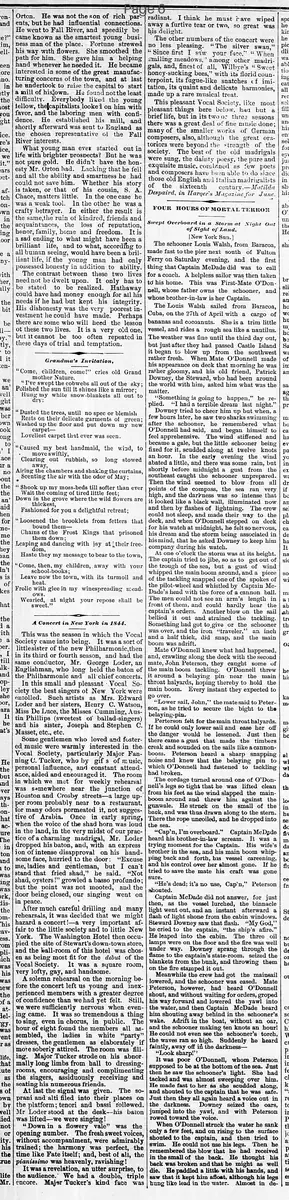
A Concert in New York in 1844.
This was the season in which the Vocal Society came into being. It was a sort of little sister of the new Philharmonic, then in its third or fourth season, and had the same conductor, Mr. George Loder, an Englishman, who long held the baton of the Philharmonic and all chief concerts.
In this small and pleasant Vocal Society the best singers of New York were enrolled. Such artists as Mrs. Edward Loder and her sisters, Henry C. Watson, Miss De Luce, the Misses Cumming, Austin Phillips (sweetest of ballad-singers) and his sister, Joseph and Stephen C. Massett, etc., etc.
Some gentlemen who loved and fostered music were warmly interested in the Vocal Society, particularly Major Fanning C. Tucker, who by gifts of music, personal influence, and constant attendance, aided and encouraged it. The room in which we met for weekly rehearsal was somewhere near the junction of Houston and Crosby streets—a large upper room probably near to a restaurant, for many odors permeated it, not suggestive of Arabia. Once in early spring, when the voice of the shad horn was loud in the land, in the very midst of our practice of a charming madrigal, Mr. Loder dropped his baton, and, with an expression of intense disapproval on his handsome face, hurried to the door: "Excuse me, ladies and gentlemen, but I can't stand that fried shad," he said. "Not shad, oysters!" growled a basso profundo; but the point was not mooted, and the door being closed, our singing went on in peace.
After much careful drilling and many rehearsals, it was decided that we might hazard a concert—a very important affair to the little society and to little New York. The Washington Hotel then occupied the site of Stewart's down-town store, and the ball-room of this hotel was chosen as being most fit for the debut of the Vocal Society. It was a square room, very lofty, gay, and handsome.
A solemn rehearsal on the morning before the concert left us young and inexperienced members with a greater degree of confidence than we had yet felt. Still, we were sufficiently nervous when evening came. It was so tremendous a thing to sing, even in chorus, in public. The hour of eight found the members all assembled, the ladies in white "party" dresses, the gentlemen as elaborately if more soberly attired. The room was filling. Major Tucker strode on his abnormally long limbs from hall to dressing-rooms, encouraging and complimenting the singers, assiduously receiving and seating his numerous friends.
At last the signal was given. The soprani and alti filed into their places on the platform: tenori and bassi followed. Mr. Loder stood at the desk—his baton was lifted—we were singing "Down in a flowery vale" was the opening number. The fresh sweet voices, without accompaniment, were admirably trained; the harmony was perfect, the time like Fate itself; and, best of all, the pianissimo was heavenly, ravishing. It was a revelation, an utter surprise, to the audience. We had a double, triple encore. Major Tucker's kind face was radiant. I think he must have wiped away a furtive tear or two, so great was his delight.
The other numbers of the concert were no less pleasing. "The silver swan," "Since first I saw your face," "When smiling meadows," among other madrigals, and, finest of all, Wilbye's "Sweet honey-sucking bees," with its florid counterpoint, its fugue-like snatches of imitation, its quaint and delicate harmonies, made up a rare musical treat.
This pleasant Vocal Society, like most pleasant things here below, had but a brief life, but in its two or three seasons there was a great deal of fine music done; many of the smaller works of German composers, also, although the great oratorios were beyond the strength of the society. The best of the old madrigals were sung, the dainty poesy, the pure and exquisite music, combined as few poets and composers have been able to do since those old English and Italian madrigalists of the sixteenth century.—Matilda Despard, in Harper's Magazine for June.
This was the season in which the Vocal Society came into being. It was a sort of little sister of the new Philharmonic, then in its third or fourth season, and had the same conductor, Mr. George Loder, an Englishman, who long held the baton of the Philharmonic and all chief concerts.
In this small and pleasant Vocal Society the best singers of New York were enrolled. Such artists as Mrs. Edward Loder and her sisters, Henry C. Watson, Miss De Luce, the Misses Cumming, Austin Phillips (sweetest of ballad-singers) and his sister, Joseph and Stephen C. Massett, etc., etc.
Some gentlemen who loved and fostered music were warmly interested in the Vocal Society, particularly Major Fanning C. Tucker, who by gifts of music, personal influence, and constant attendance, aided and encouraged it. The room in which we met for weekly rehearsal was somewhere near the junction of Houston and Crosby streets—a large upper room probably near to a restaurant, for many odors permeated it, not suggestive of Arabia. Once in early spring, when the voice of the shad horn was loud in the land, in the very midst of our practice of a charming madrigal, Mr. Loder dropped his baton, and, with an expression of intense disapproval on his handsome face, hurried to the door: "Excuse me, ladies and gentlemen, but I can't stand that fried shad," he said. "Not shad, oysters!" growled a basso profundo; but the point was not mooted, and the door being closed, our singing went on in peace.
After much careful drilling and many rehearsals, it was decided that we might hazard a concert—a very important affair to the little society and to little New York. The Washington Hotel then occupied the site of Stewart's down-town store, and the ball-room of this hotel was chosen as being most fit for the debut of the Vocal Society. It was a square room, very lofty, gay, and handsome.
A solemn rehearsal on the morning before the concert left us young and inexperienced members with a greater degree of confidence than we had yet felt. Still, we were sufficiently nervous when evening came. It was so tremendous a thing to sing, even in chorus, in public. The hour of eight found the members all assembled, the ladies in white "party" dresses, the gentlemen as elaborately if more soberly attired. The room was filling. Major Tucker strode on his abnormally long limbs from hall to dressing-rooms, encouraging and complimenting the singers, assiduously receiving and seating his numerous friends.
At last the signal was given. The soprani and alti filed into their places on the platform: tenori and bassi followed. Mr. Loder stood at the desk—his baton was lifted—we were singing "Down in a flowery vale" was the opening number. The fresh sweet voices, without accompaniment, were admirably trained; the harmony was perfect, the time like Fate itself; and, best of all, the pianissimo was heavenly, ravishing. It was a revelation, an utter surprise, to the audience. We had a double, triple encore. Major Tucker's kind face was radiant. I think he must have wiped away a furtive tear or two, so great was his delight.
The other numbers of the concert were no less pleasing. "The silver swan," "Since first I saw your face," "When smiling meadows," among other madrigals, and, finest of all, Wilbye's "Sweet honey-sucking bees," with its florid counterpoint, its fugue-like snatches of imitation, its quaint and delicate harmonies, made up a rare musical treat.
This pleasant Vocal Society, like most pleasant things here below, had but a brief life, but in its two or three seasons there was a great deal of fine music done; many of the smaller works of German composers, also, although the great oratorios were beyond the strength of the society. The best of the old madrigals were sung, the dainty poesy, the pure and exquisite music, combined as few poets and composers have been able to do since those old English and Italian madrigalists of the sixteenth century.—Matilda Despard, in Harper's Magazine for June.
What sub-type of article is it?
Essay
What themes does it cover?
Social Manners
Friendship
What keywords are associated?
Vocal Society
New York Concert
1844
Madrigals
George Loder
Major Tucker
What entities or persons were involved?
Matilda Despard, In Harper's Magazine For June.
Literary Details
Title
A Concert In New York In 1844.
Author
Matilda Despard, In Harper's Magazine For June.
Subject
Debut Concert Of The New York Vocal Society In 1844.
Form / Style
Personal Reminiscence In Prose.
Key Lines
"Excuse Me, Ladies And Gentlemen, But I Can't Stand That Fried Shad," He Said. "Not Shad, Oysters!" Growled A Basso Profundo;
"Down In A Flowery Vale" Was The Opening Number. The Fresh Sweet Voices, Without Accompaniment, Were Admirably Trained;
Wilbye's "Sweet Honey Sucking Bees," With Its Florid Counterpoint, Its Fugue Like Snatches Of Imitation, Its Quaint And Delicate Harmonies,