Thank you for visiting SNEWPapers!
Sign up free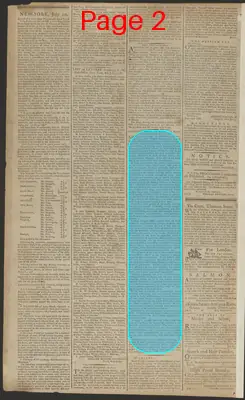
Literary
July 10, 1788
The Daily Advertiser
New York, New York County, New York
What is this article about?
This philosophical essay excerpt examines sleep as a mode of human existence distinct from waking, where bodily functions suspend except vital ones, yet the soul perceives, thinks, and dreams. It describes the transition to sleep, dream formation influenced by bodily sensations, and awakening.
Clipping
OCR Quality
98%
Excellent
Full Text
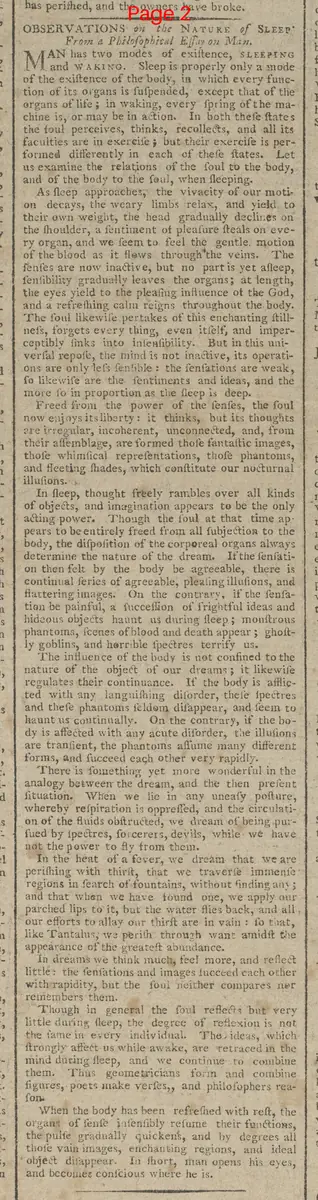
OBSERVATIONS on the NATURE of SLEEP
From a Philosophical Essay on Man.
MAN has two modes of existence, SLEEPING and WAKING. Sleep is properly only a mode of the existence of the body, in which every function of its organs is suspended, except that of the organs of life; in waking, every spring of the machine is, or may be in action. In both these states the soul perceives, thinks, recollects, and all its faculties are in exercise; but their exercise is performed differently in each of these states. Let us examine the relations of the soul to the body, and of the body to the soul, when sleeping.
As sleep approaches, the vivacity of our motion decays, the weary limbs relax, and yield to their own weight, the head gradually declines on the shoulder, a sentiment of pleasure steals on every organ, and we seem to feel the gentle motion of the blood as it flows through the veins. The senses are now inactive, but no part is yet asleep, sensibility gradually leaves the organs; at length, the eyes yield to the pleasing influence of the God, and a refreshing calm reigns throughout the body.
The soul likewise partakes of this enchanting stillness, forgets every thing, even itself, and imperceptibly sinks into insensibility. But in this universal repose, the mind is not inactive, its operations are only less sensible: the sensations are weak, so likewise are the sentiments and ideas, and the more so in proportion as the sleep is deep.
Freed from the power of the senses, the soul now enjoys its liberty: it thinks, but its thoughts are irregular, incoherent, unconnected, and, from their assemblage, are formed those fantastic images, those whimsical representations, those phantoms, and fleeting shades, which constitute our nocturnal illusions.
In sleep, thought freely rambles over all kinds of objects, and imagination appears to be the only acting power. Though the soul at that time appears to be entirely freed from all subjection to the body, the disposition of the corporeal organs always determine the nature of the dream. If the sensation then felt by the body be agreeable, there is a continual series of agreeable, pleasing illusions, and flattering images. On the contrary, if the sensation be painful, a succession of frightful ideas and hideous objects haunt us during sleep; monstrous phantoms, scenes of blood and death appear; ghostly goblins, and horrible spectres terrify us.
The influence of the body is not confined to the nature of the object of our dreams; it likewise regulates their continuance. If the body is afflicted with any languishing disorder, these spectres and these phantoms seldom disappear, and seem to haunt us continually. On the contrary, if the body is affected with any acute disorder, the illusions are transient, the phantoms assume many different forms, and succeed each other very rapidly.
There is something yet more wonderful in the analogy between the dream, and the then present situation. When we lie in any uneasy posture, whereby respiration is oppressed, and the circulation of the fluids obstructed, we dream of being pursued by spectres, sorcerers, devils, while we have not the power to fly from them.
In the heat of a fever, we dream that we are perishing with thirst, that we traverse immense regions in search of fountains, without finding any; and that when we have found one, we apply our parched lips to it, but the water flies back, and all our efforts to allay our thirst are in vain: so that, like Tantalus, we perish through want amidst the appearance of the greatest abundance.
In dreams we think much, feel more, and reflect little: the sensations and images succeed each other with rapidity, but the soul neither compares nor remembers them.
Though in general the soul reflects but very little during sleep, the degree of reflection is not the same in every individual. The ideas, which strongly affect us while awake, are retraced in the mind during sleep, and we continue to combine them. Thus geometricians form and combine figures, poets make verses, and philosophers reason.
When the body has been refreshed with rest, the organs of sense insensibly resume their functions, the pulse gradually quickens, and by degrees all those vain images, enchanting regions, and ideal objects disappear. In short, man opens his eyes, and becomes conscious where he is.
From a Philosophical Essay on Man.
MAN has two modes of existence, SLEEPING and WAKING. Sleep is properly only a mode of the existence of the body, in which every function of its organs is suspended, except that of the organs of life; in waking, every spring of the machine is, or may be in action. In both these states the soul perceives, thinks, recollects, and all its faculties are in exercise; but their exercise is performed differently in each of these states. Let us examine the relations of the soul to the body, and of the body to the soul, when sleeping.
As sleep approaches, the vivacity of our motion decays, the weary limbs relax, and yield to their own weight, the head gradually declines on the shoulder, a sentiment of pleasure steals on every organ, and we seem to feel the gentle motion of the blood as it flows through the veins. The senses are now inactive, but no part is yet asleep, sensibility gradually leaves the organs; at length, the eyes yield to the pleasing influence of the God, and a refreshing calm reigns throughout the body.
The soul likewise partakes of this enchanting stillness, forgets every thing, even itself, and imperceptibly sinks into insensibility. But in this universal repose, the mind is not inactive, its operations are only less sensible: the sensations are weak, so likewise are the sentiments and ideas, and the more so in proportion as the sleep is deep.
Freed from the power of the senses, the soul now enjoys its liberty: it thinks, but its thoughts are irregular, incoherent, unconnected, and, from their assemblage, are formed those fantastic images, those whimsical representations, those phantoms, and fleeting shades, which constitute our nocturnal illusions.
In sleep, thought freely rambles over all kinds of objects, and imagination appears to be the only acting power. Though the soul at that time appears to be entirely freed from all subjection to the body, the disposition of the corporeal organs always determine the nature of the dream. If the sensation then felt by the body be agreeable, there is a continual series of agreeable, pleasing illusions, and flattering images. On the contrary, if the sensation be painful, a succession of frightful ideas and hideous objects haunt us during sleep; monstrous phantoms, scenes of blood and death appear; ghostly goblins, and horrible spectres terrify us.
The influence of the body is not confined to the nature of the object of our dreams; it likewise regulates their continuance. If the body is afflicted with any languishing disorder, these spectres and these phantoms seldom disappear, and seem to haunt us continually. On the contrary, if the body is affected with any acute disorder, the illusions are transient, the phantoms assume many different forms, and succeed each other very rapidly.
There is something yet more wonderful in the analogy between the dream, and the then present situation. When we lie in any uneasy posture, whereby respiration is oppressed, and the circulation of the fluids obstructed, we dream of being pursued by spectres, sorcerers, devils, while we have not the power to fly from them.
In the heat of a fever, we dream that we are perishing with thirst, that we traverse immense regions in search of fountains, without finding any; and that when we have found one, we apply our parched lips to it, but the water flies back, and all our efforts to allay our thirst are in vain: so that, like Tantalus, we perish through want amidst the appearance of the greatest abundance.
In dreams we think much, feel more, and reflect little: the sensations and images succeed each other with rapidity, but the soul neither compares nor remembers them.
Though in general the soul reflects but very little during sleep, the degree of reflection is not the same in every individual. The ideas, which strongly affect us while awake, are retraced in the mind during sleep, and we continue to combine them. Thus geometricians form and combine figures, poets make verses, and philosophers reason.
When the body has been refreshed with rest, the organs of sense insensibly resume their functions, the pulse gradually quickens, and by degrees all those vain images, enchanting regions, and ideal objects disappear. In short, man opens his eyes, and becomes conscious where he is.
What sub-type of article is it?
Essay
What keywords are associated?
Sleep
Waking
Soul
Body
Dreams
Imagination
Sensations
Phantoms
What entities or persons were involved?
From A Philosophical Essay On Man.
Literary Details
Title
Observations On The Nature Of Sleep
Author
From A Philosophical Essay On Man.
Key Lines
Man Has Two Modes Of Existence, Sleeping And Waking.
Freed From The Power Of The Senses, The Soul Now Enjoys Its Liberty: It Thinks, But Its Thoughts Are Irregular, Incoherent, Unconnected, And, From Their Assemblage, Are Formed Those Fantastic Images, Those Whimsical Representations, Those Phantoms, And Fleeting Shades, Which Constitute Our Nocturnal Illusions.
In Dreams We Think Much, Feel More, And Reflect Little: The Sensations And Images Succeed Each Other With Rapidity, But The Soul Neither Compares Nor Remembers Them.
Thus Geometricians Form And Combine Figures, Poets Make Verses, And Philosophers Reason.
In Short, Man Opens His Eyes, And Becomes Conscious Where He Is.