Thank you for visiting SNEWPapers!
Sign up free
Fowle's New Hampshire Gazette And General Advertiser
Portsmouth, Rockingham County, New Hampshire
What is this article about?
A letter from Montego Bay, Jamaica, describes severe economic distress due to halted trade with the United States, including starving enslaved people, flour shortages at exorbitant prices, profiteering merchants, and curses from planters against the trade ban.
Clipping
OCR Quality
Full Text
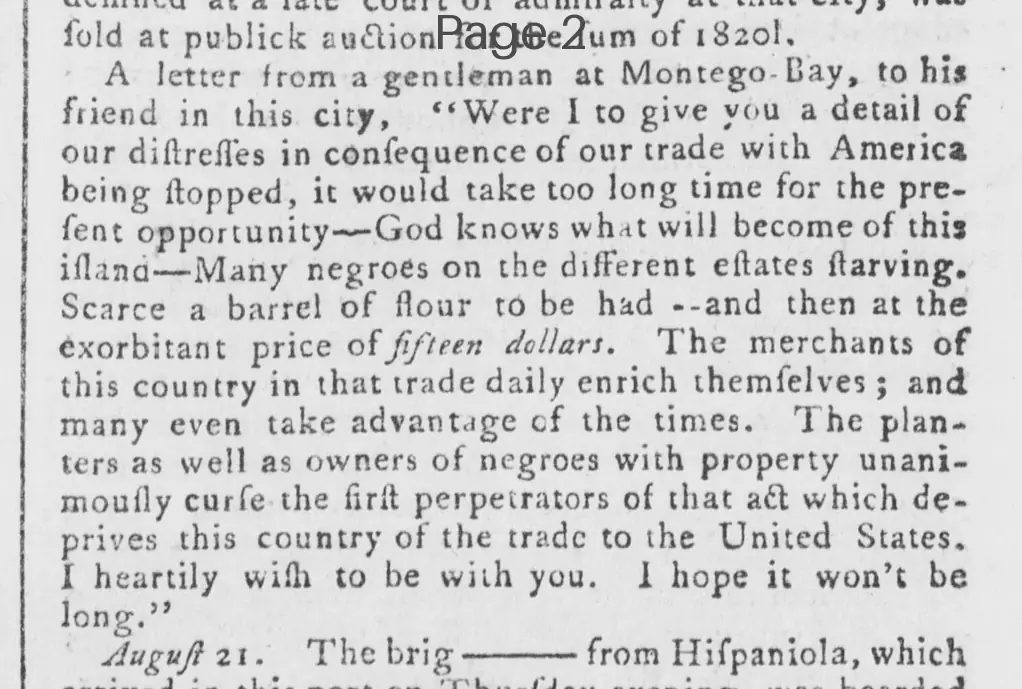
"Were I to give you a detail of our distresses in consequence of our trade with America being stopped, it would take too long time for the present opportunity--God knows what will become of this island-- Many negroes on the different estates starving. Scarce a barrel of flour to be had --and then at the exorbitant price of fifteen dollars. The merchants of this country in that trade daily enrich themselves; and many even take advantage of the times. The planters as well as owners of negroes with property unanimously curse the first perpetrators of that act which deprives this country of the trade to the United States. I heartily wish to be with you. I hope it won't be long."
What sub-type of article is it?
What keywords are associated?
Where did it happen?
Foreign News Details
Primary Location
Montego Bay
Outcome
many negroes starving; scarce flour at fifteen dollars per barrel; merchants enriching themselves; planters cursing the trade stoppage perpetrators.
Event Details
Letter details distresses from stopped trade with America: island's uncertain future, starving negroes on estates, flour scarcity and high prices, merchants profiting and taking advantage, unanimous curses from planters and negro owners against the act depriving trade to United States.