Thank you for visiting SNEWPapers!
Sign up free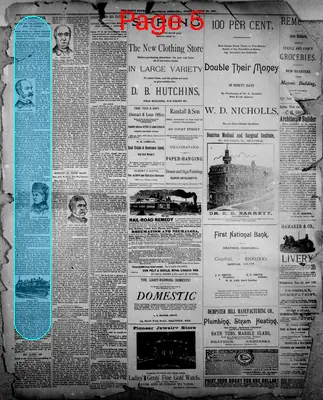
Foreign News
April 24, 1887
The Beatrice Daily Express
Beatrice, Gage County, Nebraska
What is this article about?
Biographical sketch of the Marquis of Lansdowne, Governor General of Canada since 1883, including an incident of his intervention against animal cruelty, his family, Irish estates, and description of Rideau Hall residence.
Clipping

OCR Quality
98%
Excellent
Full Text
LORD LANSDOWNE.
SKETCH OF THE GOVERNOR GENERAL OF CANADA.
Rideau House, the Official Residence.
Lady Lansdowne and Her Popularity Among the People of Canada-Some Interesting Incidents.
One bright day a winter or two ago a party of skaters was on its way to McKay's lake, near Ottawa, Ont. A carter who was traveling the same road was observed to be cruelly ill treating a horse which was attached to a heavy load of wood. One of the party at once remonstrated with the man, who, seeing that the stranger who had dared to tell him how to treat his beast was of small stature, went all the more fiercely to work with his whip. It was only with considerable difficulty that he was finally made to desist.
After returning from his skating the little man at once sent word to the secretary of the society for the prevention of cruelty to animals of what had happened, and informed him that he would, if necessary, go into the witness box and give evidence against the horse beater. It would have been a novel sight to see the governor general of Canada in the witness box, for the gentleman who so humanely interfered was none other than the Marquis of Lansdowne.
The Right Hon. Charles Keith Fitz Maurice was the eldest son of the fourth Marquis of Lansdowne, K. G., and was born in Ireland in 1845. He was educated at Eton and at Balliol college, Oxford.
Leaving college, he joined the militia, and after serving for a year was made captain of the Wilts Yeomanry cavalry. He succeeded his father in the marquisate and other titles in 1866. In the same year he was elected to parliament, and in 1868 was made lord of the treasury, which position he held until 1872, when he was selected as under secretary for war under the Gladstone ministry.
He was appointed under secretary for India when Mr. Gladstone took office again in 1880, but retired two months afterward, owing to a disagreement with the government on the subject of the compensation for disturbance (Ireland) bill. In 1883 the queen approved of his appointment as governor general of Canada, and he at once came to succeed the Marquis of Lorne, who retired in October of that year. Lord Lansdowne is a magistrate for Wiltshire and County Kerry, Ireland. In appearance he is below medium height, of light build and complexion. He is of a somewhat retiring disposition, and has not entertained as much as his predecessors, Lord Dufferin and the Marquis of Lorne. He has made personal visits to the outlying posts, and whenever he appears at an Indian reservation is expected to go through that terrible ordeal, the grand powwow.
On one of these visits he was told by an old Indian chief that "grub," or rather the want of it, was the chief source of trouble between Indians and whites; as long as they received plenty to eat they would be satisfied.
On the matter of his Irish estates, Lord Lansdowne recently said: "I am anxious for a settlement of the disputed rent question, but I will not pay the costs so far incurred. The reduction asked for in Queens county and in Kerry I will willingly grant if tenants will pay the costs."
The marquis was married in 1872 to Lady Maud Evelyn Hamilton, youngest daughter of the first Duke of Abercorn. Lady Lansdowne is a woman of good appearance, but quiet and unassuming. She is a bright conversationalist and delights in story telling. She is very popular with the young people with whom she associates, and gives many parties for their amusement. She is a great reader, and indulges in few novels, but delights in Spencer, Carlyle and Darwin. She believes in manhood suffrage and the equality of the sexes.
But she is said to be tired of living in Canada and longs for her old home. She has two children, both boys, to whom she is deeply devoted, and often expresses her only wish to be that she may live to see them grown up good men, who will be of use as well as ornament to society.
Rideau hall, the residence of the governor general, is situated about two miles from the government buildings at New Edinburgh, a suburb of the city, on the right bank of the Rideau river. The main portion of the building was originally a private residence, and was bought by the government, together with about 300 acres of land, in 1867. When Lord Dufferin came he found the establishment much too small and added a large ball room and tennis court. The advent of the Marquis of Lorne and her royal highness the Princess Louise called for many changes, particularly in the interior. As might naturally be expected, under the supervision of the princess, and in many cases the result of her own work, several rooms were decorated in a manner that illustrates the best type of decoration of the time. The hall is a puzzling piece of architecture, on which over $400,000 has been expended. In winter during the session of the houses of parliament, the scenes witnessed when skating or tobogganing are indulged in amid the splendor of illumination, when bonfires, Chinese lanterns and colored lights throw their weird shadows across the snow, revealing a vast throng of pleasure seekers dressed in fancy costume and all seemingly supremely happy, are not to be surpassed anywhere. In the summer the grounds are beautifully laid out by the skilled hands of an artistic gardener, and the park, trees and yard are scenes which can only be fully appreciated by those who have seen them.
SKETCH OF THE GOVERNOR GENERAL OF CANADA.
Rideau House, the Official Residence.
Lady Lansdowne and Her Popularity Among the People of Canada-Some Interesting Incidents.
One bright day a winter or two ago a party of skaters was on its way to McKay's lake, near Ottawa, Ont. A carter who was traveling the same road was observed to be cruelly ill treating a horse which was attached to a heavy load of wood. One of the party at once remonstrated with the man, who, seeing that the stranger who had dared to tell him how to treat his beast was of small stature, went all the more fiercely to work with his whip. It was only with considerable difficulty that he was finally made to desist.
After returning from his skating the little man at once sent word to the secretary of the society for the prevention of cruelty to animals of what had happened, and informed him that he would, if necessary, go into the witness box and give evidence against the horse beater. It would have been a novel sight to see the governor general of Canada in the witness box, for the gentleman who so humanely interfered was none other than the Marquis of Lansdowne.
The Right Hon. Charles Keith Fitz Maurice was the eldest son of the fourth Marquis of Lansdowne, K. G., and was born in Ireland in 1845. He was educated at Eton and at Balliol college, Oxford.
Leaving college, he joined the militia, and after serving for a year was made captain of the Wilts Yeomanry cavalry. He succeeded his father in the marquisate and other titles in 1866. In the same year he was elected to parliament, and in 1868 was made lord of the treasury, which position he held until 1872, when he was selected as under secretary for war under the Gladstone ministry.
He was appointed under secretary for India when Mr. Gladstone took office again in 1880, but retired two months afterward, owing to a disagreement with the government on the subject of the compensation for disturbance (Ireland) bill. In 1883 the queen approved of his appointment as governor general of Canada, and he at once came to succeed the Marquis of Lorne, who retired in October of that year. Lord Lansdowne is a magistrate for Wiltshire and County Kerry, Ireland. In appearance he is below medium height, of light build and complexion. He is of a somewhat retiring disposition, and has not entertained as much as his predecessors, Lord Dufferin and the Marquis of Lorne. He has made personal visits to the outlying posts, and whenever he appears at an Indian reservation is expected to go through that terrible ordeal, the grand powwow.
On one of these visits he was told by an old Indian chief that "grub," or rather the want of it, was the chief source of trouble between Indians and whites; as long as they received plenty to eat they would be satisfied.
On the matter of his Irish estates, Lord Lansdowne recently said: "I am anxious for a settlement of the disputed rent question, but I will not pay the costs so far incurred. The reduction asked for in Queens county and in Kerry I will willingly grant if tenants will pay the costs."
The marquis was married in 1872 to Lady Maud Evelyn Hamilton, youngest daughter of the first Duke of Abercorn. Lady Lansdowne is a woman of good appearance, but quiet and unassuming. She is a bright conversationalist and delights in story telling. She is very popular with the young people with whom she associates, and gives many parties for their amusement. She is a great reader, and indulges in few novels, but delights in Spencer, Carlyle and Darwin. She believes in manhood suffrage and the equality of the sexes.
But she is said to be tired of living in Canada and longs for her old home. She has two children, both boys, to whom she is deeply devoted, and often expresses her only wish to be that she may live to see them grown up good men, who will be of use as well as ornament to society.
Rideau hall, the residence of the governor general, is situated about two miles from the government buildings at New Edinburgh, a suburb of the city, on the right bank of the Rideau river. The main portion of the building was originally a private residence, and was bought by the government, together with about 300 acres of land, in 1867. When Lord Dufferin came he found the establishment much too small and added a large ball room and tennis court. The advent of the Marquis of Lorne and her royal highness the Princess Louise called for many changes, particularly in the interior. As might naturally be expected, under the supervision of the princess, and in many cases the result of her own work, several rooms were decorated in a manner that illustrates the best type of decoration of the time. The hall is a puzzling piece of architecture, on which over $400,000 has been expended. In winter during the session of the houses of parliament, the scenes witnessed when skating or tobogganing are indulged in amid the splendor of illumination, when bonfires, Chinese lanterns and colored lights throw their weird shadows across the snow, revealing a vast throng of pleasure seekers dressed in fancy costume and all seemingly supremely happy, are not to be surpassed anywhere. In the summer the grounds are beautifully laid out by the skilled hands of an artistic gardener, and the park, trees and yard are scenes which can only be fully appreciated by those who have seen them.
What sub-type of article is it?
Colonial Affairs
What keywords are associated?
Lord Lansdowne
Governor General Canada
Lady Lansdowne
Rideau Hall
Ottawa
Indian Reservation
Irish Estates
What entities or persons were involved?
Marquis Of Lansdowne
Lady Lansdowne
Marquis Of Lorne
Lord Dufferin
Where did it happen?
Canada
Foreign News Details
Primary Location
Canada
Event Date
1883
Key Persons
Marquis Of Lansdowne
Lady Lansdowne
Marquis Of Lorne
Lord Dufferin
Event Details
Biographical sketch of the Marquis of Lansdowne, appointed Governor General of Canada in 1883, including his background, career, an incident of intervening in horse cruelty near Ottawa, visits to Indian reservations, statements on Irish estates, family details, and description of Rideau Hall.