Thank you for visiting SNEWPapers!
Sign up free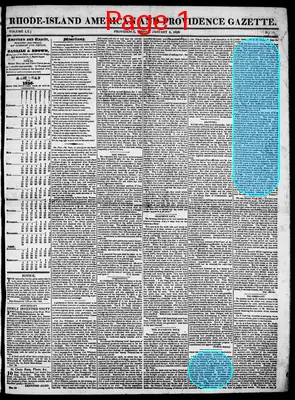
Story
January 6, 1826
Rhode Island American And Providence Gazette
Providence, Providence County, Rhode Island
What is this article about?
Historical account of the Nipmuc country in southern Worcester County, describing its former population, peaceful relations with settlers until King Philip's War in 1675, which devastated settlements through savage warfare and extermination efforts.
Clipping
OCR Quality
98%
Excellent
Full Text
FROM THE WORCESTER MONTHLY MAGAZINE.
THE NIPMUC COUNTRY.
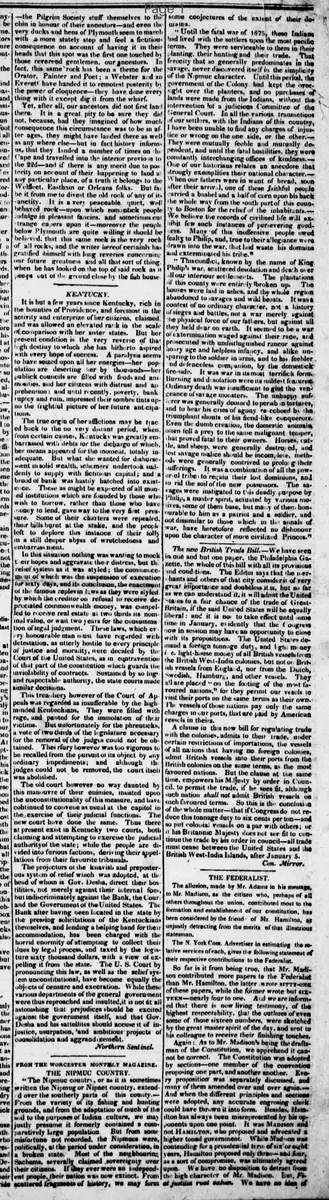
" The Nipmuc country, or as it is sometimes written the Nipmug or Nipnet country, extended over the southerly parts of this county.— From the variety of its fishing and hunting grounds, and from the adaptation of much of the soil to the purposes of Indian culture, we may justly presume it formerly contained a comparatively large population. But from some misfortune not recorded., the Nipmucs were, politically, at the period under consideration, in a broken state. Most of the neighbouring Sachems, severally claimed sovereignty over their citizens. If they ever were an independent people, their nation was now extinct. From scattered fragments of history, we may form some conjectures of the extent of their domains.
" Until the fatal war of 1675, these Indians had lived with the settlers upon the most pacific terms. They were serviceable to them in their planting, their hunting and their trade. That ferocity that so generally predominates in the savage, never discovered itself in the simplicity of the Nipmuc character. Until this period, the government of the Colony had kept the oversight over the planters, and no purchases of lands were made from the Indians, without the intervention of a judicious Committee of the General Court. In all the various transactions of our settlers, with the Indians of this country, I have been unable to find any charges of injustice or wrong on the one side, or the other.— They were mutually feeble and mutually dependent, and until the fatal hostilities, they were constantly interchanging offices of kindness.—
One of our historians relates an anecdote that strongly exemplifies their national character.— When our fathers were in want of bread, soon after their arrival, one of these faithful people carried a bushel and a half of corn upon his back the whole way from the south part of this country to Boston for the relief of the inhabitants.— We believe the records of civilised life will exhibit few such instances of persevering goodness. Many of this inoffensive people owed fealty to Philip, and, true to their allegiance were drawn into the war, that laid waste his domains and exterminated his tribe."
"This conflict, known by the name of King Philip's war, scattered desolation and death over all our interior settlements. The plantations of this county were entirely broken up. The houses were laid in ashes, and the whole region abandoned to savages and wild beasts. It was a contest of no ordinary character, not a history of sieges and battles, not a war merely against the physical force of our fathers, but against all they held dear on earth. It seemed to be a war of extermination waged against their race, and prosecuted with undistinguished rancor against hoary age and helpless infancy, and alike unsparing to the soldier in arms, and to his feebler and defenceless companion, by the domestic fire-side. It was war in its most terrifick form. Burning and desolation were its mildest features Ordinary death was insufficient to glut the vengeance of savage monsters. The unhappy sufferer was generally doomed to perish in tortures, and to hear his cries of agony re-echoed by the triumphant shouts of his fiend-like conquerors. Even the dumb creation, the domestic animals, often fell a prey to the same malignant temper, that proved fatal to their owners. Horses, cattle, and sheep, were generally destroyed, and lest savage malice should be incomplete, methods were generally contrived to prolong their sufferings. It was a combination of all the powerful tribe, to regain their lost dominions, and to rid the soil of the new possessors. The savages were instigated to this deadly purpose by Philip, a master spirit, actuated by various motives, some of them base, but many of them honourable to him as a patriot and a soldier, and not dissimilar to those which in the annals of war, have heretofore reflected no dishonour upon the character of more civilized Princes."
THE NIPMUC COUNTRY.
" The Nipmuc country, or as it is sometimes written the Nipmug or Nipnet country, extended over the southerly parts of this county.— From the variety of its fishing and hunting grounds, and from the adaptation of much of the soil to the purposes of Indian culture, we may justly presume it formerly contained a comparatively large population. But from some misfortune not recorded., the Nipmucs were, politically, at the period under consideration, in a broken state. Most of the neighbouring Sachems, severally claimed sovereignty over their citizens. If they ever were an independent people, their nation was now extinct. From scattered fragments of history, we may form some conjectures of the extent of their domains.
" Until the fatal war of 1675, these Indians had lived with the settlers upon the most pacific terms. They were serviceable to them in their planting, their hunting and their trade. That ferocity that so generally predominates in the savage, never discovered itself in the simplicity of the Nipmuc character. Until this period, the government of the Colony had kept the oversight over the planters, and no purchases of lands were made from the Indians, without the intervention of a judicious Committee of the General Court. In all the various transactions of our settlers, with the Indians of this country, I have been unable to find any charges of injustice or wrong on the one side, or the other.— They were mutually feeble and mutually dependent, and until the fatal hostilities, they were constantly interchanging offices of kindness.—
One of our historians relates an anecdote that strongly exemplifies their national character.— When our fathers were in want of bread, soon after their arrival, one of these faithful people carried a bushel and a half of corn upon his back the whole way from the south part of this country to Boston for the relief of the inhabitants.— We believe the records of civilised life will exhibit few such instances of persevering goodness. Many of this inoffensive people owed fealty to Philip, and, true to their allegiance were drawn into the war, that laid waste his domains and exterminated his tribe."
"This conflict, known by the name of King Philip's war, scattered desolation and death over all our interior settlements. The plantations of this county were entirely broken up. The houses were laid in ashes, and the whole region abandoned to savages and wild beasts. It was a contest of no ordinary character, not a history of sieges and battles, not a war merely against the physical force of our fathers, but against all they held dear on earth. It seemed to be a war of extermination waged against their race, and prosecuted with undistinguished rancor against hoary age and helpless infancy, and alike unsparing to the soldier in arms, and to his feebler and defenceless companion, by the domestic fire-side. It was war in its most terrifick form. Burning and desolation were its mildest features Ordinary death was insufficient to glut the vengeance of savage monsters. The unhappy sufferer was generally doomed to perish in tortures, and to hear his cries of agony re-echoed by the triumphant shouts of his fiend-like conquerors. Even the dumb creation, the domestic animals, often fell a prey to the same malignant temper, that proved fatal to their owners. Horses, cattle, and sheep, were generally destroyed, and lest savage malice should be incomplete, methods were generally contrived to prolong their sufferings. It was a combination of all the powerful tribe, to regain their lost dominions, and to rid the soil of the new possessors. The savages were instigated to this deadly purpose by Philip, a master spirit, actuated by various motives, some of them base, but many of them honourable to him as a patriot and a soldier, and not dissimilar to those which in the annals of war, have heretofore reflected no dishonour upon the character of more civilized Princes."
What sub-type of article is it?
Historical Event
Tragedy
Disaster
What themes does it cover?
Catastrophe
Misfortune
Tragedy
What keywords are associated?
Nipmuc Country
King Philips War
Colonial Indians
Settler Relations
War Devastation
What entities or persons were involved?
Nipmucs
Philip
Where did it happen?
Nipmuc Country, Southerly Parts Of This County
Story Details
Key Persons
Nipmucs
Philip
Location
Nipmuc Country, Southerly Parts Of This County
Event Date
1675
Story Details
The Nipmuc Indians lived peacefully with settlers, aiding them until drawn into King Philip's War, which devastated settlements through brutal extermination tactics.