Thank you for visiting SNEWPapers!
Sign up free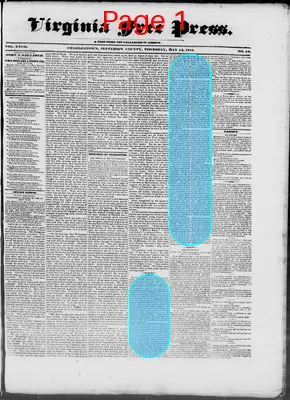
Literary
May 15, 1834
Virginia Free Press
Charles Town, Jefferson County, West Virginia
What is this article about?
Biographical sketch from Hillard's 'Life of Captain John Smith' praising Pocahontas's virtues, moral courage, and role in saving colonists and promoting peace between her Powhatan people and the English in early Virginia.
Clipping
OCR Quality
95%
Excellent
Full Text
POCAHONTAS.
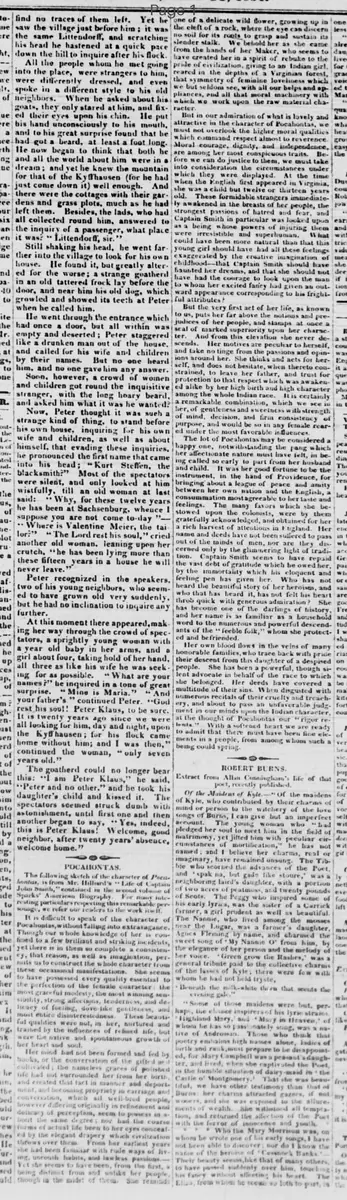
The following sketch of the character of Pocahontas, is from Mr. Hillard's "Life of Captain John Smith," contained in the second volume of Sparks' American Biography. For many interesting particulars respecting this remarkable personage, we refer our readers to the work itself.
It is difficult to speak of the character of Pocahontas, without falling into extravagance. Though our whole knowledge of her is confined to a few brilliant and striking incidents, yet there is in them so complete a consistency, that reason, as well as imagination, perforces us to construct the whole character from these occasional manifestations. She seems to have possessed every quality essential to the perfection of the female character: the most graceful modesty, the most winning gentleness, strong affections, tenderness, and delicacy of feeling, dove-like gentleness, and most entire disinterestedness. These beautiful qualities were not, in her, nurtured and trained by the influences of refined life, but were the native and spontaneous growth of her heart and soul.
Her mind had not been formed and fed by books, or the conversation of the gifted and cultivated, the nameless graces of polished life had not surrounded her from her birth, and created that tact in manner and deportment, and becoming propriety in carriage and conversation, which all well-bred people, however differing originally in refinement and delicacy of perception, seem to possess in about the same degree, nor had the coarse forms of actual life been to her eye concealed by the elegant drapery which civilization throws over them. From her earliest years she had been familiar with rude ways of living, uncouth habits, and lawless passions.—Yet she seems to have been, from the first, a being distinct from and unlike her people though in the midst of them. She remained one of a delicate wild flower, growing up in the cleft of a rock, where the eye can discern no soil for its roots to grasp and sustain its slender stalk. We behold her as she came from the hands of her Maker, who seems to have created her in a spirit of rebuke to the pride of civilization, giving to an Indian girl, reared in the depths of a Virginian forest, that symmetry of feminine loveliness which we but seldom see, with all our helps and appliances, and all that moral machinery with which we work upon the raw material character.
But in our admiration of what is lovely and attractive in the character of Pocahontas, we must not overlook the higher moral qualities which command respect almost to reverence. Moral courage, dignity, and independence, are among her most conspicuous traits. Before we can do justice to them, we must take into consideration the circumstances under which they were displayed. At the time when the English first appeared in Virginia, she was a child but twelve or thirteen years old. These formidable strangers immediately awakened in the breasts of her people, the strongest passions of hatred and fear, and Captain Smith in particular was looked upon as a being whose powers of injuring them were irresistible and superhuman.
What could have been more natural than that this young girl should have had all these feelings exaggerated by the creative imagination of childhood—that Captain Smith should have haunted her dreams, and that she should not have had the courage to look upon the man to whom her excited fancy had given an outward appearance corresponding to his frightful attributes?
But the very first act of her life, as known to us, puts her far above the notions and prejudices of her people, and stamps at once a seal of marked superiority upon her character. And from this elevation she never descends. Her motives are peculiar to herself, and take no tinge from the passions and opinions around her. She thinks and acts for herself, and does not hesitate, when thereto constrained, to leave her father, and trust for protection to that respect which was awakened alike by her high birth and high character among the whole Indian race. It is certainly a remarkable combination, which we see in her, of gentleness and sweetness with strength of mind, decision, and firm consistency of purpose, and would be so in any female reared under the most favorable influences.
The lot of Pocahontas may be considered a happy one, notwithstanding the pang which her affectionate nature must have felt, in being called so early to part from her husband and child. It was her good fortune to be the instrument, in the hands of Providence, for bringing about a league of peace and amity between her own nation and the English, a consummation most agreeable to her taste and feelings. The many favors which she bestowed upon the colonists, were by them gratefully acknowledged, and obtained for her a rich harvest of attentions in England. Her name and deeds have not been suffered to pass out of the minds of men, nor are they discerned only by the glimmering light of tradition. Captain Smith seems to have repaid the vast debt of gratitude which he owed her, by the immortality which his eloquent and feeling pen has given her. Who has not heard the beautiful story of her heroism, and who that has heard it, has not felt his heart throb quick with generous admiration? She has become one of the darlings of history, and her name is as familiar as a household word to the numerous and powerful descendants of the "feeble folk," whom she protected and befriended.
Her own blood flows in the veins of many honorable families, who trace back with pride their descent from this daughter of a despised people. She has been a powerful, though silent advocate in behalf of the race to which she belonged. Her deeds have covered a multitude of their sins. When disgusted with numerous recitals of their cruelty and treachery, and about to pass an unfavorable judgment in our minds upon the Indian character, at the thought of Pocahontas our "rigor relents." With a softened heart we are ready to admit that there must have been some elements in a people, from among whom such a being could spring.
The following sketch of the character of Pocahontas, is from Mr. Hillard's "Life of Captain John Smith," contained in the second volume of Sparks' American Biography. For many interesting particulars respecting this remarkable personage, we refer our readers to the work itself.
It is difficult to speak of the character of Pocahontas, without falling into extravagance. Though our whole knowledge of her is confined to a few brilliant and striking incidents, yet there is in them so complete a consistency, that reason, as well as imagination, perforces us to construct the whole character from these occasional manifestations. She seems to have possessed every quality essential to the perfection of the female character: the most graceful modesty, the most winning gentleness, strong affections, tenderness, and delicacy of feeling, dove-like gentleness, and most entire disinterestedness. These beautiful qualities were not, in her, nurtured and trained by the influences of refined life, but were the native and spontaneous growth of her heart and soul.
Her mind had not been formed and fed by books, or the conversation of the gifted and cultivated, the nameless graces of polished life had not surrounded her from her birth, and created that tact in manner and deportment, and becoming propriety in carriage and conversation, which all well-bred people, however differing originally in refinement and delicacy of perception, seem to possess in about the same degree, nor had the coarse forms of actual life been to her eye concealed by the elegant drapery which civilization throws over them. From her earliest years she had been familiar with rude ways of living, uncouth habits, and lawless passions.—Yet she seems to have been, from the first, a being distinct from and unlike her people though in the midst of them. She remained one of a delicate wild flower, growing up in the cleft of a rock, where the eye can discern no soil for its roots to grasp and sustain its slender stalk. We behold her as she came from the hands of her Maker, who seems to have created her in a spirit of rebuke to the pride of civilization, giving to an Indian girl, reared in the depths of a Virginian forest, that symmetry of feminine loveliness which we but seldom see, with all our helps and appliances, and all that moral machinery with which we work upon the raw material character.
But in our admiration of what is lovely and attractive in the character of Pocahontas, we must not overlook the higher moral qualities which command respect almost to reverence. Moral courage, dignity, and independence, are among her most conspicuous traits. Before we can do justice to them, we must take into consideration the circumstances under which they were displayed. At the time when the English first appeared in Virginia, she was a child but twelve or thirteen years old. These formidable strangers immediately awakened in the breasts of her people, the strongest passions of hatred and fear, and Captain Smith in particular was looked upon as a being whose powers of injuring them were irresistible and superhuman.
What could have been more natural than that this young girl should have had all these feelings exaggerated by the creative imagination of childhood—that Captain Smith should have haunted her dreams, and that she should not have had the courage to look upon the man to whom her excited fancy had given an outward appearance corresponding to his frightful attributes?
But the very first act of her life, as known to us, puts her far above the notions and prejudices of her people, and stamps at once a seal of marked superiority upon her character. And from this elevation she never descends. Her motives are peculiar to herself, and take no tinge from the passions and opinions around her. She thinks and acts for herself, and does not hesitate, when thereto constrained, to leave her father, and trust for protection to that respect which was awakened alike by her high birth and high character among the whole Indian race. It is certainly a remarkable combination, which we see in her, of gentleness and sweetness with strength of mind, decision, and firm consistency of purpose, and would be so in any female reared under the most favorable influences.
The lot of Pocahontas may be considered a happy one, notwithstanding the pang which her affectionate nature must have felt, in being called so early to part from her husband and child. It was her good fortune to be the instrument, in the hands of Providence, for bringing about a league of peace and amity between her own nation and the English, a consummation most agreeable to her taste and feelings. The many favors which she bestowed upon the colonists, were by them gratefully acknowledged, and obtained for her a rich harvest of attentions in England. Her name and deeds have not been suffered to pass out of the minds of men, nor are they discerned only by the glimmering light of tradition. Captain Smith seems to have repaid the vast debt of gratitude which he owed her, by the immortality which his eloquent and feeling pen has given her. Who has not heard the beautiful story of her heroism, and who that has heard it, has not felt his heart throb quick with generous admiration? She has become one of the darlings of history, and her name is as familiar as a household word to the numerous and powerful descendants of the "feeble folk," whom she protected and befriended.
Her own blood flows in the veins of many honorable families, who trace back with pride their descent from this daughter of a despised people. She has been a powerful, though silent advocate in behalf of the race to which she belonged. Her deeds have covered a multitude of their sins. When disgusted with numerous recitals of their cruelty and treachery, and about to pass an unfavorable judgment in our minds upon the Indian character, at the thought of Pocahontas our "rigor relents." With a softened heart we are ready to admit that there must have been some elements in a people, from among whom such a being could spring.
What sub-type of article is it?
Essay
What themes does it cover?
Moral Virtue
War Peace
Liberty Freedom
What keywords are associated?
Pocahontas
John Smith
Virginia
Indian Character
Moral Courage
Heroism
Peace League
Female Virtue
What entities or persons were involved?
Mr. Hillard
Literary Details
Title
Pocahontas.
Author
Mr. Hillard
Subject
Character Of Pocahontas
Form / Style
Biographical Sketch In Prose
Key Lines
She Seems To Have Possessed Every Quality Essential To The Perfection Of The Female Character: The Most Graceful Modesty, The Most Winning Gentleness, Strong Affections, Tenderness, And Delicacy Of Feeling, Dove Like Gentleness, And Most Entire Disinterestedness.
We Behold Her As She Came From The Hands Of Her Maker, Who Seems To Have Created Her In A Spirit Of Rebuke To The Pride Of Civilization, Giving To An Indian Girl, Reared In The Depths Of A Virginian Forest, That Symmetry Of Feminine Loveliness Which We But Seldom See, With All Our Helps And Appliances, And All That Moral Machinery With Which We Work Upon The Raw Material Character.
It Is Certainly A Remarkable Combination, Which We See In Her, Of Gentleness And Sweetness With Strength Of Mind, Decision, And Firm Consistency Of Purpose, And Would Be So In Any Female Reared Under The Most Favorable Influences.
She Has Become One Of The Darlings Of History, And Her Name Is As Familiar As A Household Word To The Numerous And Powerful Descendants Of The "Feeble Folk," Whom She Protected And Befriended.