Thank you for visiting SNEWPapers!
Sign up free
The Key West Citizen
Key West, Monroe County, Florida
What is this article about?
Florida Citrus Commission eases restrictions on using freeze-damaged oranges for frozen concentrate from 5% to 15-25%, amid grower doubts and calls for better testing methods to protect industry reputation after Dec. 12-14 freeze.
Clipping
OCR Quality
Full Text
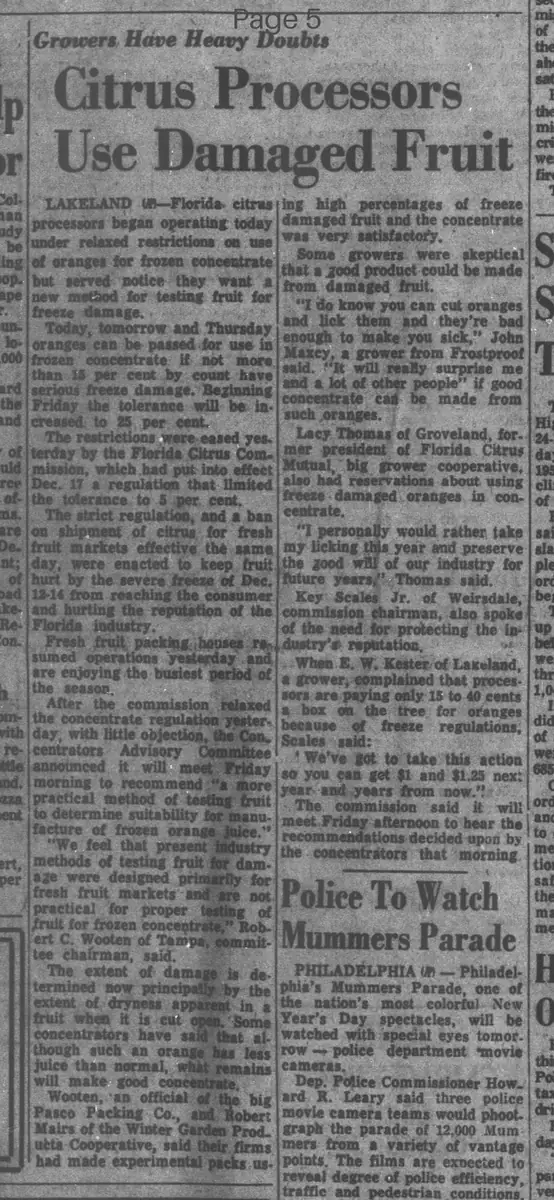
LAKELAND (U-Florida) - Citrus processors began operating today under relaxed restrictions on use of oranges for frozen concentrate but served notice they want a new method for testing fruit for freeze damage.
Today, tomorrow and Thursday oranges can be passed for use in frozen concentrate if not more than 15 per cent by count have serious freeze damage. Beginning Friday the tolerance will be increased to 25 per cent.
The restrictions were eased yesterday by the Florida Citrus Commission, which had put into effect Dec. 17 a regulation that limited the tolerance to 5 per cent.
The strict regulation, and a ban on shipment of citrus for fresh fruit markets effective the same day, were enacted to keep fruit hurt by the severe freeze of Dec. 12-14 from reaching the consumer and hurting the reputation of the Florida industry.
Fresh fruit packing houses resumed operations yesterday and are enjoying the busiest period of the season.
After the commission relaxed the concentrate regulation yesterday, with little objection, the Concentrators Advisory Committee announced it will meet Friday morning to recommend "a more practical method of testing fruit to determine suitability for manufacture of frozen orange juice."
"We feel that present industry methods of testing fruit for damage were designed primarily for fresh fruit markets and are not practical for proper testing of fruit for frozen concentrate," Robert C. Wooten of Tampa, committee chairman, said.
The extent of damage is determined now principally by the extent of dryness apparent in a fruit when it is cut open. Some concentrators have said that although such an orange has less juice than normal, what remains will make good concentrate.
Wooten, an official of the big Pasco Packing Co., and Robert Mairs of the Winter Garden Products Cooperative, said their firms had made experimental packs using high percentages of freeze damaged fruit and the concentrate was very satisfactory.
Some growers were skeptical that a good product could be made from damaged fruit.
"I do know you can cut oranges and lick them and they're bad enough to make you sick," John Maxey, a grower from Frostproof said. "It will really surprise me and a lot of other people" if good concentrate can be made from such oranges.
Lacy Thomas of Groveland, former president of Florida Citrus Mutual, big grower cooperative, also had reservations about using freeze damaged oranges in concentrate.
"I personally would rather take my licking this year and preserve the good will of our industry for future years," Thomas said.
Key Scales Jr. of Weirsdale, commission chairman, also spoke of the need for protecting the industry's reputation.
When E. W. Kester of Lakeland, a grower, complained that processors are paying only 15 to 40 cents a box on the tree for oranges because of freeze regulations, Scales said:
"We've got to take this action so you can get $1 and $1.25 next year and years from now."
The commission said it will meet Friday afternoon to hear the recommendations decided upon by the concentrators that morning.
What sub-type of article is it?
What keywords are associated?
What entities or persons were involved?
Where did it happen?
Domestic News Details
Primary Location
Lakeland, Florida
Event Date
Dec. 17 And Following Days
Key Persons
Outcome
restrictions eased to 15% tolerance today through thursday, increasing to 25% from friday; fresh fruit packing resumed; meetings planned for new testing method; processors paying 15-40 cents per box, aiming for higher prices next year.
Event Details
Citrus processors operate under relaxed restrictions allowing up to 15% freeze-damaged oranges for frozen concentrate today through Thursday, increasing to 25% from Friday, after initial 5% limit from Dec. 17 following Dec. 12-14 freeze. Commission eases rules to protect industry reputation; concentrators seek practical testing method; some growers skeptical of using damaged fruit.