Thank you for visiting SNEWPapers!
Sign up free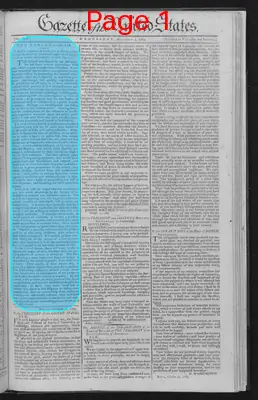
Literary
November 4, 1789
Gazette Of The United States
New York, New York County, New York
What is this article about?
An essay from The Tablet No. LIX discusses the dangers of extravagance and living beyond one's means in free societies, particularly the US. It argues that such habits lead to personal debt, misery, and social confusion, advocating for education in economy and self-denial to promote individual prosperity and virtue.
Clipping
OCR Quality
98%
Excellent
Full Text
[No. LIX.]
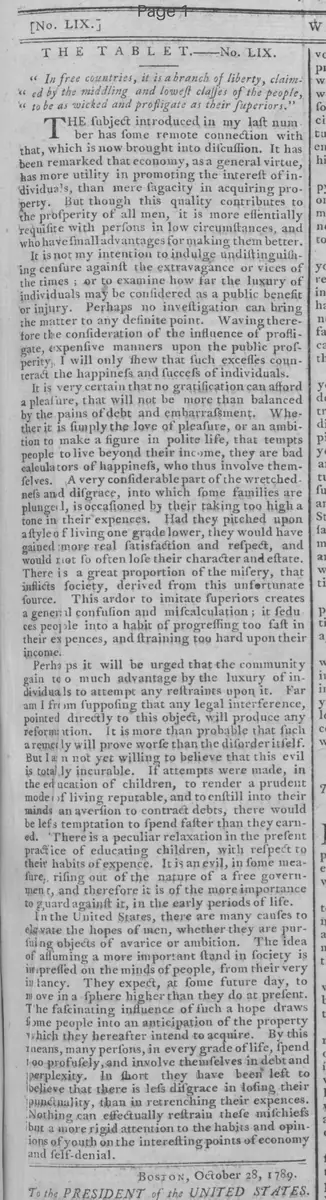
THE TABLET.--No. LIX.
"In free countries, it is a branch of liberty, claimed by the middling and lowest classes of the people to be as wicked and profligate as their superiors."
The subject has some remote connection with that, which is now brought into discussion. It has been remarked that economy, as a general virtue, has more utility in promoting the interest of individuals, than mere sagacity in acquiring property. But though this quality contributes to the prosperity of all men, it is more essentially requisite with persons in low circumstances, and who have small advantages for making them better.
It is not my intention to indulge undistinguishing censure against the extravagance or vices of the times; or to examine how far the luxury of individuals may be considered as a public benefit or injury. Perhaps no investigation can bring the matter to any definite point. Waving therefore the consideration of the influence of profligate, expensive manners upon the public prosperity, I will only show that such excesses counteract the happiness and success of individuals.
It is very certain that no gratification can afford a pleasure, that will not be more than balanced by the pains of debt and embarrassment. Whether it is simply the love of pleasure, or an ambition to make a figure in polite life, that tempts people to live beyond their income, they are bad calculators of happiness, who thus involve themselves. A very considerable part of the wretchedness and disgrace, into which some families are plunged, is occasioned by their taking too high a tone in their expenses. Had they pitched upon a style of living one grade lower, they would have gained more real satisfaction and respect, and would not so often lose their character and estate.
There is a great proportion of the misery, that inflicts society, derived from this unfortunate source. This ardor to imitate superiors creates a general confusion and miscalculation; it educes people into a habit of progressing too fast in their expenses, and straining too hard upon their income.
Perhaps it will be urged that the community gains too much advantage by the luxury of individuals to attempt any restraints upon it. Far am I from supposing that any legal interference, pointed directly to this object, will produce any reformation. It is more than probable that such a remedy will prove worse than the disorder itself. But I am not yet willing to believe that this evil is totally incurable. If attempts were made, in the education of children, to render a prudent mode of living reputable, and to instill into their minds an aversion to contract debts, there would be less temptation to spend faster than they earned.
There is a peculiar relaxation in the present practice of educating children, with respect to their habits of expense. It is an evil, in some measure, rising out of the nature of a free government, and therefore it is of the more importance to guard against it, in the early periods of life.
In the United States, there are many causes to elevate the hopes of men, whether they are pursuing objects of avarice or ambition. The idea of assuming a more important stand in society is impressed on the minds of people, from their very infancy. They expect, at some future day, to move in a sphere higher than they do at present. The fascinating influence of such a hope draws some people into an anticipation of the property which they hereafter intend to acquire. By this means, many persons, in every grade of life, spend too profusely, and involve themselves in debt and perplexity. In short they have been left to believe that there is less disgrace in losing their punctuality, than in retrenching their expenses.
Nothing can effectually restrain these mischiefs but a more rigid attention to the habits and opinions of youth on the interesting points of economy and self-denial.
Boston, October 28, 1789.
THE TABLET.--No. LIX.
"In free countries, it is a branch of liberty, claimed by the middling and lowest classes of the people to be as wicked and profligate as their superiors."
The subject has some remote connection with that, which is now brought into discussion. It has been remarked that economy, as a general virtue, has more utility in promoting the interest of individuals, than mere sagacity in acquiring property. But though this quality contributes to the prosperity of all men, it is more essentially requisite with persons in low circumstances, and who have small advantages for making them better.
It is not my intention to indulge undistinguishing censure against the extravagance or vices of the times; or to examine how far the luxury of individuals may be considered as a public benefit or injury. Perhaps no investigation can bring the matter to any definite point. Waving therefore the consideration of the influence of profligate, expensive manners upon the public prosperity, I will only show that such excesses counteract the happiness and success of individuals.
It is very certain that no gratification can afford a pleasure, that will not be more than balanced by the pains of debt and embarrassment. Whether it is simply the love of pleasure, or an ambition to make a figure in polite life, that tempts people to live beyond their income, they are bad calculators of happiness, who thus involve themselves. A very considerable part of the wretchedness and disgrace, into which some families are plunged, is occasioned by their taking too high a tone in their expenses. Had they pitched upon a style of living one grade lower, they would have gained more real satisfaction and respect, and would not so often lose their character and estate.
There is a great proportion of the misery, that inflicts society, derived from this unfortunate source. This ardor to imitate superiors creates a general confusion and miscalculation; it educes people into a habit of progressing too fast in their expenses, and straining too hard upon their income.
Perhaps it will be urged that the community gains too much advantage by the luxury of individuals to attempt any restraints upon it. Far am I from supposing that any legal interference, pointed directly to this object, will produce any reformation. It is more than probable that such a remedy will prove worse than the disorder itself. But I am not yet willing to believe that this evil is totally incurable. If attempts were made, in the education of children, to render a prudent mode of living reputable, and to instill into their minds an aversion to contract debts, there would be less temptation to spend faster than they earned.
There is a peculiar relaxation in the present practice of educating children, with respect to their habits of expense. It is an evil, in some measure, rising out of the nature of a free government, and therefore it is of the more importance to guard against it, in the early periods of life.
In the United States, there are many causes to elevate the hopes of men, whether they are pursuing objects of avarice or ambition. The idea of assuming a more important stand in society is impressed on the minds of people, from their very infancy. They expect, at some future day, to move in a sphere higher than they do at present. The fascinating influence of such a hope draws some people into an anticipation of the property which they hereafter intend to acquire. By this means, many persons, in every grade of life, spend too profusely, and involve themselves in debt and perplexity. In short they have been left to believe that there is less disgrace in losing their punctuality, than in retrenching their expenses.
Nothing can effectually restrain these mischiefs but a more rigid attention to the habits and opinions of youth on the interesting points of economy and self-denial.
Boston, October 28, 1789.
What sub-type of article is it?
Essay
What themes does it cover?
Moral Virtue
Commerce Trade
Social Manners
What keywords are associated?
Economy
Extravagance
Luxury
Debt
Free Society
Education
Self Denial
United States
Literary Details
Title
The Tablet. No. Lix.
Subject
On Economy And Extravagance In Free Countries
Key Lines
It Is Very Certain That No Gratification Can Afford A Pleasure, That Will Not Be More Than Balanced By The Pains Of Debt And Embarrassment.
This Ardor To Imitate Superiors Creates A General Confusion And Miscalculation; It Educes People Into A Habit Of Progressing Too Fast In Their Expenses, And Straining Too Hard Upon Their Income.
If Attempts Were Made, In The Education Of Children, To Render A Prudent Mode Of Living Reputable, And To Instill Into Their Minds An Aversion To Contract Debts, There Would Be Less Temptation To Spend Faster Than They Earned.
In The United States, There Are Many Causes To Elevate The Hopes Of Men, Whether They Are Pursuing Objects Of Avarice Or Ambition.
Nothing Can Effectually Restrain These Mischiefs But A More Rigid Attention To The Habits And Opinions Of Youth On The Interesting Points Of Economy And Self Denial.