Thank you for visiting SNEWPapers!
Sign up free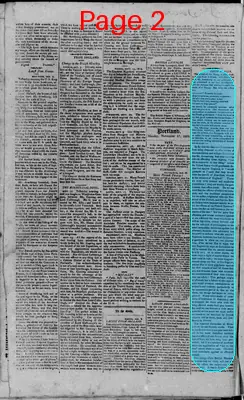
Editorial
November 13, 1809
Portland Gazette, And Maine Advertiser
Portland, Cumberland County, Maine
What is this article about?
Editorial critiques French government's hostile stance toward the US, dismissing treaty rumors and Armstrong's despatches. It argues France demands US war on Britain to counter British Orders in Council, originating from French Decrees. Mocks Bonaparte's proposals and madness, notes British Ministry change unlikely to affect negotiations.
Clipping

OCR Quality
95%
Excellent
Full Text
FROM FRANCE.
The arrival of the Wasp, at New York, in 33 days from L'Orient, with despatches from Mr. Armstrong to our government was announced in our last, accompanied with the Rumour that she had brought the bones of a Treaty. But when we reflect that
"Rumour is a pipe.
Blown by surmises, jealousies, conjectures
And of so easy and so plain a stop.
That the discordant, wavering multitude
Can each one play upon it,"
we, should be extremely cautious what heed we give to it. The democratic editors continue to represent the disposition of the French government "from the head to the foot, good towards the United States;" than which nothing can be more distant from the truth, as the articles selected for this day's Gazette will plainly show.
The following remarks from the last Providence American, will serve to illustrate the opinion, that Bonaparte will never soften his tone towards us, so long as he discovers, in our rulers a disposition to continue the willing instruments of his ambitious views:——
So far was the Imperial Government from being disposed to offer terms of accommodation and redress, it is stated that Mr. Armstrong had done nothing towards effecting these objects, "nor did he expect to do any thing," unless the United States would previously declare war against England, or "would guarantee to France that they would resist the search of American vessels by the cruisers of England." These are truly very modest and equitable propositions! they are worthy the government that offers them. Do we not know that the offence of which we complain, and the maritime persecution that we suffer, originated with the Emperor of the French, and that the British Orders were imposed merely to repel the effects of the French Decrees?
Is not this fact as well known as the existence of the sun? Yet the party first offending, and whose measures against us are infinitely the most iniquitous as well as injurious, comes forward and has the unheard of presumption to demand immediate hostilities against her adversary, because this adversary has the power to enforce what she enacts!
Napoleon, however, has had the unusual goodness to allow us two alternatives; if we do not like to wage war with England by express declaration he will be content that we should merely do it by act; or in other words, we must resist a right of search which we shall resist in vain; we must magnanimously array our four or five frigates, and our fifty or sixty gun-boats against the 1200 vessels of war of Great Britain, and threaten them with immediate extermination if they dare contravene our edicts! This perhaps might be effectual, but a failure of the experiment would produce consequences so serious to our country, particularly to the commercial part of it, that on the whole, the design had better be relinquished. If any other mode of resistance, (if resistance be desirable,) can be designed, let those who wish the thing effected make their plan known.
But until we can become a little more powerful on the ocean we must suffer our vessels to be searched by British cruisers, and be burnt, sunk and confiscated by French.
The reported distraction of Bonaparte we do not literally credit. That he has for fourteen years past been subject to the most diabolical madness that ever afflicted any despot since the days of Nero, we have long been persuaded; but it is a species of madness which the application of "ice to the head" cannot abate or cure. Charlotte Corday could have applied an effectual remedy.
The change of the British Ministry is an event that we think will not essentially affect the negociation with this country. It was in England generally thought a change of men, rather
The arrival of the Wasp, at New York, in 33 days from L'Orient, with despatches from Mr. Armstrong to our government was announced in our last, accompanied with the Rumour that she had brought the bones of a Treaty. But when we reflect that
"Rumour is a pipe.
Blown by surmises, jealousies, conjectures
And of so easy and so plain a stop.
That the discordant, wavering multitude
Can each one play upon it,"
we, should be extremely cautious what heed we give to it. The democratic editors continue to represent the disposition of the French government "from the head to the foot, good towards the United States;" than which nothing can be more distant from the truth, as the articles selected for this day's Gazette will plainly show.
The following remarks from the last Providence American, will serve to illustrate the opinion, that Bonaparte will never soften his tone towards us, so long as he discovers, in our rulers a disposition to continue the willing instruments of his ambitious views:——
So far was the Imperial Government from being disposed to offer terms of accommodation and redress, it is stated that Mr. Armstrong had done nothing towards effecting these objects, "nor did he expect to do any thing," unless the United States would previously declare war against England, or "would guarantee to France that they would resist the search of American vessels by the cruisers of England." These are truly very modest and equitable propositions! they are worthy the government that offers them. Do we not know that the offence of which we complain, and the maritime persecution that we suffer, originated with the Emperor of the French, and that the British Orders were imposed merely to repel the effects of the French Decrees?
Is not this fact as well known as the existence of the sun? Yet the party first offending, and whose measures against us are infinitely the most iniquitous as well as injurious, comes forward and has the unheard of presumption to demand immediate hostilities against her adversary, because this adversary has the power to enforce what she enacts!
Napoleon, however, has had the unusual goodness to allow us two alternatives; if we do not like to wage war with England by express declaration he will be content that we should merely do it by act; or in other words, we must resist a right of search which we shall resist in vain; we must magnanimously array our four or five frigates, and our fifty or sixty gun-boats against the 1200 vessels of war of Great Britain, and threaten them with immediate extermination if they dare contravene our edicts! This perhaps might be effectual, but a failure of the experiment would produce consequences so serious to our country, particularly to the commercial part of it, that on the whole, the design had better be relinquished. If any other mode of resistance, (if resistance be desirable,) can be designed, let those who wish the thing effected make their plan known.
But until we can become a little more powerful on the ocean we must suffer our vessels to be searched by British cruisers, and be burnt, sunk and confiscated by French.
The reported distraction of Bonaparte we do not literally credit. That he has for fourteen years past been subject to the most diabolical madness that ever afflicted any despot since the days of Nero, we have long been persuaded; but it is a species of madness which the application of "ice to the head" cannot abate or cure. Charlotte Corday could have applied an effectual remedy.
The change of the British Ministry is an event that we think will not essentially affect the negociation with this country. It was in England generally thought a change of men, rather
What sub-type of article is it?
Foreign Affairs
War Or Peace
Partisan Politics
What keywords are associated?
French Relations
Bonaparte Demands
Us Neutrality
British Orders
French Decrees
Armstrong Despatches
Treaty Rumors
What entities or persons were involved?
Bonaparte
Mr. Armstrong
French Government
British Ministry
Democratic Editors
Editorial Details
Primary Topic
French Demands For Us Action Against Britain
Stance / Tone
Critical Of French Government And Bonaparte, Skeptical Of Treaty Rumors
Key Figures
Bonaparte
Mr. Armstrong
French Government
British Ministry
Democratic Editors
Key Arguments
French Government Demands Us Declare War On England Or Resist British Search Of Vessels
Maritime Persecution Originated With French Decrees, Not British Orders
Bonaparte's Proposals Are Presumptuous And Inequitable
Us Lacks Naval Power To Resist Britain Effectively
Bonaparte Exhibits Diabolical Madness
British Ministry Change Unlikely To Affect Us Negotiations