Thank you for visiting SNEWPapers!
Sign up free
Literary
July 9, 1828
Morning Star
Limerick, York County, Maine
What is this article about?
A dramatic narrative depicts the Great Fire of Rome engulfing the city, focusing on the destruction of the Amphitheatre of Statilius Taurus. Escaping crowds flee amid chaos, while wild beasts rage in the flaming arena. A naked Ethiopian slave sits calmly on the imperial throne, awaiting death.
Clipping
OCR Quality
98%
Excellent
Full Text
MISCELLANY.
DESTRUCTION OF A ROMAN THEATRE.
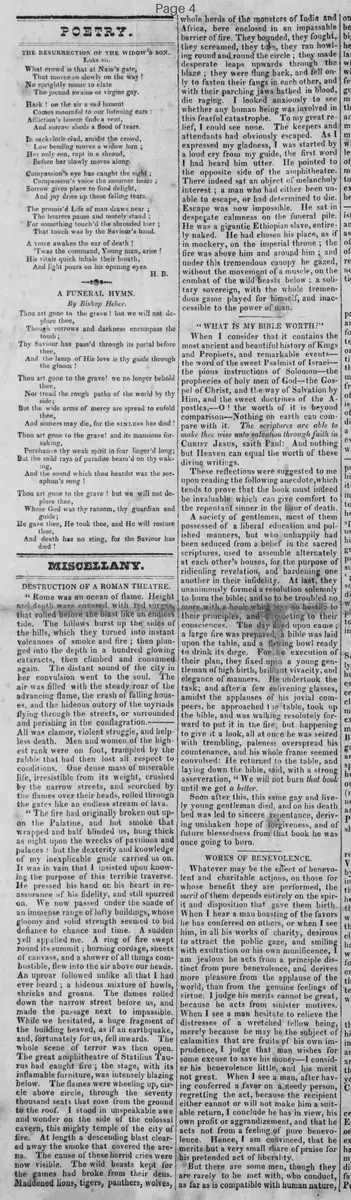
"Rome was an ocean of flame. Height and depth were covered with red surges, that rolled before the blast like an endless tide. The billows burst up the sides of the hills, which they turned into instant volcanoes of smoke and fire; then plunged into the depth in a hundred glowing cataracts, then climbed and consumed again. The distant sound of the city in her convulsion went to the soul. The air was filled with the steady roar of the advancing flame, the crash of falling houses, and the hideous outcry of the myriads flying through the streets, or surrounded and perishing in the conflagration. All was clamor, violent struggle, and helpless death. Men and women of the highest rank were on foot, trampled by the rabble that had then lost all respect to conditions. One dense mass of miserable life, irresistible from its weight, crushed by the narrow streets, and scorched by the flames over their heads, rolled through the gates like an endless stream of lava."
The fire had originally broken out upon the Palatine, and hot smoke that wrapped and half blinded us, hung thick as night upon the wrecks of pavilions and palaces: but the dexterity and knowledge of my inexplicable guide carried us on. It was in vain that I insisted upon knowing the purpose of this terrible traverse. He pressed his hand on his heart in reassurance of his fidelity, and still spurred on. We now passed under the shade of an immense range of lofty buildings, whose gloomy and solid strength seemed to bid defiance to chance and time. A sudden yell appalled me. A ring of fire swept round its summit; burning cordage, sheets of canvass, and a shower of all things combustible, flew into the air above our heads. An uproar followed unlike all that I had ever heard; a hideous mixture of howls, shrieks and groans. The flames rolled down the narrow street before us, and made the passage next to impassable. While we hesitated, a huge fragment of the building heaved, as if an earthquake, and, fortunately for us, fell inwards. The whole scene of terror was then open.
The great amphitheatre of Statilius Taurus had caught fire; the stage, with its inflammable furniture, was intensely blazing below. The flames were wheeling up, circle above circle, through the seventy thousand seats that rose from the ground to the roof. I stood in unspeakable awe and wonder on the side of the colossal cavern, this mighty temple of the city of fire. At length a descending blast cleared away the smoke that covered the arena. The cause of these horrid cries were now visible. The wild beasts kept for the games had broke from their dens. Maddened lions, tigers, panthers, wolves, whole herds of the monsters of India and Africa, here enclosed in an impassable barrier of fire. They bounded, they fought, they screamed, they tore, they ran howling round and round the circle; they made desperate leaps upwards through the blaze; they were flung back, and fell only to fasten their fangs in each other, and with their parching jaws bathed in blood, die raging. I looked anxiously to see whether any human being was involved in this fearful catastrophe. To my great relief, I could see none. The keepers and attendants had obviously escaped. As I expressed my gladness, I was startled by a loud cry from my guide, the first word I had heard him utter. He pointed to the opposite side of the amphitheatre. There indeed sat an object of melancholy interest; a man who had either been unable to escape, or had determined to die. Escape was now impossible. He sat in desperate calmness on the funeral pile. He was a gigantic Ethiopian slave, entirely naked. He had chosen his place, as if in mockery, on the imperial throne; the fire was above him and around him; and under this tremendous canopy he gazed, without the movement of a muscle, on the combat of the wild beasts below: a solitary sovereign, with the whole tremendous game played for himself, and inaccessible to the power of man.
DESTRUCTION OF A ROMAN THEATRE.
"Rome was an ocean of flame. Height and depth were covered with red surges, that rolled before the blast like an endless tide. The billows burst up the sides of the hills, which they turned into instant volcanoes of smoke and fire; then plunged into the depth in a hundred glowing cataracts, then climbed and consumed again. The distant sound of the city in her convulsion went to the soul. The air was filled with the steady roar of the advancing flame, the crash of falling houses, and the hideous outcry of the myriads flying through the streets, or surrounded and perishing in the conflagration. All was clamor, violent struggle, and helpless death. Men and women of the highest rank were on foot, trampled by the rabble that had then lost all respect to conditions. One dense mass of miserable life, irresistible from its weight, crushed by the narrow streets, and scorched by the flames over their heads, rolled through the gates like an endless stream of lava."
The fire had originally broken out upon the Palatine, and hot smoke that wrapped and half blinded us, hung thick as night upon the wrecks of pavilions and palaces: but the dexterity and knowledge of my inexplicable guide carried us on. It was in vain that I insisted upon knowing the purpose of this terrible traverse. He pressed his hand on his heart in reassurance of his fidelity, and still spurred on. We now passed under the shade of an immense range of lofty buildings, whose gloomy and solid strength seemed to bid defiance to chance and time. A sudden yell appalled me. A ring of fire swept round its summit; burning cordage, sheets of canvass, and a shower of all things combustible, flew into the air above our heads. An uproar followed unlike all that I had ever heard; a hideous mixture of howls, shrieks and groans. The flames rolled down the narrow street before us, and made the passage next to impassable. While we hesitated, a huge fragment of the building heaved, as if an earthquake, and, fortunately for us, fell inwards. The whole scene of terror was then open.
The great amphitheatre of Statilius Taurus had caught fire; the stage, with its inflammable furniture, was intensely blazing below. The flames were wheeling up, circle above circle, through the seventy thousand seats that rose from the ground to the roof. I stood in unspeakable awe and wonder on the side of the colossal cavern, this mighty temple of the city of fire. At length a descending blast cleared away the smoke that covered the arena. The cause of these horrid cries were now visible. The wild beasts kept for the games had broke from their dens. Maddened lions, tigers, panthers, wolves, whole herds of the monsters of India and Africa, here enclosed in an impassable barrier of fire. They bounded, they fought, they screamed, they tore, they ran howling round and round the circle; they made desperate leaps upwards through the blaze; they were flung back, and fell only to fasten their fangs in each other, and with their parching jaws bathed in blood, die raging. I looked anxiously to see whether any human being was involved in this fearful catastrophe. To my great relief, I could see none. The keepers and attendants had obviously escaped. As I expressed my gladness, I was startled by a loud cry from my guide, the first word I had heard him utter. He pointed to the opposite side of the amphitheatre. There indeed sat an object of melancholy interest; a man who had either been unable to escape, or had determined to die. Escape was now impossible. He sat in desperate calmness on the funeral pile. He was a gigantic Ethiopian slave, entirely naked. He had chosen his place, as if in mockery, on the imperial throne; the fire was above him and around him; and under this tremendous canopy he gazed, without the movement of a muscle, on the combat of the wild beasts below: a solitary sovereign, with the whole tremendous game played for himself, and inaccessible to the power of man.
What sub-type of article is it?
Prose Fiction
What themes does it cover?
Death Mortality
Political
What keywords are associated?
Great Fire Of Rome
Amphitheatre Destruction
Wild Beasts
Ethiopian Slave
Conflagration
Palatine Hill
Statilius Taurus
Literary Details
Title
Destruction Of A Roman Theatre.
Key Lines
Rome Was An Ocean Of Flame. Height And Depth Were Covered With Red Surges, That Rolled Before The Blast Like An Endless Tide.
The Great Amphitheatre Of Statilius Taurus Had Caught Fire; The Stage, With Its Inflammable Furniture, Was Intensely Blazing Below.
The Wild Beasts Kept For The Games Had Broke From Their Dens. Maddened Lions, Tigers, Panthers, Wolves, Whole Herds Of The Monsters Of India And Africa, Here Enclosed In An Impassable Barrier Of Fire.
He Was A Gigantic Ethiopian Slave, Entirely Naked. He Had Chosen His Place, As If In Mockery, On The Imperial Throne; The Fire Was Above Him And Around Him;