Thank you for visiting SNEWPapers!
Sign up free
Literary
April 17, 1840
Burlington Free Press
Burlington, Chittenden County, Vermont
What is this article about?
A moral fable titled 'THE THREE FRIENDS' tells of a man with three friends tested by accusation: two abandon him, but the least expected defends him successfully. It allegorizes how wealth deserts man at death, relatives accompany to the grave but turn back, while good works plead for mercy before God's judgment.
Clipping
OCR Quality
98%
Excellent
Full Text
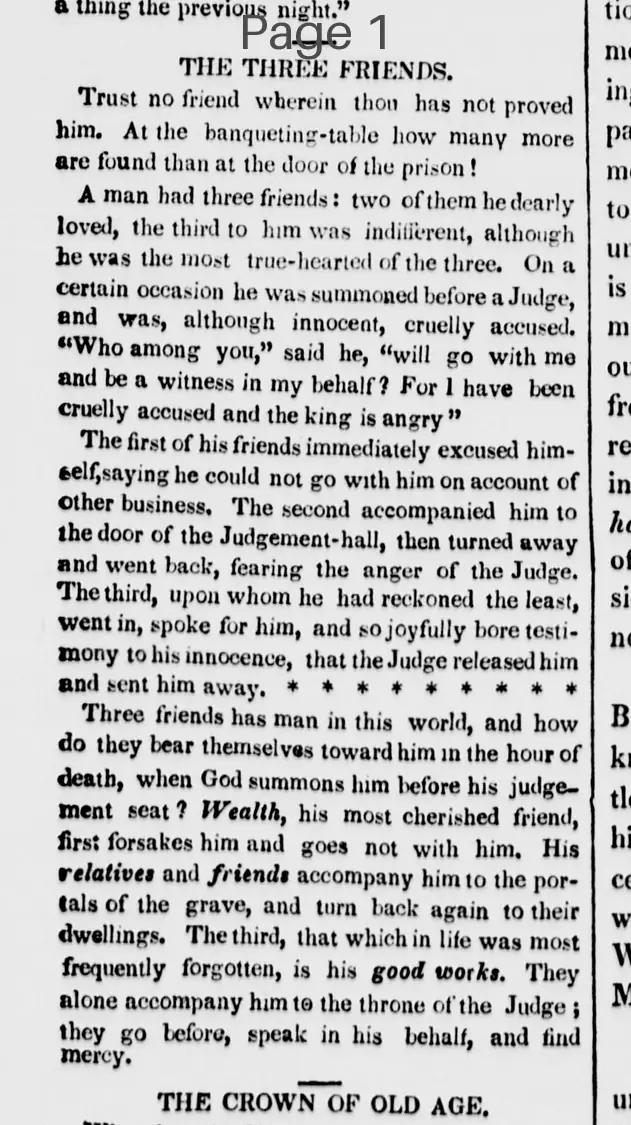
THE THREE FRIENDS.
Trust no friend wherein thou hast not proved him. At the banqueting-table how many more are found than at the door of the prison!
A man had three friends: two of them he dearly loved, the third to him was indifferent, although he was the most true-hearted of the three. On a certain occasion he was summoned before a Judge, and was, although innocent, cruelly accused. "Who among you," said he, "will go with me and be a witness in my behalf? For I have been cruelly accused and the king is angry"
The first of his friends immediately excused himself, saying he could not go with him on account of other business. The second accompanied him to the door of the Judgement-hall, then turned away and went back, fearing the anger of the Judge. The third, upon whom he had reckoned the least, went in, spoke for him, and so joyfully bore testimony to his innocence, that the Judge released him and sent him away.
Three friends has man in this world, and how do they bear themselves toward him in the hour of death, when God summons him before his judgement seat? Wealth, his most cherished friend, first forsakes him and goes not with him. His relatives and friends accompany him to the portals of the grave, and turn back again to their dwellings. The third, that which in life was most frequently forgotten, is his good works. They alone accompany him to the throne of the Judge; they go before, speak in his behalf, and find mercy.
Trust no friend wherein thou hast not proved him. At the banqueting-table how many more are found than at the door of the prison!
A man had three friends: two of them he dearly loved, the third to him was indifferent, although he was the most true-hearted of the three. On a certain occasion he was summoned before a Judge, and was, although innocent, cruelly accused. "Who among you," said he, "will go with me and be a witness in my behalf? For I have been cruelly accused and the king is angry"
The first of his friends immediately excused himself, saying he could not go with him on account of other business. The second accompanied him to the door of the Judgement-hall, then turned away and went back, fearing the anger of the Judge. The third, upon whom he had reckoned the least, went in, spoke for him, and so joyfully bore testimony to his innocence, that the Judge released him and sent him away.
Three friends has man in this world, and how do they bear themselves toward him in the hour of death, when God summons him before his judgement seat? Wealth, his most cherished friend, first forsakes him and goes not with him. His relatives and friends accompany him to the portals of the grave, and turn back again to their dwellings. The third, that which in life was most frequently forgotten, is his good works. They alone accompany him to the throne of the Judge; they go before, speak in his behalf, and find mercy.
What sub-type of article is it?
Fable
Allegory
Prose Fiction
What themes does it cover?
Moral Virtue
Friendship
Death Mortality
What keywords are associated?
Three Friends
Moral Fable
Good Works
Death Judgment
Wealth Abandonment
Relatives Grave
Divine Mercy
Literary Details
Title
The Three Friends.
Key Lines
Trust No Friend Wherein Thou Hast Not Proved Him. At The Banqueting Table How Many More Are Found Than At The Door Of The Prison!
Three Friends Has Man In This World, And How Do They Bear Themselves Toward Him In The Hour Of Death, When God Summons Him Before His Judgement Seat?
Wealth, His Most Cherished Friend, First Forsakes Him And Goes Not With Him.
His Relatives And Friends Accompany Him To The Portals Of The Grave, And Turn Back Again To Their Dwellings.
They Alone Accompany Him To The Throne Of The Judge; They Go Before, Speak In His Behalf, And Find Mercy.