Thank you for visiting SNEWPapers!
Sign up free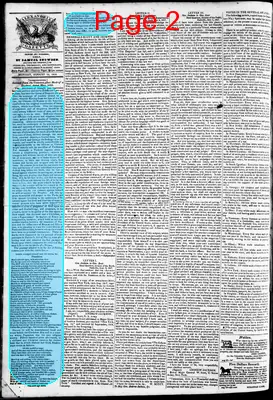
Literary
August 25, 1828
Phenix Gazette
Alexandria, Virginia
What is this article about?
An essay exploring the universality of human expression in literature across ages and cultures, exemplified by a Turkish captain's exhortation and a detailed comparison of Horace's and Shakespeare's descriptions of life's stages from infancy to old age.
Clipping
OCR Quality
95%
Excellent
Full Text
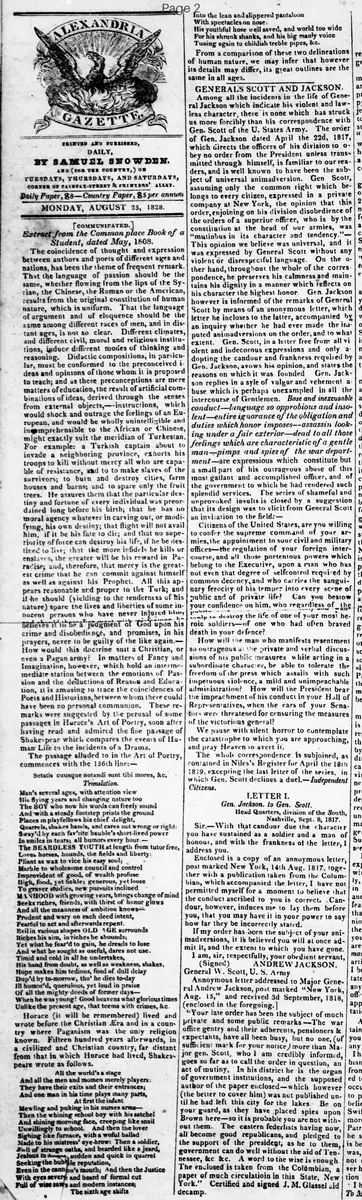
The coincidence of thought and expression between authors and poets of different ages and nations, has been the theme of frequent remark. That the language of passion should be the same, whether flowing from the lips of the Syrian, the Chinese, the Roman or the American, results from the original constitution of human nature, which is uniform. That the language of argument and of eloquence should be the same among different races of men, and in distant ages, is not so clear. Different climates, and different civil, moral and religious institutions, induce different modes of thinking and reasoning. Didactic compositions, in particular, must be conformed to the preconceived ideas and opinions of those whom it is proposed to teach; and as these preconceptions are matters of education, the result of artificial combinations of ideas, derived through the senses from external objects,—instructions, which would shock and outrage the feelings of a European, and would be wholly unintelligible and incomprehensible to the African or Chinese, might exactly suit the meridian of Turkestan.
For example: a Turkish captain about to invade a neighboring province, exhorts his troops to kill without mercy all who are capable of resistance, and to make slaves of the survivors; to burn and destroy cities, farm houses and barns; and to spare only the fruit trees. He assures them that the particular destiny and fortune of every individual was preordained long before his birth; that he has no moral agency whatever in carving out, or modifying, his own destiny; that flight will not avail him, if it be his fate to die; and that no superiority of force can destroy his life, if he be destined to live; that the more infidels he kills or enslaves, the greater will be his reward in Paradise; and, therefore, that mercy is the greatest crime that he can commit against himself as well as against his Prophet. All this appears reasonable and proper to the Turk; and if he should (yielding to the tenderness of his nature) spare the lives and liberties of some innocent persons who have never injured him, he believes it to be a judgment of God upon his crime and disobedience, and promises, in his prayers, never to be guilty of the like again.
How would this doctrine suit a Christian, or even a Pagan army? In matters of Fancy and Imagination, however, which hold an intermediate station between the emotions of Passion and the deductions of Reason and Education, it is amusing to trace the coincidences of Poets and Historians, between whom there could have been no personal communion. These remarks were suggested by the perusal of some passages in Horace's Art of Poetry, soon after having read and admired the fine passage of Shakespear which compares the events of Human Life to the incidents of a Drama.
The passage alluded to in the Art of Poetry, commences with the 156th line:-
Setatis cuusque notandi sunt tibi mores, &c.
Translation.
Man's several ages, with attention view
His flying years and changing nature too
The Boy who now his words can freely sound
And with a steady footstep prints the ground
Places in playfellows his chief delight,
Quarrels, shakes hands, and cares not wrong or right:
Sway'd by each fav'rite bauble's short-lived power
In smiles in tears; all humors every hour.-
The BEARDLESS YOUTH at length from tutor free,
Loves horses, hounds, the fields and liberty:
Pliant as wax to vice his easy soul;
Marble to wholesome council and control
Improvident of good, of wealth profuse
High, fond, yet fickle; generous, yet loose
To graver studies, new pursuits inclined
MANHOOD with growing years, brings change of mind
Seeks riches, friends, with thirst of honor glows
And all the meanness of ambition knows
Prudent and wary on each deed intent,
Fearful to act and afterwards repent.
Evil in various shapes OLD AGE surrounds
Riches his aim, in riches he abounds;
Yet what he fear'd to gain, he dreads to lose
And what he sought as useful, dares not use.
Timid and cold in all he undertakes,
His hand from doubt, as well as weakness, shakes,
Hope makes him tedious, fond of dull delay
Dup'd by to-morrow, tho' he dies to-day
ill humor'd, querulous, yet loud in praise
Of all the mighty deeds of former days-
When he was young! Good heavens what glorious times
Unlike the present age, that teems with crimes, &c.
Horace (it will be remembered) lived and wrote before the Christian Era and in a country where Paganism was the only religion known. Fifteen hundred years afterwards, in a civilized and Christian country, far distant from that in which Horace had lived, Shakespear wrote as follows.
All the world's a stage
And all the men and women merely players:
They have their exits and their entrances;
And one man in his time plays many parts,
At first the infant
Mewling and puking in his nurses arms--
Then the whining school boy with his satchel
And shining morning face, creeping like snail
Unwillingly to school. And then the lover
Sighing like furnace, with a woful ballad
Made to his mistress' eye-brow: Then a soldier
Full of strange oaths, and bearded like a pard,
Jealous in honor, sudden and quick in quarrel
Seeking the bubble reputation,
Even in the cannon's mouth; And then the Justice
With eyes severe and beard of formal cut
Full of wise saws and modern instances;
Into the lean and slipper'd pantaloon
With spectacles on nose:
His youthful hose well saved, and world too wide
For his shrunk shanks, and his big manly voice
Turning again to childish treble pipes, &c.
From a comparison of these two delineations of human nature, we may infer that however its details may differ, its great outlines are the same in all ages.
For example: a Turkish captain about to invade a neighboring province, exhorts his troops to kill without mercy all who are capable of resistance, and to make slaves of the survivors; to burn and destroy cities, farm houses and barns; and to spare only the fruit trees. He assures them that the particular destiny and fortune of every individual was preordained long before his birth; that he has no moral agency whatever in carving out, or modifying, his own destiny; that flight will not avail him, if it be his fate to die; and that no superiority of force can destroy his life, if he be destined to live; that the more infidels he kills or enslaves, the greater will be his reward in Paradise; and, therefore, that mercy is the greatest crime that he can commit against himself as well as against his Prophet. All this appears reasonable and proper to the Turk; and if he should (yielding to the tenderness of his nature) spare the lives and liberties of some innocent persons who have never injured him, he believes it to be a judgment of God upon his crime and disobedience, and promises, in his prayers, never to be guilty of the like again.
How would this doctrine suit a Christian, or even a Pagan army? In matters of Fancy and Imagination, however, which hold an intermediate station between the emotions of Passion and the deductions of Reason and Education, it is amusing to trace the coincidences of Poets and Historians, between whom there could have been no personal communion. These remarks were suggested by the perusal of some passages in Horace's Art of Poetry, soon after having read and admired the fine passage of Shakespear which compares the events of Human Life to the incidents of a Drama.
The passage alluded to in the Art of Poetry, commences with the 156th line:-
Setatis cuusque notandi sunt tibi mores, &c.
Translation.
Man's several ages, with attention view
His flying years and changing nature too
The Boy who now his words can freely sound
And with a steady footstep prints the ground
Places in playfellows his chief delight,
Quarrels, shakes hands, and cares not wrong or right:
Sway'd by each fav'rite bauble's short-lived power
In smiles in tears; all humors every hour.-
The BEARDLESS YOUTH at length from tutor free,
Loves horses, hounds, the fields and liberty:
Pliant as wax to vice his easy soul;
Marble to wholesome council and control
Improvident of good, of wealth profuse
High, fond, yet fickle; generous, yet loose
To graver studies, new pursuits inclined
MANHOOD with growing years, brings change of mind
Seeks riches, friends, with thirst of honor glows
And all the meanness of ambition knows
Prudent and wary on each deed intent,
Fearful to act and afterwards repent.
Evil in various shapes OLD AGE surrounds
Riches his aim, in riches he abounds;
Yet what he fear'd to gain, he dreads to lose
And what he sought as useful, dares not use.
Timid and cold in all he undertakes,
His hand from doubt, as well as weakness, shakes,
Hope makes him tedious, fond of dull delay
Dup'd by to-morrow, tho' he dies to-day
ill humor'd, querulous, yet loud in praise
Of all the mighty deeds of former days-
When he was young! Good heavens what glorious times
Unlike the present age, that teems with crimes, &c.
Horace (it will be remembered) lived and wrote before the Christian Era and in a country where Paganism was the only religion known. Fifteen hundred years afterwards, in a civilized and Christian country, far distant from that in which Horace had lived, Shakespear wrote as follows.
All the world's a stage
And all the men and women merely players:
They have their exits and their entrances;
And one man in his time plays many parts,
At first the infant
Mewling and puking in his nurses arms--
Then the whining school boy with his satchel
And shining morning face, creeping like snail
Unwillingly to school. And then the lover
Sighing like furnace, with a woful ballad
Made to his mistress' eye-brow: Then a soldier
Full of strange oaths, and bearded like a pard,
Jealous in honor, sudden and quick in quarrel
Seeking the bubble reputation,
Even in the cannon's mouth; And then the Justice
With eyes severe and beard of formal cut
Full of wise saws and modern instances;
Into the lean and slipper'd pantaloon
With spectacles on nose:
His youthful hose well saved, and world too wide
For his shrunk shanks, and his big manly voice
Turning again to childish treble pipes, &c.
From a comparison of these two delineations of human nature, we may infer that however its details may differ, its great outlines are the same in all ages.
What sub-type of article is it?
Essay
What themes does it cover?
Moral Virtue
What keywords are associated?
Human Nature
Ages Of Man
Horace
Shakespeare
Literary Comparison
Poetic Coincidence
Literary Details
Subject
Comparison Of Horace And Shakespeare On The Stages Of Human Life
Key Lines
Setatis Cuusque Notandi Sunt Tibi Mores, &C.
All The World's A Stage
And All The Men And Women Merely Players:
They Have Their Exits And Their Entrances;
And One Man In His Time Plays Many Parts,