Thank you for visiting SNEWPapers!
Sign up free
Literary
April 17, 1878
The Morristown Gazette
Morristown, Hamblen County, Tennessee
What is this article about?
An article quotes Thomas Carlyle's 1869 letter to Mr. Erskine, where the iconoclastic writer expresses deep reverence for the Lord's Prayer, describing how it unexpectedly comforted him during a sleepless night, highlighting its profound spiritual significance.
Clipping
OCR Quality
98%
Excellent
Full Text
Carlyle on The Lord's Prayer
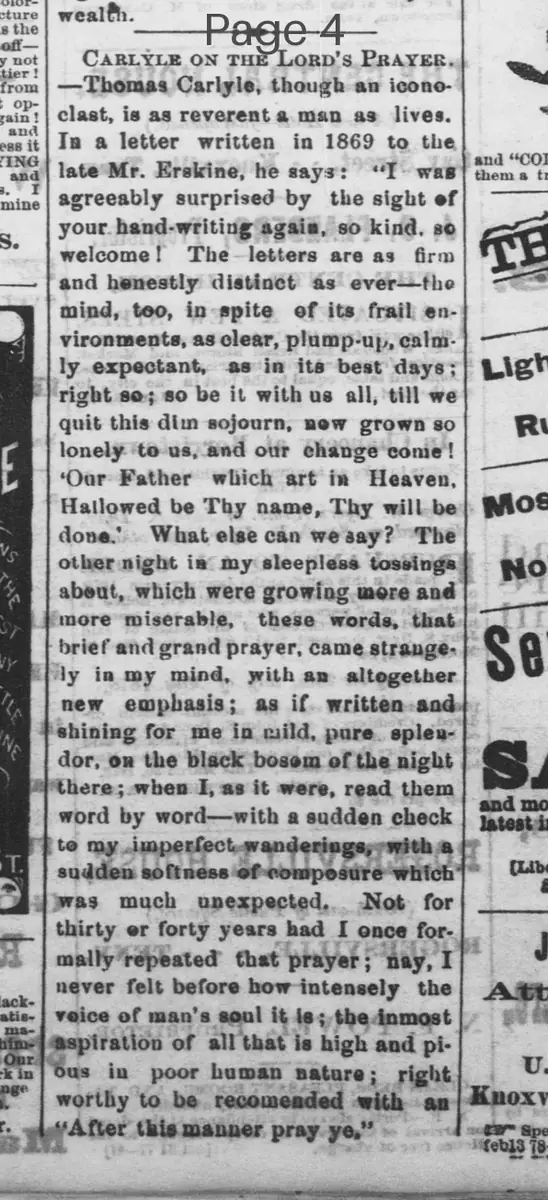
-Thomas Carlyle, though an iconoclast, is as reverent a man as lives. In a letter written in 1869 to the late Mr. Erskine, he says: "I was agreeably surprised by the sight of your hand-writing again, so kind, so welcome! The letters are as firm and honestly distinct as ever; the mind, too, in spite of its frail environments, as clear, plump-out, calmly expectant, as in its best days; right so: so be it with us all, till we quit this dim sojourn, now grown so lonely to us, and our change come! 'Our Father which art in Heaven, Hallowed be Thy name, Thy will be done.' What else can we say? The other night in my sleepless tossings about, which were growing more and more miserable, these words, that brief and grand prayer, came strangely in my mind, with an altogether new emphasis; as if written and shining for me in mild, pure splendor, on the black bosom of the night there; when I, as it were, read them word by word—with a sudden check to my imperfect wanderings, with a sudden softness of composure which was much unexpected. Not for thirty or forty years had I once formally repeated that prayer; nay, I never felt before how intensely the voice of man's soul it is; the inmost aspiration of all that is high and pious in poor human nature; right worthy to be recommended with an 'After this manner pray ye.'"
-Thomas Carlyle, though an iconoclast, is as reverent a man as lives. In a letter written in 1869 to the late Mr. Erskine, he says: "I was agreeably surprised by the sight of your hand-writing again, so kind, so welcome! The letters are as firm and honestly distinct as ever; the mind, too, in spite of its frail environments, as clear, plump-out, calmly expectant, as in its best days; right so: so be it with us all, till we quit this dim sojourn, now grown so lonely to us, and our change come! 'Our Father which art in Heaven, Hallowed be Thy name, Thy will be done.' What else can we say? The other night in my sleepless tossings about, which were growing more and more miserable, these words, that brief and grand prayer, came strangely in my mind, with an altogether new emphasis; as if written and shining for me in mild, pure splendor, on the black bosom of the night there; when I, as it were, read them word by word—with a sudden check to my imperfect wanderings, with a sudden softness of composure which was much unexpected. Not for thirty or forty years had I once formally repeated that prayer; nay, I never felt before how intensely the voice of man's soul it is; the inmost aspiration of all that is high and pious in poor human nature; right worthy to be recommended with an 'After this manner pray ye.'"
What sub-type of article is it?
Essay
Epistolary
What themes does it cover?
Religious
Moral Virtue
What keywords are associated?
Thomas Carlyle
Lords Prayer
Reverence
Letter 1869
Spiritual Comfort
Iconoclast
What entities or persons were involved?
Thomas Carlyle
Literary Details
Title
Carlyle On The Lord's Prayer
Author
Thomas Carlyle
Subject
Reverence For The Lord's Prayer In A Letter To Mr. Erskine
Form / Style
Prose Reflection Quoting A Personal Letter
Key Lines
'Our Father Which Art In Heaven, Hallowed Be Thy Name, Thy Will Be Done.' What Else Can We Say?
Not For Thirty Or Forty Years Had I Once Formally Repeated That Prayer; Nay, I Never Felt Before How Intensely The Voice Of Man's Soul It Is; The Inmost Aspiration Of All That Is High And Pious In Poor Human Nature; Right Worthy To Be Recommended With An 'After This Manner Pray Ye.'